Real Eyes Realize Real Lies

My super power is seeing what other people do not. Working in the field of health insurance opened my eyes to the fact that our medical care system was bleeding our economy to death and compromising our well-being. Was this intentional or was it being done unwittingly? “Unwittingly, blindly,” I thought at the time, “The people who run the system are unable to see what they are doing to us.” The system has become a dark mess created by insurance companies, hospitals and pharmaceutical companies, with each entity focused on its own bottom line.

I left insurance to work in the field of childhood wellness and to write articles for Natural Awakenings Magazine. As I began researching and contributing articles to the Healthy Kids and Healthy Living sections, my super power began allowing me to see solutions to children’s health challenges and to write about them.

Dean and I had been parenting our own two kids consciously – limiting screen time, seeking outdoor adventures, packing healthy lunches, sharing home-cooked dinners and supporting their athletic activities. When our scholar-athlete son, Neil, 19, was diagnosed with terminal DIPG brain cancer in 2016, we were stunned. “This is impossible! How could this happen?” Oncologists were unable to provide a reasonable explanation.

As conscious, well-informed parents, we quickly concluded the cancer was caused by a pair of vaccines our son had been given during his pre-college physical exam one year earlier – the human papillomavirus (HPV) vaccine (a.k.a. Gardasil) and the meningococcal vaccine. One was supposed to prevent cancer and the other was supposed to prevent brain inflammation.

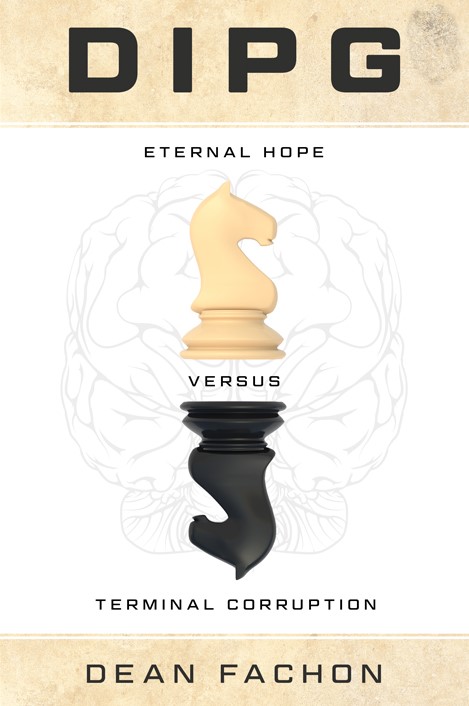
We were aware of adverse events associated with the HPV vaccine, including death. In fact, when one of us had attended Neil on previous doctor visits, we declined the vaccine when it was offered. At the age of 18, however, Neil had driven himself to his appointment, and when the nurse again offered the vaccine, he held out his arm. Dean describes this particular medical transgression, in a book we just published – DIPG: Eternal Hope Versus Terminal Corruption, on pages 87-90. Neil lost his battle with cancer on February 19, 2017, however, our fight continues.

Six years passed before I spoke publicly about the vaccine incident, and its connection with Neil’s illness and his death. In February 2023, we attended a conference presentation on “Citizen Journalism” given by Children’s Health Defense (CHD). The presenters encouraged the audience to document events and stories through video recordings, and CHD TV journalist Polly Tommey invited me onstage to demonstrate citizen journalism. She interviewed me, and I told Neil’s story. What I remember most about that day is people approaching me afterwards to thank me for speaking out. I found great courage and confidence in this.

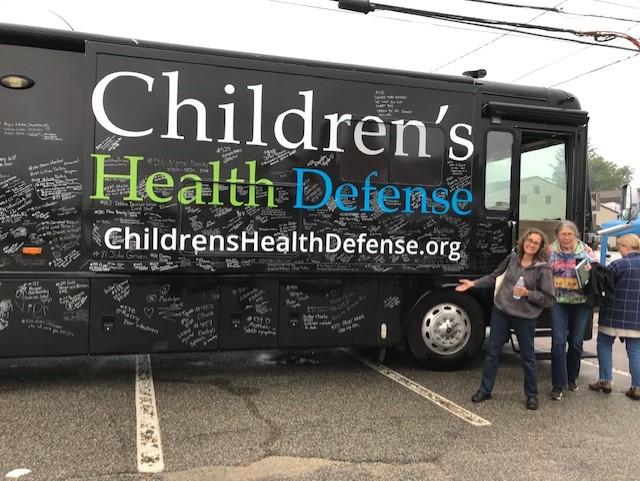
On September 29, 2023, the CHD TV bus rolled into my state, Rhode Island, one stop of many on its cross-country tour. Tommey was collecting people’s stories of vaccine injury and death. I waited in the rain until it was my turn to climb aboard. This time she led me through a full video interview, and I told my story in greater detail and with photos.

While on the bus, I met Brian Hooker, PhD, host of Doctor and Scientists on CHD TV and co-author of Vax-Unvax: Let the Science Speak with Robert F. Kennedy Jr. (RFK Jr.). Wikipedia describes Dr. Hooker as the “Department Chair and Professor Emeritus of Biology at Simpson University… known for promoting the false claim that vaccines cause autism.” Wikipedia describes RFK Jr. as an “American politician, environmental lawyer, anti-vaccine activist and conspiracy theorist.” In Vax-Unvax, these two insightful authors do a deep dive investigation to report on the “real” science and criminality behind vaccines. If you take time to actually read the book, you will be gobsmacked and come to respect their grasp of the real science.

Note: RFK Jr is the chairman and founder of Children’s Health Defense, whose mission is ending childhood health epidemics by eliminating toxic exposure. The organization seeks to protect children, expose harms and seek justice. RFK, Jr hosts The Defender Show on CHD TV.

Hooker signed a copy of his book for me, writing “For Neil, May you rest in the arms of almighty God! Your testimony lives on forever!”

I was also gifted with a second book, The HPV Vaccine on Trial: Seeking Justice for a Generation Betrayed by Mary Holland, J.D., Kim Mack Rosenberg, J.D., and Eileen Iorio. Official statements by the FDA, CDC and WHO, claiming that HPV vaccines are safe, contrast sharply with reports of devastating injuries and death which are recounted throughout this book.

Before leaving the bus…

… I signed Neil’s name and my testimony number (562). Then I went home and found my CHD TV bus interview HPV Vaccine Cancer Connection on the CHD website, watched it and began to read my new books.
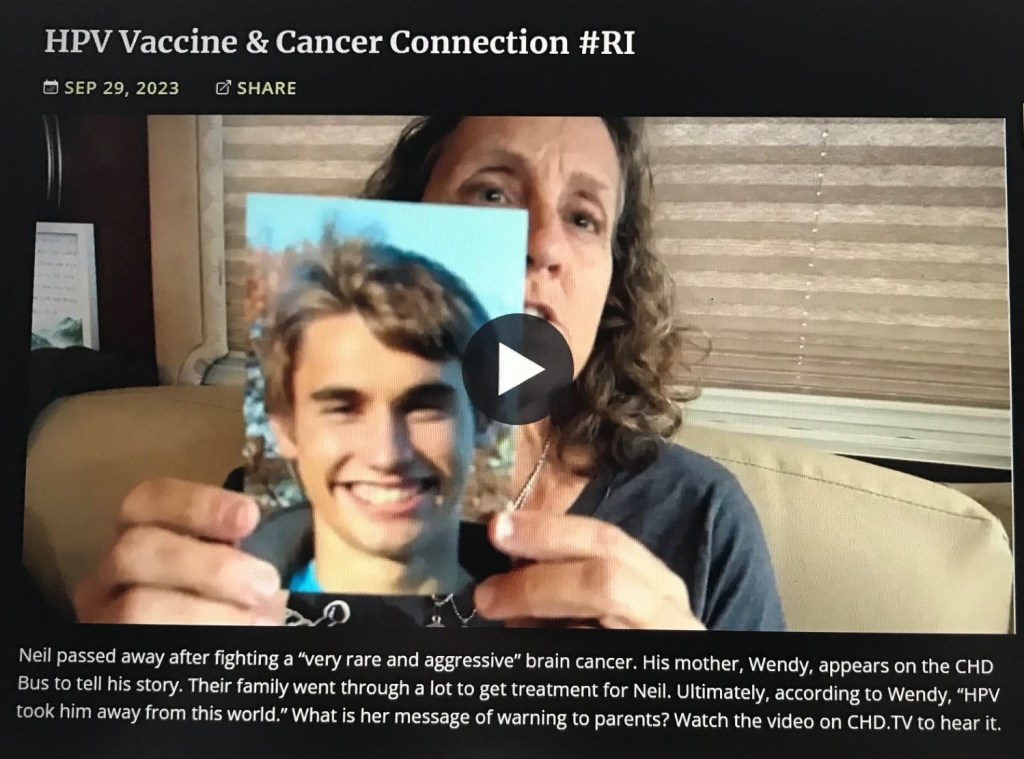
In the Vax-Unvax book there is a chapter about HPV Vaccines, which states the following:

“The 2012 Vaccine Adverse Event Reporting System (VAERS) data showed that more serious adverse reactions were attributed to Gardasil than all other vaccines, with Gardasil accounting for more than 60% of the total. The Gardasil vaccine also accounted for 63.8% if all deaths, 61.2% of all life-threatening reactions, and 81.8% of all cases of permanent disability recorded in the CDC VAERS data.”

Let this fact sink in: more adverse reactions than all other vaccines. Gardasil is Merck’s #2 selling product, and Keytruda (a.k.a pembrolizumab), a drug used to treat cancer, is the company’s #1 product. Keytruda has such a long list of ugly common side effects, I question how anyone would want to take it.

Merck and GlaxoSmithKline bring in over $2.5 billion in annual sales for HPV vaccines, and the U.S. government has given these companies blanket liability protection. While the companies claimed the vaccines provided protection against cervical cancer, the clinical trials failed to demonstrate this claim. The HPV Vaccine on Trial exposé shares trial data and reports of women harmed by HPV vaccines.

The CHD bus continued across the country collecting stories to share in its new documentary VAXXED III: Authorized to Kill. The film premiered last week in select theaters. It is a brilliant and stunning piece of journalism. It will be released to the online public on October 4. It presents people’s testimonies of real experiences with C0VID vaccine injuries and deaths, as well as stories of hospital measures that led to unnecessary deaths for the unvaccinated. Currently, the C0VID mRNA spike protein shots, approved for use by the FDA in 2021, now have more adverse event reporting than all other vaccines.

So what comes next? How do we help the children who have been injured, and how do we help everyone else? We take back our health care sovereignty, and we learn how to heal ourselves. The human body has the amazing ability to heal itself when we give it proper support.

I attended the VAXXED III film premier with a group of women who work on the leading edge of care and are proving our children can get better. They provide guidance and natural solutions that are less toxic, less expensive, kinder to the body and more effective. One of these women, Maria Rickert Hong, is a co-founder of Documenting Hope https://documentinghope.com/ and Epidemic Answers https://epidemicanswers.org. These websites provide knowledge for alleviating or even reversing the damage that’s been done. For those of you who, like me, are fighting for kids diagnosed with terminal cancer, please watch Rickert Hong’s interview with Nasha Winters, ND, Lac, FABNO, the best-selling author of The Metabolic Approach to Cancer, about supporting the health of kids with cancer. Winters was diagnosed with Stage 4 Ovarian Cancer at the age of 19. She managed to save herself, and, thirty years later, she is alive and well and helping others in her role as a Naturopathic Oncologist. Documenting Hope will help you find answers for treating autism and other debilitating diseases.

Please check out our DIPG Book web page and all the other links provided in this blog. Open your eyes. Real Eyes Realize Real Lies. We must seek beyond wikipedia and google, and beyond the mainstream media reporting and the agency information controlled by Big Pharma and unelected government technocrats who abuse their power.
For Our Children (Part 1)

Cancer is the leading disease-related cause of death among children.

My journey of awakening: A few years after receiving an MBA, I earned my license to sell health insurance. Then I worked for three years as an independent agent, representing four large health insurance companies (Blue Cross, United Health, Tufts and Aflac), and I read a lot.

I read health articles about increases in obesity and incidence of autism, ADHD and diabetes among children. Having a father suffering from heart disease and a mother-in-law fighting stage 4 cancer, I also read about these diseases. And, I came to understand how the increasing usage of medical services was driving up insurance costs.

As a number cruncher, I analyzed the double-digit increases in premium costs year-over-year. These increases surpassed inflation and pay raises, by an order of magnitude in one client case that I clearly recall. Higher insurance costs were placing a greater financial burden on small businesses and their employees. This translated into more stress and more dis-ease. I envisioned our economy being pulled into a downward spiral.

The medical insurance system was an economic disaster in the making, and, in good conscience, I could no longer participate in the “system.” I left my job in medical insurance to work with urban school children in “out of school time” (OST) programs, with the intention of helping “insure” their long-term well-being through physical activity, healthy behavioral habit development and social-emotional learning, through fun activities, mostly outdoors. I sought to address the root cause of poo health.

During my first summertime youth enrichment program (2012), I witnessed the highly-processed, starchy foods being served for school breakfasts and lunches, including sugary cereals, mealy apples and gluey white bread sandwiches that stuck to the roof of the mouth. The sandwich had one wafer-thin piece of process meat and no lettuce. I took one bite and threw it in the trash can.

My youth work experiences compelled me to write articles about children’s health for a local magazine, Natural Awakenings, and my own awakening evolved. The revelations kept coming…

And WHOMP! In 2016, the most unthinkable happened. Our teenage son, Neil, was diagnosed with terminal DIPG brain stem cancer. The oncologist told him he had three months to live, maybe six, if he were to undergo radiation. Neil, my husband and I sat there in disbelief. How could this possibly have happened to an athletic child who had been perfectly healthy one year earlier?

Statistically, the DIPG diagnosis had a one in a billion chance of happening to any child, healthy or immune-compromised. The oncologist could not say what caused DIPG. She conducted a physical exam, and she asked a few questions. She asked Neil when he’d had his last bowel movement, and he could not remember. One week? Two weeks? Yikes! I got stuck in that moment, while the oncologist breezed on ahead with more questions.

Finally, the doctor delivered her recommendations – dexamethasone, a tissue biopsy and radiation therapy (drugs, surgery, radiation) – “standard of care” for DIPG. Clearly, she had no schooling in gut health and nutrition, and this was a blinking yellow light for me. Caution! Caution! Slow down! Wait. Stop right there!

Thus began our real journey of awakening. Stay tuned for additional blog entries, and check out our book.

What is a rare cancer?

In 2016, our son, Neil, was diagnosed with Diffuse Intrinsic Pontine Glioma (DIPG), a “rare cancer.” With DIPG Awareness Day coming tomorrow, I got to wondering what “rare” means in this context. Here is what I found on the National Cancer Institute (NIH) website – MyPart:

“Rare cancers are those that affect fewer than 40,000 people per year in the U.S. As a group, they make up just over a quarter of all cancers. Because rates of cancer in children are very low, all children’s cancers are considered rare. A quarter of all cancer deaths each year are due to rare cancers. Although new treatments are always being developed, finding new treatments for rare cancers is very hard for many reasons.”

Over a quarter of all cancers are rare. So, then I got to wondering, how many rare “brain cancers” are there? Here is what I read on the NCI website – NCI-Connect:

“There are over 130 different central nervous system (CNS) tumor types. However, they account for less than two percent of all cancers diagnosed each year in the United States. Because primary CNS cancers are so rare, disease information, support, and expert care can be hard to find. NCI-CONNECT started with 12 select tumor types, each with fewer than 2,000 people diagnosed per year in the United States.”

DIPG is among the rarest and deadliest of these cancers, with only about 300 children diagnosed per year. For a 19-year-old to be diagnosed with DIPG is beyond rare; it’s unique.

The MyPart page explains what a “rare” diagnosis means for patients:

  • It often takes a long time from the time you think something is wrong to the time when doctors know that you have a rare cancer and what kind of cancer it is.
  • It is hard to find doctors who know a lot about your cancer and how to treat it.
  • It is hard to know what to do when doctors don’t agree on how to treat your cancer.
  • You may need to travel far from your home and family to get treatment for your rare cancer.

It took five months from the onset of initial symptoms for doctors to arrive at a cancer diagnosis. From the moment our son was told that he had a “rare” brain stem tumor, we had to contend with the other three challenges. When the oncologist went on to say that the cancer was aggressive, inoperable and incurable, and Neil had maybe only three months left to live, we understood all to well what “rare” and “deadly” meant.

Cancer is but one category of “rare” diseases. So how many “rare” diseases are known to exist and how many people can relate to our situation? The National Library of Science website reports:

Regulators, scientists, clinicians and patient advocacy groups often cite ~7,000 as the number of rare diseases, or between 5,000 and 8,000 depending on the source.

To date, approximately 300 million people live with “rare” diseases, according to The Lancet, which means pretty much everyone knows someone and can relate. Treating a rare disease requires personalized therapy, yet our rigidly-controlled medical system, with its overbearing clinical trial drug approval process, prevents this from happening. Our conventional system is completely dysfunctional when it comes to helping people diagnosed with rare diseases. Is there anything we can do to challenge the current system and improve how we come to understand and treat rare diseases?

Yes! My husband, Dean, is publishing our son’s story, DIPG: Eternal Hope vs. Terminal Corruption to help people begin to explore and discuss this topic. Available by July 2024, our family’s personal narrative offers a compelling illustration. Please visit our web page and share this blog, which can serve as a forum for readers to exchange their thoughts, experiences and suggestions. Together, we could create one heck of a virtual book club. Refer the “Suggested Reading” list we provide. The first book on that list is Defeat Cancer. If you are interested in joining a “rare” book club, please contact us.

Healthy Lawns, Healthy Pets, Healthy Kids, Healthy Families

September is Lymphoma Awareness Month: time to dispose of weedkillers containing glyphosate (such as Roundup), which are known to cause non-Hodgkins lymphoma, and about healthier alternatives.

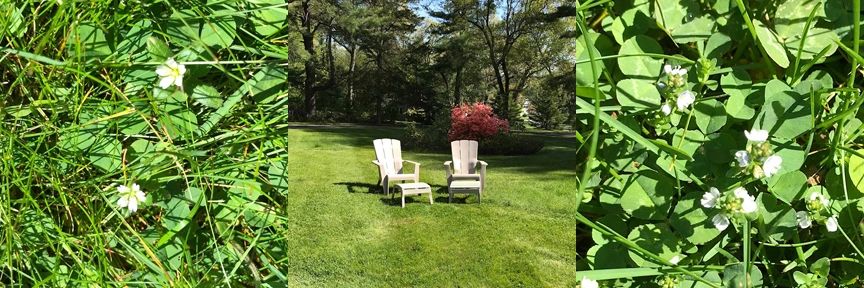
We stopped using herbicides and pesticides on our lawn over twenty years ago, and it is still green and lush. If you take a close look at our lawn, you will see Dandelions, Violets, Cinquefoil, Chickweed (left), Sweet Clover and Veronica (right) and more. Some of these “weeds” are highly nutritious and medicinal, and they represent the biodiversity that makes nature so resilient.

A lawn that grows only one species of plant, such as Bluegrass, is called a monoculture. It lacks diversity, and it is a wasteland for pollinators. It lacks nourishment – no flowers, no pollen and no nectar essential for sustaining wild bees, honey bees, butterflies and other pollinators. Furthermore, maintaining the perfect monoculture lawn requires the application of chemicals, including herbicides to eliminate all other plant life and pesticides to eliminate insect pests. These chemicals are harmful to pollinators, as well as pets and children. They also pollute groundwater and run off into streams and rivers, where they cause harm to fish, birds and other wildlife. So why use them? 

If weeds truly bother you, try these safer alternatives solutions, presented by Drugwatch. I love my weeds, however, I will use mulch to keep them out of my garden beds.

Reduce yard labor, save money, and create a safe and healthy outdoor space for pets, kids, wildlife and you. Check out these Story Walking Radio Hour podcasts.

Pesticide Free Parks, Lawns and Gardens

Lawns into Meadows: Rebuilding Biodiversity

Wild Weed Wisdom: Gather and Give

Dispose of lawn chemicals properly. Rhode Islanders can take their hazardous waste to the Eco-Depot. Where can you take it where you live?

Game Boy

On February 19, 2017, our Jester, Neil Fachon, crossed over into another realm. The first condolence letter to arrive was from Neil’s friend Trey, whose mother, Gail, was our home care nurse. Trey captured memories of Neil’s love of game play in a long letter. He placed the letter inside a note card. On the face of the card was an original photograph Trey had taken of flowering dogwood. The image was fitting, as every spring a dogwood tree would bloom outside the bedroom window where Neil sat at his computer.

Although Neil and Trey grew up in different towns and attended different schools, they had a friendship that began with recreational soccer when they were grade-school age and continued on into their college years.

So, what does one say or write to a bereaved family? How does one find the right words? Trey just allowed the words to flow and filled two folded sheets of lined paper, with his neat all-caps style of handwriting. His thoughts and memories poured out onto the pages in a fluid stream of consciousness…

DEAR MR. FACHON, MRS. FACHON, AND EVIE,

I WOKE UP THIS MORNING AT ABOUT 7:45 A.M. AND JUST LIKE ANY OTHER DAY, I CHECKED MY EMAILS, LOOKED AT THE NEWS, AND PEEKED AT MY FACEBOOK ACCOUNT. I STARTED SCROLLING DOWN MY HOME PAGE, STOPPED SCROLLING ABRUPTLY, AND SAW “A WISE OLD SOUL HAS RETURNED HOME… NEIL PASSED AWAY JUST AFTER 7 P.M. LAST NIGHT.” OVER THE PAST 6 MONTHS OR SO, I HAVE BEEN GETTING CONSISTENT REPORTS ON NEIL’S WELL-BEING (NEIL WAS THE FIRST ONE I STARTED CHECKING IN WITH, AND THEN LATER MY PARENTS WERE UPDATING ME)…WHEN I SAW THAT FACEBOOK POST (HAVING ALREADY KNOWN NEIL WAS NOT DOING WELL AND WAS IN HOSPICE CARE), I DIDN’T KNOW HOW TO REACT. I WAS SAD, DISTRAUGHT, PERPLEXED, AND FRUSTRATED WITH MYSELF (FOR NOT HAVING BEEN ABLE TO HELP, BEING HERE IN PENNSYLVANIA). HOWEVER, IN THE MOMENT, I DECIDED TO BE CONSTRUCTIVE AND TO BROWSE OVER MY HISTORY WITH NEIL. FOLLOWING IS A LIST OF SOME OF THE BIG THINGS THAT HAVE STUCK WITH ME: PLAYING DODGEBALL WITH NEIL’S FRIENDS AND NEIL IN THE BASEMENT OF THEIR HOUSE ON ASHBROOK RUN, PLAYING H-O-R-S-E WITH THE BASKETBALL HOOP OUTSIDE YOUR HOUSE (NEIL WAS ALWAYS VERY TALENTED AT IT; I WOULD SOMETIMES TELL HIM IT WAS LUCK, BUT HE’D KEEP MAKING THE SHOTS), PLAYING RECREATIONAL AND COMPETITIVE SOCCER WITH NEIL (INDOOR/OUTDOOR) THROUGHOUT MY YOUTH (NEIL WAS ALWAYS A TEAM PLAYER; ALWAYS ONE TO PASS THE BALL AND GIVE SOMEONE ELSE A CHANCE), PLAYING SOCCER FOR PRACTICE IN OUR BACKYARDS, GOING OUT FOR SOME SAILING ADVENTURES ON “QUANTUM LEAP” IN POINT JUDITH POND (NEIL WOULD ALWAYS LOVE TO PLAY HEARTS (AND OTHER CARD GAMES WITH ME IN THE CABIN AND SEE IF HE COULD “SHOOT THE MOON” AGAINST ME), PLAYING “BACKYARD SOCCER’ WITH ME ON HIS COMPUTER (WE WOULD ALWAYS BE OVERJOYED AND OVERCOME WITH LAUGHTER WHENEVER WE SCORED SOME ‘IMPOSSIBLE’ GOALS), PLAYING POOL IN MY BASEMENT (WITH LIMITED ROOM TO MAKE A SHOT AND WITH SOME BENT POOL STICKS – NEIL DIDN’T WORRY ABOUT THOSE SMALL THINGS; HE WAS JUST GLAD TO BE DOING SOMETHING FUN FOR BOTH OF US). THOSE ARE SOME, BUT NOT ALL, OF THE MEMORIES THAT HAVE DEFINED MY FRIENDSHIP WITH NEIL. HE WAS ALWAYS A LEADER, ALWAYS AN ACTIVIST, ALWAYS ATHLETIC, ALWAYS A TEAM PLAYER, ALWAYS THOUGHTFUL, ALWAYS BOLD AND ADVENTUROUS, ALWAYS STRONG, ALWAYS PASSIONATE, ALWAYS FORGIVING, ALWAYS CHEERFUL, ALWAYS CLEVER, ALWAYS ABLE, ALWAYS WELL-READ, ALWAYS A FIGHTER, AND MOST IMPORTANTLY TO ME, ALWAYS A FRIEND. EVEN THOUGH THERE WAS A TIME WHERE ADVENTURES LED US IN DIFFERENT DIRECTIONS, THERE HAS NEVER BEEN AND NEVER WILL BE A TIME WHERE I HAVE FORGOTTEN OR WILL FORGET NEIL, AND ALL THE JOY AND HAPPINESS HE HAS BROUGHT TO MY LIFE THROUGH OUR FRIENDSHIP. NEIL WILL FOREVER BE WITH ME IN SPIRIT. I WOULD LIKE TO SINCERELY THANK ALL OF YOU FOR LETTING ME KNOW AND BECOME FRIENDS WITH SUCH A CARING AND GENUINE MAN. I WOULD LIKE TO GIVE THE MOST SINCERE OF CONDOLENCES TO EACH OF YOU. WHAT GIVES ME COMFORT IS KNOWING THAT NEIL’S LIFE AND EVERYONE’S MEMORIES OF NEIL SHALL NEVER FADE. EACH PERSON WHOM NEIL HAS TOUCHED IN HIS LIFE WILL BRING NEIL IN SPIRIT WITH THEM IN THEIR EXPERIENCES AROUND THE WORLD. NEIL WILL BE LIVING VICARIOUSLY THROUGH EACH AND EVERY ONE OF US. JUST BECAUSE NEIL HAS PASSED DOES NOT MEAN THE CELEBRATION OF HIS LIFE IS OVER. RATHER, THE CELEBRATION OF HIS LIFE HAS MERELY HIT A NEW PHASE, ONE IN WHICH MEMORIES OF HIM AND WITH HIM WILL LIVE ON FOREVER.

BY YOUR SIDE IN THOUGHTS AND PRAYERS,

TREY 20 FEBRUARY, 2017

This letter brought immediate comfort and some laughter. Trey mentions “SHOOT THE MOON” and ‘IMPOSSIBLE’ GOALS. Shooting the moon is what one tries to do when dealt a really lousy hand of cards in the game of Hearts. It’s risky, yet fun. One plays to win all the hearts and the queen of spades. He who successfully shoots the moon is the biggest winner. If Neil’s life was just a game, shooting the moon was the best metaphor to describe his approach to that game.

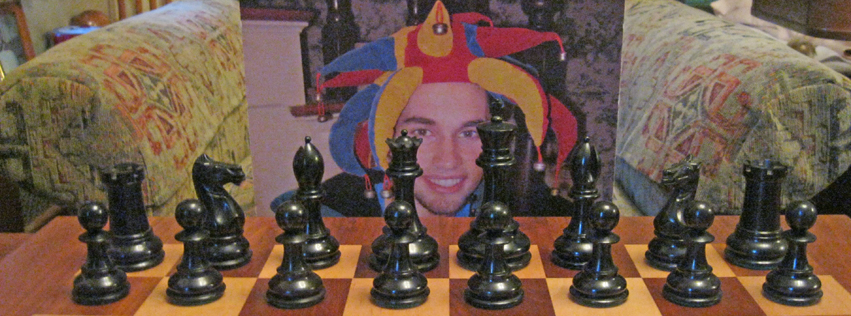
Neil was named, in part, for Neil Armstrong, the first astronaut to step on the moon. At the time of his naming, we were unaware that the name Neil means champion. He had a strategic mind, which he used to his advantage in competitive chess and tennis, however, he was game for any game.

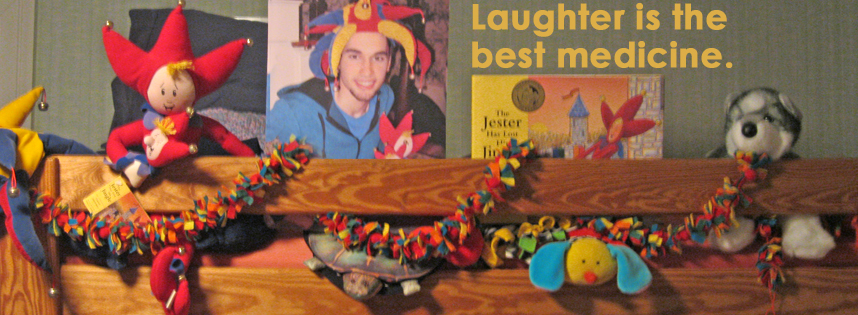
Neil’s playful spirit reflected the rhyme from a favorite story book, The Jester Has Lost His Jingle: “But one was still happy and bubbled with joy, for he played with life as you play with a toy.” We continue to honor Neil, by raising funds in his memory to The Jester & Pharley Phund. which delivers Jester books, dolls and joy to pediatric cancer patients and other children facing a wide range of other serious life challenges.

Be a Difference Maker!

Student Leadership Training Program (SLTP) founder, Jim Fitzgerald emphasized service, “A big part of everyday is spent building character and those efforts culminate on Friday with our service project. For the last few years that project has been to decorate hats to provide to hospitals to give to kids.” The service project centered around David Saltzman’s magical children’s book, The Jester Has Lost His Jingle. which has been a part of the SLTP program since it’s publication in 1995.

Saltzman was an English and art major at Yale University, diagnosed with cancer during his senior year. For the next year-and-a-half, he kept a journal of his thoughts and drawings while completing The Jester Lost His Jingle and other stories. David Saltzman died 11 days before his 23rd birthday. Five years later, his parents published The Jester Has Lost His Jingle and printed 10,000 copies to give to hospitalized children. The book imparts lessons of hope, humor, encouragement and charity. David’s parents also established the Jester & Pharley Phund, a non-profit dedicated “to bringing the joy of laughter and the love of learning to all children, especially those who may be ill or have special needs.”

Regarding the SLTP service project, Jim explains, “It is a defining time for our kids,and we celebrate their feelings by sharing David’s wonderful story about choices and the meaning of love. The group explores the concept of service and how to make it more meaningful and less of a chore.” At the end of the difference maker workshop, each student receives a large, decorative safety pin with a jingle bell to wear at future SLTP events. “We tell them,” says Fitzgerald, ‘When you hear the bell jingle, you need to remember: It’s up to YOU to make a difference. It’s up to YOU to care.’”

Many SLTP students returned to their high schools and implemented The Jester & Pharley Phund’s Reading To Give program in their local elementary schools. Neil Fachon volunteered to lead the program in East Greenwich. He teamed up with other SLTP alumni, planned meetings, coordinated the paperwork, helped present dramatic readings of the book to elementary classrooms and enrolled the younger students in read-a-thons to raise money for giving Jester books and dolls to pediatric cancer patients at nearby hospitals. He also helped thread beaded jingle bells to give out as a reminder of the Jester and his joyful spirit.

Four years later, when Neil was hospitalized for brain surgery and later pneumonia, I wore the jingle pin he had made everyday. One unforgettable character in The Jester Has Lost His Jingle is a little girl lying in a hospital bed with her head wrapped in a bandage. The jester visits her room, talks with her and tries to cheer her up. It is the most precious moment of the story. It is where the Jester discovers he still has his jingle – his ability to bring joy to others.

Many people are unaware that when a child has a serious illness, his or her life can become depressingly isolated. Some children are so sick they are unable to go to school and be with their friends. It is easy for the kids at school to forget about the friend who is not present. While siblings, parents and caregivers do their best to tend to the well-being of a pediatric cancer patient, that patient sorely misses the company of friends. Friends are special! Friends are the jesters of life!

Since Neil’s passing on February 19, 2017 from DIPG brain cancer, $20,401 in cash and in-kind contributions have been given in Neil’s memory to The Jester & Pharley Phund to help bring joy and laughter to hospitalized children. These kind gifts have resulted in the donation of 577 Jester books and 448 Jester dolls and 4 Jester Educator Enrichment Manuals to hospitals, as well as the donation of a Smile Cart to Camp Sunshine, along with 36 Jester books, 2 Jester dolls and 2 PhunBooks.

The Jester Has Lost His Jingle is Dream Visions 7 Radio’s February Kids Book-of-the-Month. For every $10 donation in Neil’s memory, The Phund will be honored to donate a copy of “The Jester Has Lost His Jingle.” The donor and Neil will be acknowledged in a bookplate. You may want to order a copy for a special child in your life; this book is inspirational for students or for anyone of any age who could use a mood booster. Donations and personal orders can be made online at www.thejester.org or checks may be mailed to The Jester & Pharley Phund, P.O. Box 817, Palos Verdes Estates, CA 90274. Donors may also contribute by calling 310-544-4733. Be a difference maker, give the gift of joy and laughter to someone in need.

The Devil in the Detail

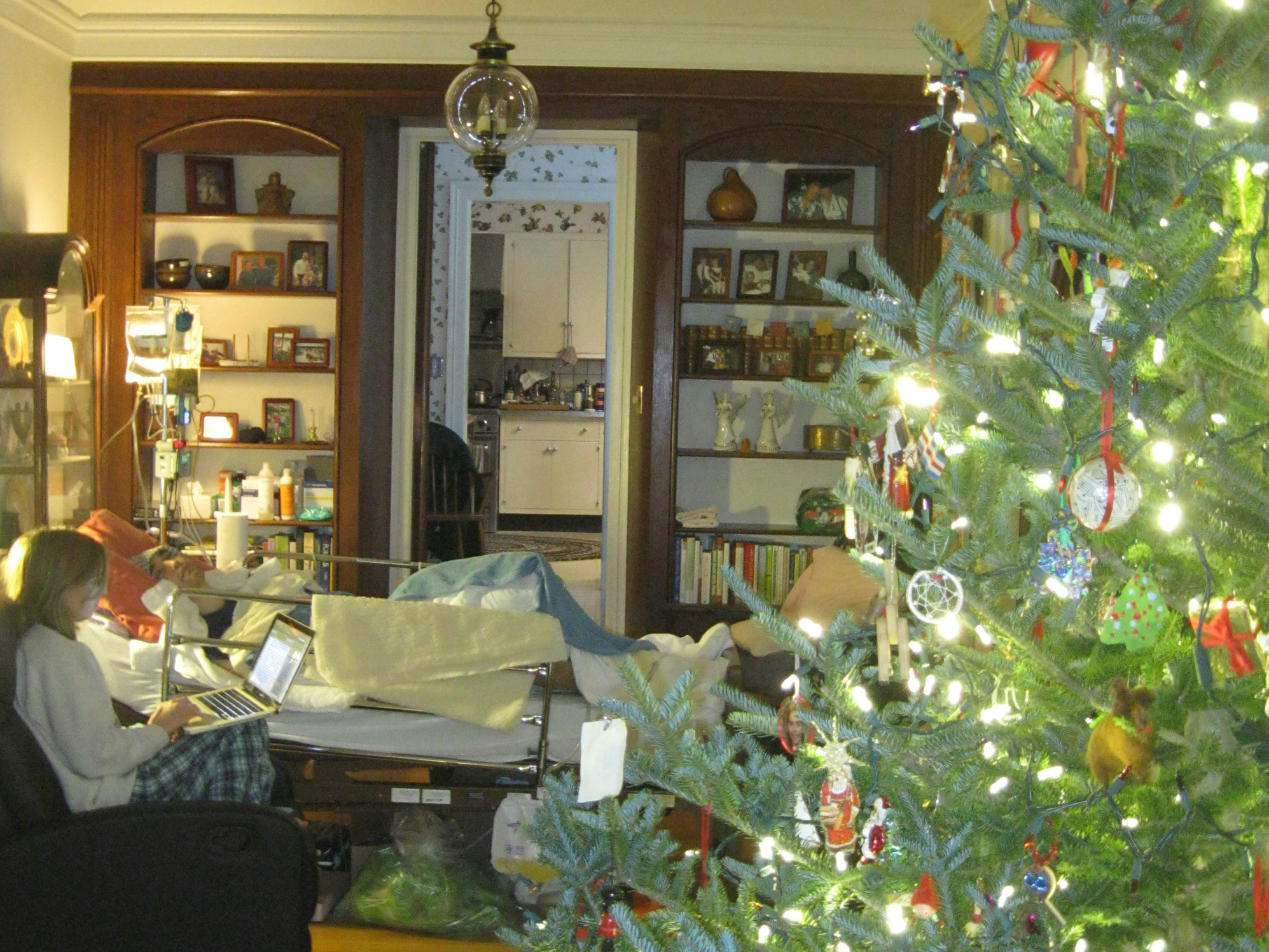
In preparation for Neil’s return home from the hospital, we had rented a hospital bed and positioned it to face a freshly-cut Christmas tree. We had to establish new home routines, since Neil was now bedridden. We had converted the rest of the dining room into a private hospital ward. We stocked the dining room shelves with towels and hospital supplies and stowed bulkier items under the bed – a carton of feeding formula, disposable bed pads, a package of Depends and a giant bag of mouth swabs.

Dr. B. had given us a plan for gradually resuming Neil’s therapy infusions, and there was a tangle of tubes and bags to organize and manage. Dean set up a pole behind the bed for hanging ANP bags and the Liquid Hope feeding formula bag, along with their associated tubing and pumps. Liquid Hope is not a product provided by hospitals. It is a special formula made with real whole food ingredients. Unlike standard hospital formula, it is a plant-based organic product, that is corn-free, soy-free and GMO-free. Before ordering it from the manufacturer ourselves, we had to demonstrate to the hospital nutritionist that it was nutritionally complete and met their dietary guidelines.

Syringes, spring water, a suction pump and hand sanitizer sat on the table next to Neil’s bed. In between ANP cycles and Liquid Hope meals, we used a syringe to provide Neil with water through the percutaneous endoscopic gastrostomy (PEG), a flexible feeding tube that had been surgically placed into Neil’s stomach before we left the hospital. We ground up his pills and dissolved them in small amounts of water, which we pulled into the syringe, measuring and delivering the fluids through the PEG. We used the suction device, with its tube and attachments, to keep Neil’s throat clear of phlegm. It was a noisy machine, yet it worked as needed. Dean handled suctioning during the day. Evie and I took turns during the night, while sleeping vigil on a living room couch.

Maintaining the proper amount of water was a challenging trial and error process. Since Neil was no longer able to self-regulate his water intake, we had to try our best to regulate it for him. In mid-December Neil was again at Death’s doorstep, because his potassium had dipped dangerously low and his sodium had risen alarmingly high. As we were updosing the ANPs, the blood test results that informed us of this were delayed, delivered over three days after the blood had been drawn. We relied on a phlebotomist to perform daily home draws and next day results to properly monitor Neil’s blood levels.

Dr. Burzynski provided us with a prescription for a liquid potassium supplement. The only liquid potassium supplements available at the pharmacy were formulated with added sweeteners and colored orange with chemical dyes, ingredients known to promote cancer. This product was the only option available.

We kept detailed records of all the fluid going in – ANP infusions, Liquid Hope, potassium and water – and all the fluid going out. An indwelling Foley catheter steadily filled the urine bag hanging off the end of the bed frame and every time we emptied the bag we recorded the amount. We also tracked vital information with a pulse oximeter, a device that clips onto the finger and monitors blood oxygen saturation and pulse.

The visiting nurse in charge of Neil’s case, Gail from South County Hospital Health, was a dear friend dedicated to his care. Neil had grown up playing soccer with Gail’s son, Trey. Gail coordinated a wonderful team of home care specialists for Neil. Erin, the physical therapist had been helping Neil with balance and strength since September. Now she focused on maintaining the range of motion and circulation in his legs, and she showed me how to massage his feet and legs and manually rotate the joints of his ankles, knees and hips. Donna, Neil’s occupational therapist, had been helping with hand and arm coordination. Julia, a speech therapist, helped troubleshoot swallowing issues. Pam, the home health aide, came three days a week to spend an hour assisting Gail or us with Neil’s personal hygiene and bed sheet changes. And Jaymi, the alternate nurse filled in when Gail was unavailable.

Transporting Neil to MGH for neurological assessments was far too complicated, so we recruited a close friend, Dr. Achina Stein, DO, DFAPA, ABIHM, IFMCP, and her associate Sally Davidson, RN, MS, ANP-BC, IFMCP onto the team, as alternate sub-investigators. They graciously agreed to doing house calls and neurological assessments. Urologist Drew Tompkins was another valuable member of home care our team. We were truly blessed with the best home care support one could expect given the circumstances. This compassionate team of nurses, practitioners, aides and doctors took us under their wings and taught us an unbelievable amount in a relatively short span of time.

When not coordinating practitioner visits, I was moving constantly back and forth between the kitchen and the dining room – checking on Neil, monitoring apparatus and managing water, food, supplements and medicine. Moving in a clumsy hurry one day, I managed to pinch my left thumb as the door swung shut. The bruise that grew from the base of the thumbnail took the shape of a tiny wrench squeezing a tiny heart and producing a teeny drop of blood. My body seemed to be expressing outwardly the heart-wrenching feeling I was suppressing deep down within.

Neil could no longer walk nor dance nor sing nor talk. He could no longer eat nor drink nor grin nor laugh out loud. Yet, his heart was strong, his mind was sharp, and his eyes could speak. He was entirely present, he still had his sense of humor, and together we all called upon the Jester’s positive spirit to lift us up through the holiday season:

Whenever I feel like crying,

I smile hard instead!

I turn my smile upside down

and stand it on its head!

The rhyme is from The Jester Has Lost His Jingle, an uplifting children’s book by David Saltzman. Purchases support the Jester & Pharley Phund, which donates copies of the book and jester dolls to hospitalized children. The imaginary jester was Neil’s constant companion.

This post is an excerpt from Neil’s DIPG story, a work-in-progress. To put this chapter into context, this all happened in December 2016. Indomitable in spirit, Neil had survived six months beyond his three-month prognosis. I write this to raise awareness about the realities of pediatric brain cancer and to share what went on behind our family’s doors. While these words describe our experience at this stage in the progression of this disease, another family’s telling will differ greatly. I am interested in those stories, because they may hold valuable gems of information. The telling is always hard, and the memories difficult to revisit. For me, the writing process is strangely therapeutic, bringing with it a release of emotions.

I welcome editorial comments and reader reactions to this draft.

Evie hanging out with Neil

One Voice in a Sea of Voices

     Neil’s young voice was one of many to speak out about DIPG Awareness and Childhood Cancer in general. This week a few more voices are striving to be heard in Washington, D.C. Three days ago, the DIPG advocacy group issued a press release. The header expresses a sense of urgency – A Moonshot for Kids: DIPG Awareness Resolution H.Res.69 Runs out of Time as Childhood Cancer Advocates Return to Capitol Hill. It continues:

     “Since the DIPG Awareness Resolution was first introduced in January of 2016, roughly 1200 more children have died of the deadly brain cancer while the bill has had no attention from House Leadership despite growing support nationwide. The DIPG Advocacy Group returns to fight for this bill which boldly confronts the lack of human values in the medical research industry.”

It concludes with the strong voice of a mother, Janet Demeter, who lost her child, Jack, age 4, to DIPG:

      “…it [DIPG] exemplifies in a powerful way the marginalization of childhood cancers and lack of funding for research. Every child’s life deserves hope, but there is none for these children with DIPG. The first iteration of this bill we used to call, ‘Moonshot for Kids.’ Most experts familiar with the disease agree that, if they could find the cure to this one, they might just find the cure to brain cancer. I know they can if science put a man on the moon 50 years ago.”

     To put this into perspective, according to the American Society of Clinical Oncology (ASCO), while about 3,560 children will be diagnosed with a brain or central nervous system (CNS) tumor this year, it is estimated that 16,830 adults (9,490 men and 7,340 women) will die from primary cancerous brain and CNS tumors. DIPG, one of the deadliest pediatric diseases with a dismal less-than-1% survival rate, has an average age of incidence between 5 and 9 years old. Diagnosed at age 19, Neil was even more of an outlier. He sat on the cusp of childhood and adulthood, just old enough to make his own bold decisions regarding treatment and to clearly articulate the experience of the disease. When DIPG robbed him of his ability to speak and to write about the experience, he spoke to us with his eyes, and this we documented with a few telling photographs.

     Stories show far more than statistics, and the sea of voices telling the stories intend to create a big wave. I can imagine Neil’s spirit, riding the crest with a whole bunch of younger souls, all destined to create a sea of change. That is the objective of my writing and sharing his story.


Words Matter

     Words matter. Through voice, we speak words to instantly transmit positive thoughts, encouragement, comfort, love and joy. Through writing, we use words to share valuable information, to describe transformative ideas and to compose inspiring stories. I write for Rhode Island NATURAL AWAKENINGS magazine, because the focus is upbeat – Healthy Living Healthy Planet – and my words go out to over 50,000 readers. More recently, I’ve been working on the story of our late son, Neil, who was, and still is, an enthusiastic and conscious communicator, taking care in choosing just the right words.

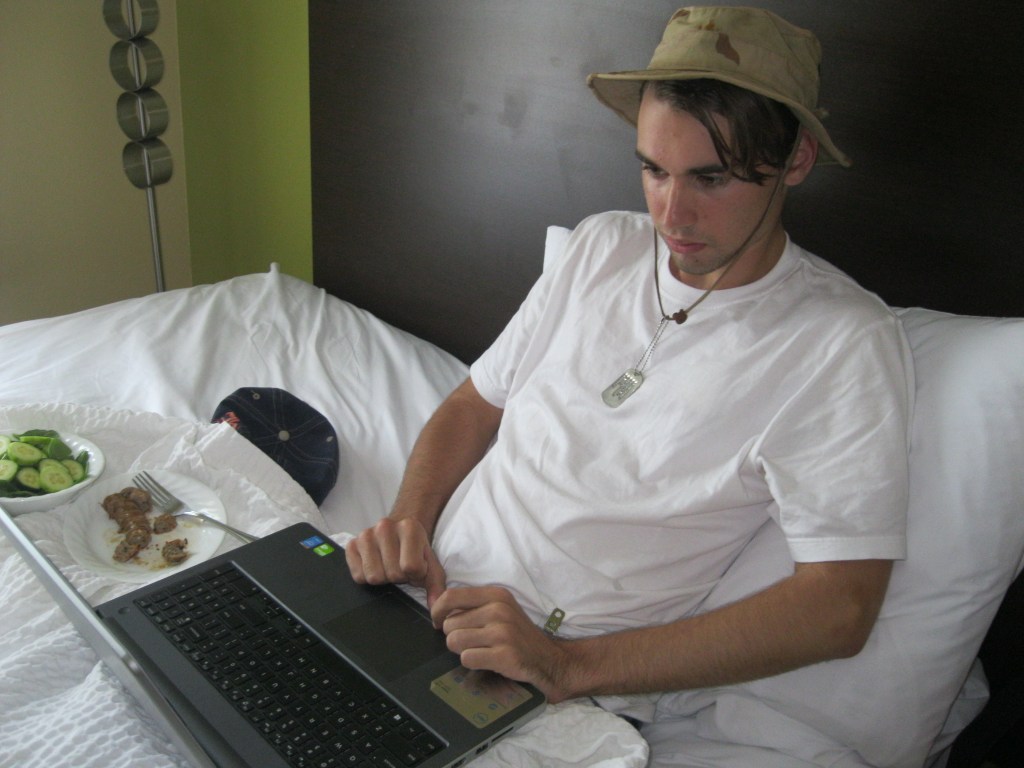
Neil, 19, resting in his Houston hotel room with his laptop, writing a petition to solicit support for his right to continue trying the experimental treatment of his choice. He is wearing a boonie hat and dog tags given to him by a friend who served in the Army Special Forces.
Neil composing words in the fight for his Right to Try

     “Neil had a unique voice, his own way of expressing his life experiences, character, thoughts and feelings. That was until a tumor started to grow inside his brain and gradually took away his ability to write and then his ability to speak. The name of the disease, diffuse intrinsic pontine glioma, is a strange string of uncommon vocabulary words. It is better known by its acronym, DIPG. Diffuse means the tumor is dispersed throughout the tissue, as opposed to being a solid tumor. Pontine refers to a part of the brain stem known as the pons, which relays messages between several areas of the brain and between the brain and the rest of the body. Without the pons, the brain would not be able to function, and neither would the body. Intrinsic means deep-seated. Each of these words means the tumor is inoperable. Glioma refers to the glial tissue that is supposed to support and protect the nerve cells, only in the case of DIPG, the glial cells grow out of control and strangle the nerve cell pathways. DIPG gradually takes away all physical abilities, except the ability to think. Throughout the progression of the disease, Neil remained conscious of everything that was happening, and somehow managed to accept it all with grace.

     “Do people realize how blessed they are to have a voice? Since Neil is no longer able to share his story, his thoughts about life and his dreams for the world, I’m here to do it. Things happened in Neil’s life that other kids need to know about in order to help make this world a better place. As Neil’s mom, I’m able to access a lot of material and will share as much as I can in Neil’s own words and the words of the friends, family, coaches and teachers who knew him best. Neil loved a good story, and if Neil’s story and his thoughts about life make people think, and think about their own stories differently, then I will have done my job well.”

     I welcome blog readers to engage and share the thoughts sparked by these words. Words are expressions of thought. Words and thoughts are influential. I dream of empowering more young people, like Neil, to share their ideas, stories and dreams for a better world. Read Neil’s story in the Boston Globe.