
September is Lymphoma Awareness Month: time to dispose of weedkillers containing glyphosate (such as Roundup), which are known to cause non-Hodgkins lymphoma, and about healthier alternatives.
We stopped using herbicides and pesticides on our lawn over twenty years ago, and it is still green and lush. If you take a close look at our lawn, you will see Dandelions, Violets, Cinquefoil, Chickweed (left), Sweet Clover and Veronica (right) and more. Some of these “weeds” are highly nutritious and medicinal, and they represent the biodiversity that makes nature so resilient.
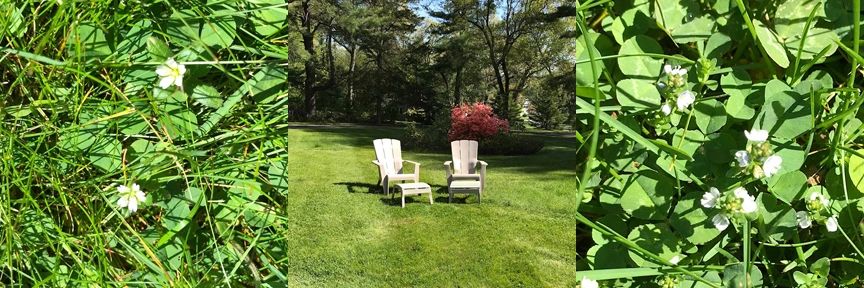
A lawn that grows only one species of plant, such as Bluegrass, is called a monoculture. It lacks diversity, and it is a wasteland for pollinators. It lacks nourishment – no flowers, no pollen and no nectar essential for sustaining wild bees, honey bees, butterflies and other pollinators. Furthermore, maintaining the perfect monoculture lawn requires the application of chemicals, including herbicides to eliminate all other plant life and pesticides to eliminate insect pests. These chemicals are harmful to pollinators, as well as pets and children. They also pollute groundwater and run off into streams and rivers, where they cause harm to fish, birds and other wildlife. So why use them?
If weeds truly bother you, try these safer alternatives solutions, presented by Drugwatch. I love my weeds, however, I will use mulch to keep them out of my garden beds.
Reduce yard labor, save money, and create a safe and healthy outdoor space for pets, kids, wildlife and you. Check out these Story Walking Radio Hour podcasts.
Pesticide Free Parks, Lawns and Gardens
Lawns into Meadows: Rebuilding Biodiversity
Wild Weed Wisdom: Gather and Give
Dispose of lawn chemicals properly. Rhode Islanders can take their hazardous waste to the Eco-Depot. Where can you take it where you live?

 Wendy Nadherny Fachon