For Our Children (Part 1)

Cancer is the leading disease-related cause of death among children.

My journey of awakening: A few years after receiving an MBA, I earned my license to sell health insurance. Then I worked for three years as an independent agent, representing four large health insurance companies (Blue Cross, United Health, Tufts and Aflac), and I read a lot.

I read health articles about increases in obesity and incidence of autism, ADHD and diabetes among children. Having a father suffering from heart disease and a mother-in-law fighting stage 4 cancer, I also read about these diseases. And, I came to understand how the increasing usage of medical services was driving up insurance costs.

As a number cruncher, I analyzed the double-digit increases in premium costs year-over-year. These increases surpassed inflation and pay raises, by an order of magnitude in one client case that I clearly recall. Higher insurance costs were placing a greater financial burden on small businesses and their employees. This translated into more stress and more dis-ease. I envisioned our economy being pulled into a downward spiral.

The medical insurance system was an economic disaster in the making, and, in good conscience, I could no longer participate in the “system.” I left my job in medical insurance to work with urban school children in “out of school time” (OST) programs, with the intention of helping “insure” their long-term well-being through physical activity, healthy behavioral habit development and social-emotional learning, through fun activities, mostly outdoors. I sought to address the root cause of poo health.

During my first summertime youth enrichment program (2012), I witnessed the highly-processed, starchy foods being served for school breakfasts and lunches, including sugary cereals, mealy apples and gluey white bread sandwiches that stuck to the roof of the mouth. The sandwich had one wafer-thin piece of process meat and no lettuce. I took one bite and threw it in the trash can.

My youth work experiences compelled me to write articles about children’s health for a local magazine, Natural Awakenings, and my own awakening evolved. The revelations kept coming…

And WHOMP! In 2016, the most unthinkable happened. Our teenage son, Neil, was diagnosed with terminal DIPG brain stem cancer. The oncologist told him he had three months to live, maybe six, if he were to undergo radiation. Neil, my husband and I sat there in disbelief. How could this possibly have happened to an athletic child who had been perfectly healthy one year earlier?

Statistically, the DIPG diagnosis had a one in a billion chance of happening to any child, healthy or immune-compromised. The oncologist could not say what caused DIPG. She conducted a physical exam, and she asked a few questions. She asked Neil when he’d had his last bowel movement, and he could not remember. One week? Two weeks? Yikes! I got stuck in that moment, while the oncologist breezed on ahead with more questions.

Finally, the doctor delivered her recommendations – dexamethasone, a tissue biopsy and radiation therapy (drugs, surgery, radiation) – “standard of care” for DIPG. Clearly, she had no schooling in gut health and nutrition, and this was a blinking yellow light for me. Caution! Caution! Slow down! Wait. Stop right there!

Thus began our real journey of awakening. Stay tuned for additional blog entries, and check out our book.

What is a rare cancer?

In 2016, our son, Neil, was diagnosed with Diffuse Intrinsic Pontine Glioma (DIPG), a “rare cancer.” With DIPG Awareness Day coming tomorrow, I got to wondering what “rare” means in this context. Here is what I found on the National Cancer Institute (NIH) website – MyPart:

“Rare cancers are those that affect fewer than 40,000 people per year in the U.S. As a group, they make up just over a quarter of all cancers. Because rates of cancer in children are very low, all children’s cancers are considered rare. A quarter of all cancer deaths each year are due to rare cancers. Although new treatments are always being developed, finding new treatments for rare cancers is very hard for many reasons.”

Over a quarter of all cancers are rare. So, then I got to wondering, how many rare “brain cancers” are there? Here is what I read on the NCI website – NCI-Connect:

“There are over 130 different central nervous system (CNS) tumor types. However, they account for less than two percent of all cancers diagnosed each year in the United States. Because primary CNS cancers are so rare, disease information, support, and expert care can be hard to find. NCI-CONNECT started with 12 select tumor types, each with fewer than 2,000 people diagnosed per year in the United States.”

DIPG is among the rarest and deadliest of these cancers, with only about 300 children diagnosed per year. For a 19-year-old to be diagnosed with DIPG is beyond rare; it’s unique.

The MyPart page explains what a “rare” diagnosis means for patients:

  • It often takes a long time from the time you think something is wrong to the time when doctors know that you have a rare cancer and what kind of cancer it is.
  • It is hard to find doctors who know a lot about your cancer and how to treat it.
  • It is hard to know what to do when doctors don’t agree on how to treat your cancer.
  • You may need to travel far from your home and family to get treatment for your rare cancer.

It took five months from the onset of initial symptoms for doctors to arrive at a cancer diagnosis. From the moment our son was told that he had a “rare” brain stem tumor, we had to contend with the other three challenges. When the oncologist went on to say that the cancer was aggressive, inoperable and incurable, and Neil had maybe only three months left to live, we understood all to well what “rare” and “deadly” meant.

Cancer is but one category of “rare” diseases. So how many “rare” diseases are known to exist and how many people can relate to our situation? The National Library of Science website reports:

Regulators, scientists, clinicians and patient advocacy groups often cite ~7,000 as the number of rare diseases, or between 5,000 and 8,000 depending on the source.

To date, approximately 300 million people live with “rare” diseases, according to The Lancet, which means pretty much everyone knows someone and can relate. Treating a rare disease requires personalized therapy, yet our rigidly-controlled medical system, with its overbearing clinical trial drug approval process, prevents this from happening. Our conventional system is completely dysfunctional when it comes to helping people diagnosed with rare diseases. Is there anything we can do to challenge the current system and improve how we come to understand and treat rare diseases?

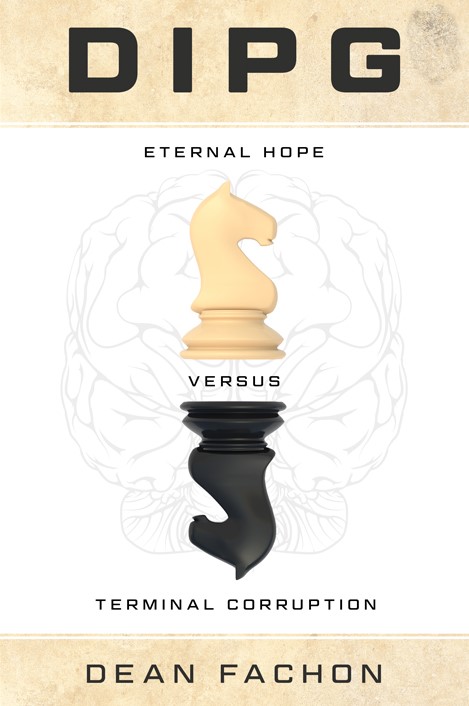
Yes! My husband, Dean, is publishing our son’s story, DIPG: Eternal Hope vs. Terminal Corruption to help people begin to explore and discuss this topic. Available by July 2024, our family’s personal narrative offers a compelling illustration. Please visit our web page and share this blog, which can serve as a forum for readers to exchange their thoughts, experiences and suggestions. Together, we could create one heck of a virtual book club. Refer the “Suggested Reading” list we provide. The first book on that list is Defeat Cancer. If you are interested in joining a “rare” book club, please contact us.