Be a Difference Maker!

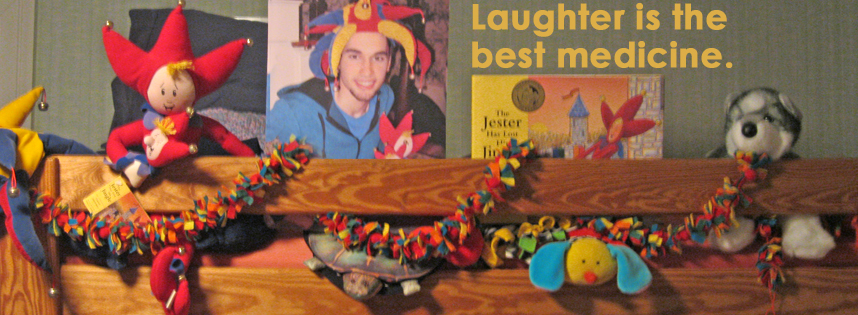
Student Leadership Training Program (SLTP) founder, Jim Fitzgerald emphasized service, “A big part of everyday is spent building character and those efforts culminate on Friday with our service project. For the last few years that project has been to decorate hats to provide to hospitals to give to kids.” The service project centered around David Saltzman’s magical children’s book, The Jester Has Lost His Jingle. which has been a part of the SLTP program since it’s publication in 1995.

Saltzman was an English and art major at Yale University, diagnosed with cancer during his senior year. For the next year-and-a-half, he kept a journal of his thoughts and drawings while completing The Jester Lost His Jingle and other stories. David Saltzman died 11 days before his 23rd birthday. Five years later, his parents published The Jester Has Lost His Jingle and printed 10,000 copies to give to hospitalized children. The book imparts lessons of hope, humor, encouragement and charity. David’s parents also established the Jester & Pharley Phund, a non-profit dedicated “to bringing the joy of laughter and the love of learning to all children, especially those who may be ill or have special needs.”

Regarding the SLTP service project, Jim explains, “It is a defining time for our kids,and we celebrate their feelings by sharing David’s wonderful story about choices and the meaning of love. The group explores the concept of service and how to make it more meaningful and less of a chore.” At the end of the difference maker workshop, each student receives a large, decorative safety pin with a jingle bell to wear at future SLTP events. “We tell them,” says Fitzgerald, ‘When you hear the bell jingle, you need to remember: It’s up to YOU to make a difference. It’s up to YOU to care.’”

Many SLTP students returned to their high schools and implemented The Jester & Pharley Phund’s Reading To Give program in their local elementary schools. Neil Fachon volunteered to lead the program in East Greenwich. He teamed up with other SLTP alumni, planned meetings, coordinated the paperwork, helped present dramatic readings of the book to elementary classrooms and enrolled the younger students in read-a-thons to raise money for giving Jester books and dolls to pediatric cancer patients at nearby hospitals. He also helped thread beaded jingle bells to give out as a reminder of the Jester and his joyful spirit.

Four years later, when Neil was hospitalized for brain surgery and later pneumonia, I wore the jingle pin he had made everyday. One unforgettable character in The Jester Has Lost His Jingle is a little girl lying in a hospital bed with her head wrapped in a bandage. The jester visits her room, talks with her and tries to cheer her up. It is the most precious moment of the story. It is where the Jester discovers he still has his jingle – his ability to bring joy to others.

Many people are unaware that when a child has a serious illness, his or her life can become depressingly isolated. Some children are so sick they are unable to go to school and be with their friends. It is easy for the kids at school to forget about the friend who is not present. While siblings, parents and caregivers do their best to tend to the well-being of a pediatric cancer patient, that patient sorely misses the company of friends. Friends are special! Friends are the jesters of life!

Since Neil’s passing on February 19, 2017 from DIPG brain cancer, $20,401 in cash and in-kind contributions have been given in Neil’s memory to The Jester & Pharley Phund to help bring joy and laughter to hospitalized children. These kind gifts have resulted in the donation of 577 Jester books and 448 Jester dolls and 4 Jester Educator Enrichment Manuals to hospitals, as well as the donation of a Smile Cart to Camp Sunshine, along with 36 Jester books, 2 Jester dolls and 2 PhunBooks.

The Jester Has Lost His Jingle is Dream Visions 7 Radio’s February Kids Book-of-the-Month. For every $10 donation in Neil’s memory, The Phund will be honored to donate a copy of “The Jester Has Lost His Jingle.” The donor and Neil will be acknowledged in a bookplate. You may want to order a copy for a special child in your life; this book is inspirational for students or for anyone of any age who could use a mood booster. Donations and personal orders can be made online at www.thejester.org or checks may be mailed to The Jester & Pharley Phund, P.O. Box 817, Palos Verdes Estates, CA 90274. Donors may also contribute by calling 310-544-4733. Be a difference maker, give the gift of joy and laughter to someone in need.

The Resilient Heart

Raising a resilient child begins at an early age. Books give children a rich vocabulary of words they can use in expressing their own thoughts and feelings. My husband and I read to our children from infancy, beginning with picture books of rhythm and rhyme. Then we moved on to picture story books, chapter books, and children’s classics. At bedtime my husband would read to one child, while I would read to the other.

Reading requires looking, listening, and thinking, and develops all these skills through practice. Once children learn to see, they can see to learn. Once they learn to listen, they can listen in order to learn. And, once they learn to read, they can read to learn. These skills are empowering.

When our children were able to read on their own, we listened as they would read aloud to us. When they got tired of reading aloud, we would take over and read some engaging fiction that was well beyond their reading level, exposing them to more advanced vocabulary and emotional situations. By reading aloud, fluently and expressively, we were able to model effective communication skills to our children. Reading teaches empathy. Studies conducted at The New School in New York City show evidence that literary fiction improves a reader’s capacity to understand what others are thinking and feeling. Children learn from stories about how other children handle life challenges. By reading books that share the stories and beliefs of children raised in different cultures, we can expose our own children to a wider range of experiences and perspectives, and to higher levels of imagined and unimagined intelligence. These stories lead us to learn the more advanced vocabulary of empathy, compassion, respect, collaboration, and resilience, so we can model these practices for one another.

While referring to God in my children’s book, The Angel Heart, I must acknowledge and respect those who believe in different forms of spirit – god or goddess, guardian angels, Mother Nature, Father Sky, Great Spirit, The Force, or perhaps a collective entity. Some people think this is all hogwash, and so be it. Telling the story of a real, yet magical, flower, I provide clues that suggest the presence of a mysterious creative and benevolent source that provides for us and watches over us. Faith in this higher power helps us to cultivate spiritual wisdom, strength, love and peace within ourselves, which we can then share to help make a better world.

I am toying with the idea of more spiritually inclusive version of The Angel Heart, at a lower price point and with supplemental material for parents and teachers. Until then, however, my original book and e-book can be found for purchase by clicking here, and my Natural Awakenings magazine article about Emotional Literacy can be found here.

Dear Me

     Back in January 2011, Neil’s science teacher asked each of his freshman students to write a letter to themselves, to be delivered upon college graduation. Little did Neil know he would not live to read the letter he’d written. In May 2018, Mr. Rath contacted us, told us about the letter and asked if we would like to have it. At first, he had hesitated doing so, fearing the letter might contain something we might find painful, but on balance he thought we should make the decision about whether or not to read it. The following Sunday, Mother’s Day, Dean carefully slit open the envelope and handed it to me. I read it aloud:

“Dear Me,

“By the time I read this I better be a billionaire mechanic top class with a chauffeur and lots of nice stuff. JKJK. But seriously. It better be better than where I am right now though, cause where I am now is seems to be no friends, only Starcraft 2, Chess, in the fall soccer and whatever else I decide to do. My niche which is apparently the main thing I am supposed to be writing about, according to Mr. Rath, is small. I don’t have much of a niche at school. I go I learn take notes take tests, move from group to group, talk from person to person without any real close friends. Sept Andrew, but you probably don’t even remember him where you are somewhere in the future, Plus he changed schools to Hendricken so we can’t hang much anymore. My niche at home is fairly small. I help with yard work; raking, shoveling snow, mowing the lawn, picking up sticks, minny stuff nothing big. I just sit around playing Starcraft 2 all day. Which is probably going to cost me a bit, but hopefully it doesn’t cost you wherever you are. Hopefully you actually got a girlfriend and a group of friends you hang with on Friday nights. People call you regularly and chat. I know I don’t have it as bad as many others, but it would be nice to have friends to hang with after school that aren’t complete morons. I hope whenever you open this letter you find it of interest and not a peculiar annoyance, because if you found this to be an annoyance that would kinda be sad to me. It would mean you’d fallen farther into a slump than you are now. Well enough of this riff raff. You probably gunna think you were crazy back when you was me.

“Sincerely,

“You”

      I had to pause to wipe away my tears every time the text blurred before my eyes. We were aware Neil’s first semester of high school was a tough one, between soccer team hazing and disappointing friendships. When Neil chose to confide in us about his social challenges, he did so because he needed us to listen, yet refrain from becoming directly involved, and we learned to respect that.

     Dear Me. Ironically, the opening words are suggestive of an exclamation expressing surprise or distress, as in “Dear Me, how do I answer this question?” Describing one’s niche can be an intimidating writing assignment for a young person. A niche is a position, role, career or activity that suits somebody’s talents, personality and interests. How many kids struggle to figure out where they belong… how they fit in among their peers or how they find their special place in the world?

     Daunting as this may seem, questioning one’s niche is a tremendously valuable exercise in and of itself, because quite simply, it provokes deep thought. I sensed that, for Neil, this particular question sparked an urgent search for answers… Eventually, Neil’s niche became “friendship.”

If you were to write a letter to yourself, what would you write?

Explore, Experience, Explain (2): Lymph Therapies

How might a dysfunctional lymph system effect the body? Can a lymph problem contribute to, say, frozen shoulder? And, if so, how? Doctors have differing opinions on what causes frozen shoulder (adhesive capsulitis). Some say sitting at a desk or laying down and resting the shoulder for long periods can aggravate an existing problem by limiting the use of the aggrieved shoulder.

Dr. Austin Oolo attributes the cause of frozen shoulder to a triad of physiological circumstances: a neck problem, a shoulder strain and a hormone imbalance.

Dr. Christiane Northrup suggests there may be emotional issues underlying shoulder issues, such as feeling one needs to carry the weight of the world upon one’s shoulders… or being too rigid in one’s thinking… or engaging in too much negative self-talk… or perhaps holding on to emotions of sadness which are associated with physical pain.

So what caused my left shoulder to freeze up?

Grief can be physically immobilizing, and I am certain grief was a key factor. In January 2018, less than one year after losing our son, age 20, to brain stem cancer, my shoulder began to stiffen. By May, the pain was so intense it kept me up at night. Had sadness and pain had come to settle deep within my tissues?

Considering my left shoulder, I recall sitting next to Neil, my left arm reaching around behind his back to support his weakening body, as he sat up to sip and swallow water, which he had to do often due to the high sodium content of his anti-neoplaston therapy infusions. Swallowing had become more difficult, as he was losing control of his muscles and mucous clogged his throat. We spent at least half an hour, every night, in the middle of the night, sitting together patiently on the edge of his bed, as he slowly sipped, spat, sipped and swallowed.

The cancer journey was full of unimaginable moments. First, the diagnosis (Wham!), and then the prognosis: He has three months to live (Bam!), followed by a year of intense battle. I buried the harshness of each and every heart-wrenching moment deep down inside, so that I could move forward, remaining strong and positive for Neil and the rest of the family. Had these suppressed memories and associated emotions become locked within?

Generally, frozen shoulder describes a pathological process in which the body forms adhesions of muscle fiber around the shoulder capsule, leading to restricted movement and pain. In the absence of movement, emotional and chemical toxins accumulate inside knots of scar tissue. While physical therapy (PT) and myofacial release massage therapy help to break down the scar tissue physically, recovery is a slow painful process. After seven months of daily PT and massage, I regained about 80 percent of my range of motion. Then I reached a plateau.

My residual pain and restriction compelled me to probe for a deeper understanding of my dysfunction, which is why I decided to undergo a full-body bioregulatory assessment at the new BioMed Center in Providence. In so doing, my open mind was exposed to new aspects of physical science, new non-invasive biofeedback therapies and new insights as to what was happening inside my body – physically, energetically and emotionally. The resulting information and associated possibilities astonish me.

Thermometry test results (explained in Part 1) indicated a lymph system blockage in my head and neck area. The primary role of lymph is to remove toxins from body tissues. While the heart automatically pumps blood through the cardiovascular system, the lymph system relies on body movement as a pump. It’s difficult to move lymph if body movement is restricted. I had never realized how important regular physical movement is for detoxing.

Among the BioMed doctors’ recommendations were movement therapy in the form of rebounding. Rebounding is a type of spring-leveraged low-impact exercise performed on a rebounder—sometimes called a “mini-trampoline.” The up-down movement of rebounding unblocks the lymph system and compels lymphatic fluid to flow and flush toxins. Rebounding is considered the most effective movement therapy for increasing lymph flow and draining toxins from the body. Basic rebounding movements include bouncing in place, jumping jacks, twists, side-to-side motions and running in place. Rebounding is fun, and gym trainers can guide people in doing rebounding safely and effectively.

For elderly people or people with restricted by balance or knee joint problems, rocking in a rocking chair is a good alternative. Children can move lymph by swinging on a swing, which requires pumping the arms and legs. My sister consciously jiggles to move her lymph and boost her mood. All of these simple and enjoyable activities activate the movement of lymph.

For patients looking to expedite the removal of a lymph blockage or for patients whose voluntary movement is restricted by a neurological disorder, the BioMed Center offers technologies which can assist in the process of moving lymph, expelling toxins and addressing emotional blockages and imbalances. More on this in Part 3.

Learn more about bioregulatory medicine. The BioMed Center is hosting an open house on Wednesday, February 13, 4:30-6pm at 111 Chestnut Street in Providence.

The Last Straw

Patch news recently reported that a local senator has introduced bill S202 to limit plastic in Rhode Island. The bill attempts to follow suit to a straw law that went into effect in California on January 1. Although completely in support of reducing plastic waste, I disagree with this king of legislation. There is little doubt that straws litter the nation’s shorelines and have disastrous consequences for marine life. What I take issue with is pinning the responsibility and the penalty on restaurants: “Establishments in violation of the law would receive a notice of violation for the first and second offenses.”

EcoRInews reports “Restaurants may offer straws made of paper, pasta, sugar cane, wood, or bamboo. Each violation incurs a $25 fine, not to exceed $300 in a year. The state director of health would enforce penalties.”

Restaurants do not toss litter into waterways and onto beaches; careless individuals do. The senator argues that curtailing the use of plastic straws in restaurants will encourage consumers to think twice about their own footprint. It will, if waitresses politely explain the Last Plastic Straw Challenge, which encourages bars and restaurants to eliminate plastic pollution at the source by only providing plastic straws upon request. This law is requiring restaurants to educate their customers.

Many Rhode Island restaurants are already doing this of their own conscious free will, and the movement is catching on. Food server, Lori Rinkel, got permission from the manager of Tickets restaurant, in Middletown, to post a sign that says “Please consider going strawless! The ocean thanks you!” Rinkel does not put a straw in any drink ever that she serves. “If someone asks for a straw, I ask them if they really need it, and probably go overboard by telling them that it takes 200 years for that straw to decompose, and it never really does and that we use 500 billion straws a day in the U.S. alone. Then I usually tell them, ‘I am going to get fired over straws!’ The majority of my customers are thankful of the information, and I tell them ‘This is one simple thing you can do to help our environment, it is so easy.’”

There was a campaign in Newport this summer called #strawlessbythesea. Most of the restaurants on Broadway joined in. Campaigners updated Instagram with the corporate companies that are getting away from plastic straws, including McDonalds, Disney World and Starbucks, to name a few. Meg’s Aussie Milk Bar on Bellevue Avenue in Newport takes a slightly different tack, offering reusable stainless steel straws and straw cleaning brushes for sale at the cash register. With all this recent activism, people are starting to say “No straw, please,” when ordering water and drinks.

S202 was referred to the Senate Committee on the Environment and Agriculture, and a hearing date has yet to be announced. Do we really need a straw law? I do hereby summon the Straw Man. The term straw man generally means a person or an argument that is set up to be knocked down, usually to make a point. I invite you to take a shot, or stand behind him. Share your thoughts in the comments section of this blog.

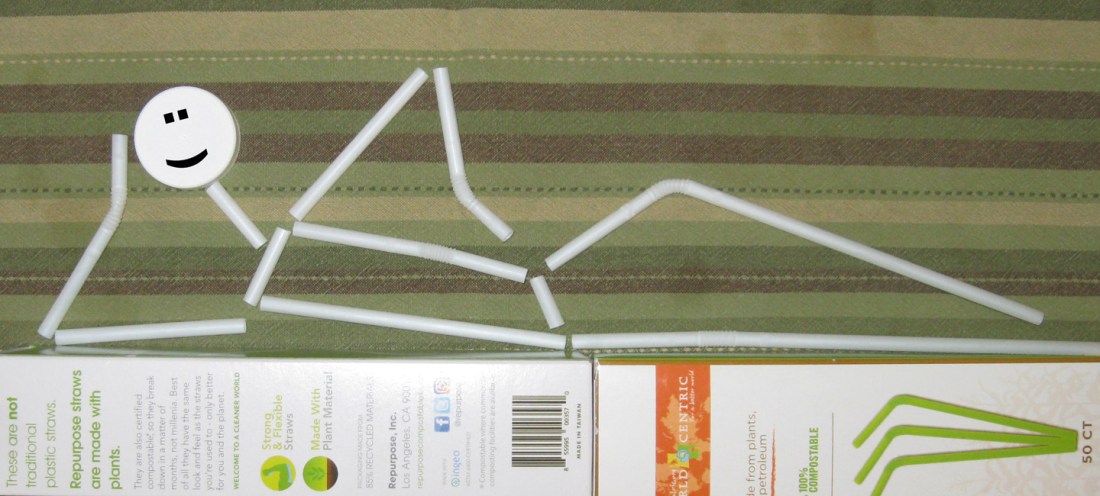
Learn more about real Plastic Waste Reduction Heroes… btw, the straws featured in the artwork above are plant-based and biodegradable.

Spotlight on Medical Marijauna

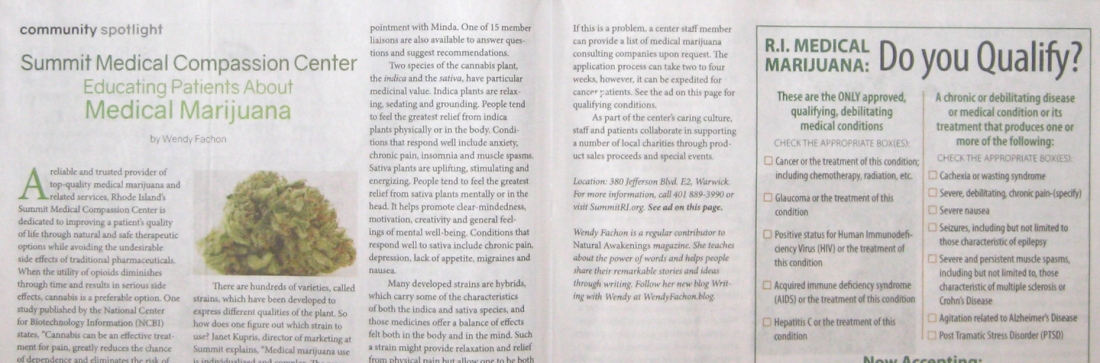
When the Rhode Island Natural Awakenings publisher asked me to write a spotlight on the Summit Medical Compassion Center, I eagerly complied, because the integration of medicinal cannabis in treating life-threatening diseases is becoming more noteworthy.

The endocannabinoid system (ECS) was discovered in 1992 by scientists studying how cannabis interacts with the brain. This previously unknown molecular signaling system is involved in regulating a broad range of biological functions and maintaining homeostasis, a healthy equilibrium, within the body. Scientists realized that the ECS allows the body to send signals back and forth, rather than just one direction, allowing the body to communicate with itself, so that it could fix itself.

When our son Neil was diagnosed with cancer, we learned about the beneficial effects of CBD and THC, two key chemical compounds produced by the cannabis plant that are compatible with receptors in the ECS. While CBD and THC do not comprise a proven cure to cancer, they can help fight against the disease. They have demonstrated abilities to prevent cancer cells from reproducing, to prevent the formation of new blood vessels needed by a tumor to grow, to prevent cancer from spreading to other organs and to cause cancerous cells to kill themselves. There are documented cases of cannabis oil sending cancer patients into remission and cases of patients who took cannabis oil and still succumbed to the disease.

Due to his terminal condition, Neil’s medical marijuana card application was expedited and the compassion center he visited gave him some different products to try. Use is individualized and complex, and the process is exploratory. I wish there had been more hard research to guide us, because we sensed so much possibility in integrating cannabis with cancer therapy. This is why I felt so compelled to write about the topic now.

One of the gems I picked up while doing research for the medical marijuana article was this: Cannabis can prevent opioid use and can alleviate symptoms associated with opioid withdrawal. Award-winning neuroscientist, Adie Poe, explains how cannabis can help with opioid detox and replacement: “The evidence suggests it’s the opposite of a gateway drug. It’s an exit drug. This is one of the most exciting frontiers we have in cannabis science at the moment.”

A second gem is that Autism patients will be able to access medical marijuana here in Rhode Island. A third gem is the emergence of cannabis training for nurses.

Read the full article.

Storywalking for Inspiration

The trash I find while out walking inspires much of my writing. Because of this, my husband named me the Storywalker, and we refer to this creative process as “Storywalking.”

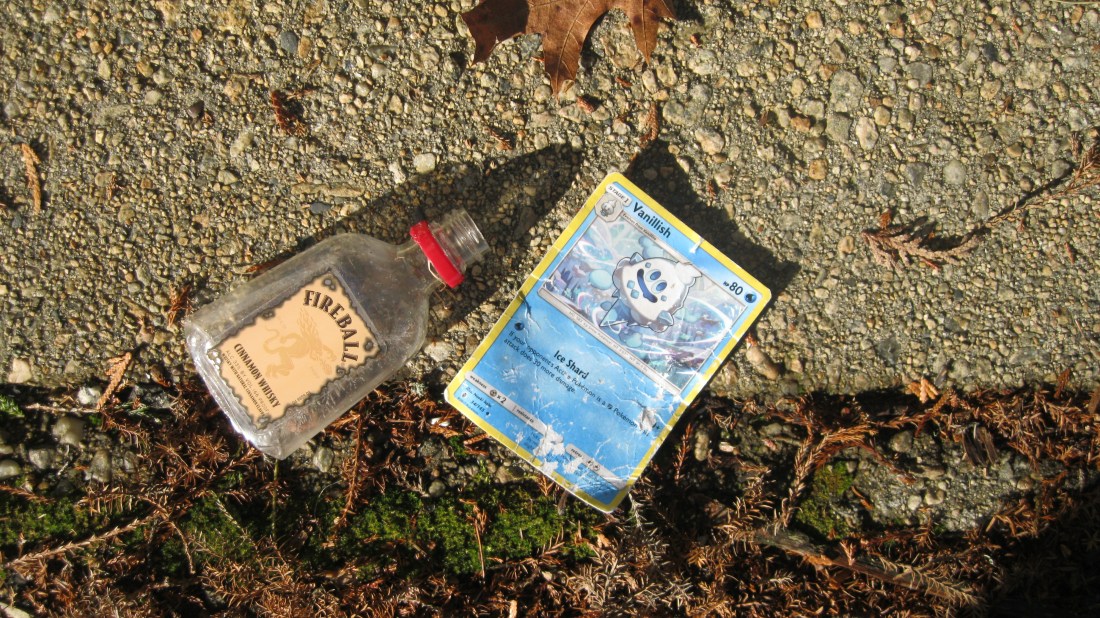
For example, yesterday, walking to my yoga class I found a Pokemon card, featuring Vanillish and an Ice Shard attack. Vanillish? Villainish! The card was stiff as ice, with bits of dried leaf plastered to it, masking the face of the character. I tucked it in my pocket.

Further down the sidewalk, I noticed a small liquor bottle, called a nip. On the label was a character that looked like the Devil and some words. The “RED HOT” nip once held some Fireball Cinnamon Whisky. Cinnamon? Pokemon. The Inside was a frozen flash of crystallized water.

What happens when a Shard attack meets a Fireball attack? Poof! A lot of steam! Our son, Neil, used to collect Pokemon cards and play the game with his friends. Unfortunately, Neil was attacked and completely taken out by Cancer last year. Poof! I pulled the Pokemon card out of my pocket and showed it to my yoga teacher as I checked into class. She commented that the leaf fragment covering Vanillish’s face was shaped like a heart. I took off my sneakers, hung up my coat and went into the studio.

As I left yoga, I pulled the card out of my coat pocket. The leaf fragments were gone. They had effectively melted away, revealing the hidden character of Vanillish, a cute smiley composite of ice cream and ice crystals, shaped like an ice cream cone. Sweet! I hold my angel, that sneaky silly cool little devil, forever in my heart and mind.

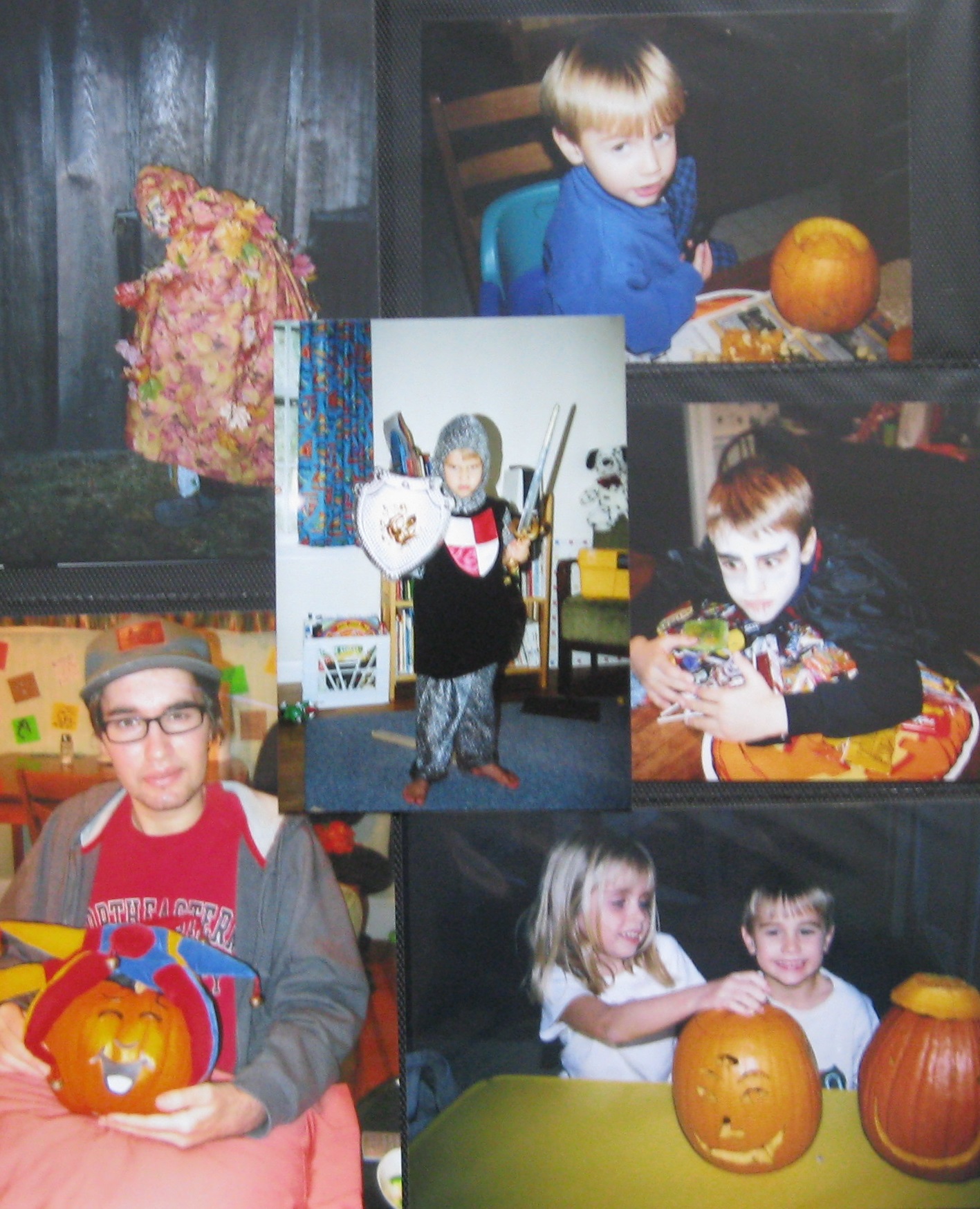
Captions, starting from top left and spiraling clockwise: Sneaking around cloaked in dead leaves; looking cute and innocent; hoarding sweets with a vampire’s sweet tooth; smiling faces; smiling his way through the last Halloween of his life here; ever ready to engage in battle.

Learn more about After Death Communications (ADC) from Psychology Today. Our angels and muses are there to inspire us.

What do you think about Writing?

Estudiantes de ESL, corte y pegue el siguiente texto en “google translate” para convertirlo a su idioma principal.

One year, Neil’s first assignment for English class was to write a letter to the teacher, about English and writing, so he wrote:

  I like to be treated with respect. It’s nice when teachers tell funny stories about their past related to a subject we’re discussing. I find that it makes classes more interesting and keeps students from dozing off. I really dislike it when a teacher gets overly strict and starts to yell at the class or when one student is goofing off and the whole class gets blamed.

  As a writer I can write pretty strong and vividly, but it’s definitely not my strongest subject. I’d like to get better at using quotation marks and conversations in my writing. I like to write about my memories and past experiences and hate writing “how to” procedures. I’m best at voice in my writing and worst at spelling and grammar (But please, please, please don’t do to many grammar lessons, they bore me to death. Probably why I’m worst at it).

  My favorite book series is the “Alex Rider” series. It’s about a teenage spy who does James Bond kind of stuff. My favorite book type definitly, positivly is fiction/fantasy/Science Fiction. In past classes I’ve hated doing picture narative and have loved doing personal naratives.

Some people like to write science fiction of fantasy stories, while others may prefer composing poetry or keeping a personal journal. Some people dream of publishing a book, while others just enjoy writing and receiving letters. Imagine writing a letter to a teacher and sharing your opinions and preferences with regards to writing

What would you like the teacher to know about you?

What do you like and dislike about English class?

What are your strengths and weaknesses when it comes to writing?

How would you like to improve your writing?

What kind of writing do you enjoy doing?

What genre of books do you like to read?

What are your favorite activities outside of school or work?

Do you participate in activities you might like to write about?

January 28, I begin facilitating a high school Writing Club and am looking forward to conversing with the students about their personal goals – what kinds of pieces they wish to write, what they want to learn and how they hope to improve their skills. Beyond that, I look forward to guiding them, reading their words and learning more about them. So, what do YOU think about writing?

Explore, Experience, Explain (1): Thermometry

Some people write about their adventures, traveling across the icy Arctic, through the wild Amazon, over the boundless sea, or under. Today, I’ve decided to write about the vast unexplored terrain right inside my body. I prepared to navigate this uncharted territory by traveling only 15 miles from home, into the city of Providence, where I underwent a complete body health assessment and consultation, using state-of-the-art diagnostics.

As a writer for Rhode Island’s #1 healthy living magazine, I ‘m always finding there is so much more to explore, research, experience and explain with regards to well-being. After reading a book on bioregulatory medicine, touring Providence’s new BioMed Center and writing an article about both for RI’s Natural Awakenings magazine, I felt drawn to participate in this exploratory process. The process appears to be non-invasive, so why not be a guinea pig. I set up an appointment for January 2, filled out the requisite medical forms and followed through with the appointment.

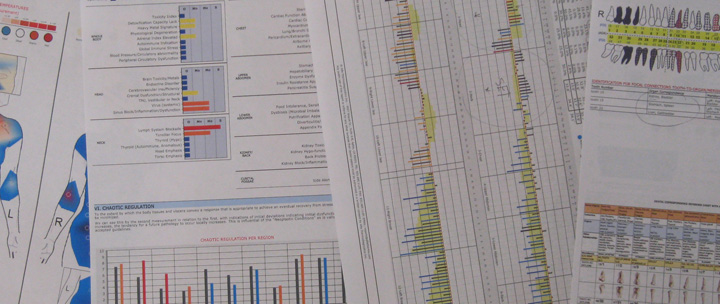
What happened that day? A whole lot. Where do I begin? With a quick overview and the description of one of six tests. I’m analytical and I’m visual. I like to look at numbers and pictures, because they show me things. The graphic above shows a small sampling of the resulting data of energy signatures, which map the terrain inside my body. The data provides a glimpse of my AlfaVue Regulation Thermometry Report.

I tried to explain this test in my article with one sentence: “whole body regulation thermometry is an assessment that takes skin temperature readings at 119 points on the body, before and after stress, to assess circulation patterns and identify areas of vulnerability or dysregulation.” The stress part sounds a bit scary. In actuality, inducing stress had nothing to do with psychological battering or trotting on a treadmill. It was induced with exposure to a slightly colder temperature for ten minutes. I just stood there. The temperature readings were as quick as a when someone swipes a thermometer across the forehead. The resulting numbers and pictures are far more adequate than my one sentence in explaining thermometry, which was the first and most demanding of all the tests – simply stressful enough for the body to communicate relevant data, so doctors can see, interpret and explain the most significant findings.

What jumped out on this map of my body was a lymph system blockade (red bar on graph). This issue was confirmed by other types of tests administered that day. This is a symptom of being a passionate writer who will sit and spend hours absorbed in the work. According to Anne Lemons, “Prolonged sitting negatively impacts the lymphatic system as well as the heart, brain, and musculoskeletal system (1,2,3). If you sit most of the day for work, set a timer to get up every hour to take a short walk and move your lymph. As you may have heard it described, ‘sitting is the new smoking.'” Lymph vessels are activated by body movement; any activity that moves the arms, legs, and torso will help to move lymph.

The lymphatic system is a network of tissues and organs that help rid the body of toxins, waste and other unwanted materials. While there are numerous doctors trained to treat all the other body systems (neurologist (nervous), cardiologist (cardovascular), gastroenterologist (digestive), endocrinologist (glandular), a patient would be hard-pressed to find a lymphologist.

Understanding the critical role of the lymphatic system, the doctors at BioMed gave me a list of options for exploring and removing this blockade, many of which I can do myself, including dry skin brushing, rebounding for ten minutes per day at my health club, doing a detox regimen, taking a daily spore-based probiotic and adding a few herbal supplements. BioMed also offered me options to expedite the blockade removal process, including cranial/structural core distortion release (CSCDR), myofacial massage, hemosonic treatment and ozone therapy.

I plan to explore all of these options, one by one, to see which makes the most difference for me. I also plan to learn more about the lymph system and how it interacts with the other systems in my body. Once I get past the blockade, I can start to explore other areas of my internal terrain, because there is so much more to learn.

Read my recent article to learn more about bioregulatory medicine. The BioMed Center is hosting an open house on Wednesday, February 13, 4:30-6pm at 111 Chestnut Street in Providence.

Read what Anne Lemons recommends for lymphatic self-care.

Door-opening Sentences

Upon reading the title and the opening sentence of an article, I decide whether to continue reading… when writing articles, I consider the title and first sentence as an open door inviting a reader to step into the topic. Open doors present choices, and readers can choose to enter into the topic, or move on to the next door.

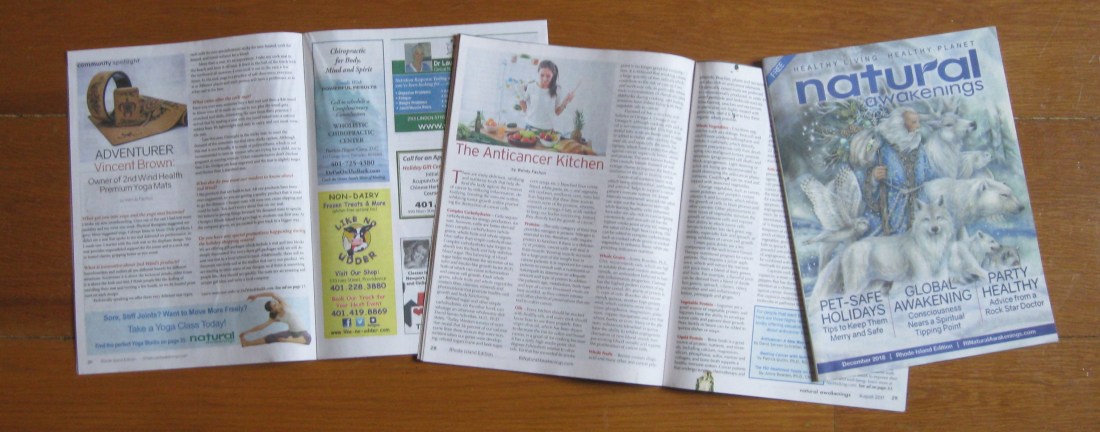
On the last day of 2018, I present six open doors… articles written this past year for Rhode Island’s Natural Awakenings magazine. The magazine tagline is “healthy living healthy planet.” Each article spotlights innovative Rhode Islanders doing amazing stuff to help make this world a better place for others. I’m passionate about interviewing cool people and sharing their inspiring stories. Which door below beckons you to enter?

Meditation in Rhode Island (Feb 2018) – While meditation practice is known to help promote greater concentration, mindfulness and relaxation, it is also shown to help decrease anxiety and depression. Read more.

Regenerating Soil Naturally (Jul 2018)Vermicomposting is the process of using worms and micro-organisms to turn food waste into nutrient-rich humus. Read more.

Plastic Waste Reduction Heroes: Reduce, Reuse and Repurpose (Sep 2018) – Produced from fossil fuel, plastics and plastic waste are directly associated with climate change, and as more people realize this, more people take action. Read more.

Young Voices for Education Equity (Oct 2018) – At Young Voices, a Rhode Island organization that provides low-income youth with advocacy skills, students are helped in understanding an issue, thinking strategically, speaking out articulately and persuasively, and assuming roles of leadership. Read more.

FreshConn: An Online Farmer’s Market with a Social Responsibility (Nov 2018) – When Patrick Straus and Brandon Monti look at problems, they see solutions. Co-founders of FreshConn, Straus and Monti represent the emerging generation of spirit-inspired social entrepreneurs. Read more.

Adventurer Vincent Brown: Owner of 2nd Wind Health Premium Yoga Mats (Dec 2018)What got you into yoga and the yoga mat business? I broke my arm snowboarding. Read more.