Our pink dogwood is old. It is less healthy than it used to be, and it’s roots press up against the foundation of the house. It seems it is time to let it go. Letting go is hard for me to do. Looking out the window at the pink blossoms, for perhaps the last time, brings to mind words I wrote in Shining a Light on Grief:
“…thinking I doing well with respect to grieving, I resumed writing monthly articles for Natural Awakenings magazine, beginning with The Anticancer Kitchen, sharing some of what you and I had learned together – what to eat, what to avoid. Writing about foods that prevent and fight against cancer came easily. It was a practical piece of writing, which I hoped readers would find it helpful.
“At this same time, I began journaling, reliving the difficult memories of your final year, while they were fresh in my mind. I withdrew into this writing, spending days sitting at your computer table, capturing the sequence of events and the details, trying to rationalize it all. As I wrote, however, the reliving was causing more pain than comfort.
“Maybe that is why I would wear your favorite sweat pants and gray hoodie, and imagine your warm presence wrapped around me while I wrote. For comfort. To suppress the anguish deep in my heart. Occasionally, I would look out the window and find distraction in the seasonal changes of the dogwood tree, as you once did. The leaves turned burgundy and fell in the fall, while birds foraged the red berries. The snow came and frosted the branches, and the squirrels nibbled on the new buds for winter time sustenance.
Squirrel. Your power animal. This reminded me of my solitary walk around the block, the day after you died. I found a dead squirrel lying on the pavement. It had taken a bad fall from high up above. It was perfectly beautiful, with a just slight trace of blood, in the back of its head, near the brain stem. I imagined the squirrel had taken a leap of fate, and missed. I mourned its death with yours. It is said that when you see a dead animal in the road, the noticing is to help the spirit of the animal to move on, however, it could also be message for the viewer.
“I have read about squirrel power on a shamanic website. ‘“’Squirrel is an almighty power animal to have any time when you feel you have reached a dead end in your life, or in a situation and ready to give up. We are shown that perseverance and the readiness to try different methods are the keys to success.’”’ The notion that any obstacle can be overcome is part of the squirrel’s outlook on life. There is no giving up. I can see now that this was a message for me, yet back then I was numb and blind to it.”
If we have the pink dogwood cut down, we will have to find a young pink dogwood to replace it, and plant it a little further away from the house.What do you think?
My super power is seeing what other people do not. Working in the field of health insurance opened my eyes to the fact that our medical care system was bleeding our economy to death and compromising our well-being. Was this intentional or was it being done unwittingly? “Unwittingly, blindly,” I thought at the time, “The people who run the system are unable to see what they are doing to us.” The system has become a dark mess created by insurance companies, hospitals and pharmaceutical companies, with each entity focused on its own bottom line.
I left insurance to work in the field of childhood wellness and to write articles for Natural AwakeningsMagazine. As I began researching and contributing articles to the Healthy Kids and Healthy Living sections, my super power began allowing me to see solutions to children’s health challenges and to write about them.
Dean and I had been parenting our own two kids consciously – limiting screen time, seeking outdoor adventures, packing healthy lunches, sharing home-cooked dinners and supporting their athletic activities. When our scholar-athlete son, Neil, 19, was diagnosed with terminal DIPG brain cancer in 2016, we were stunned. “This is impossible! How could this happen?” Oncologists were unable to provide a reasonable explanation.
As conscious, well-informed parents, we quickly concluded the cancer was caused by a pair of vaccines our son had been given during his pre-college physical exam one year earlier – the human papillomavirus (HPV) vaccine (a.k.a. Gardasil) and the meningococcal vaccine. One was supposed to prevent cancer and the other was supposed to prevent brain inflammation.
We were aware of adverse events associated with the HPV vaccine, including death. In fact, when one of us had attended Neil on previous doctor visits, we declined the vaccine when it was offered. At the age of 18, however, Neil had driven himself to his appointment, and when the nurse again offered the vaccine, he held out his arm. Dean describes this particular medical transgression, in a book we just published – DIPG: Eternal Hope Versus Terminal Corruption, on pages 87-90. Neil lost his battle with cancer on February 19, 2017, however, our fight continues.
Six years passed before I spoke publicly about the vaccine incident, and its connection with Neil’s illness and his death. In February 2023, we attended a conference presentation on “Citizen Journalism” given by Children’s Health Defense (CHD). The presenters encouraged the audience to document events and stories through video recordings, and CHD TV journalist Polly Tommey invited me onstage to demonstrate citizen journalism. She interviewed me, and I told Neil’s story. What I remember most about that day is people approaching me afterwards to thank me for speaking out. I found great courage and confidence in this.
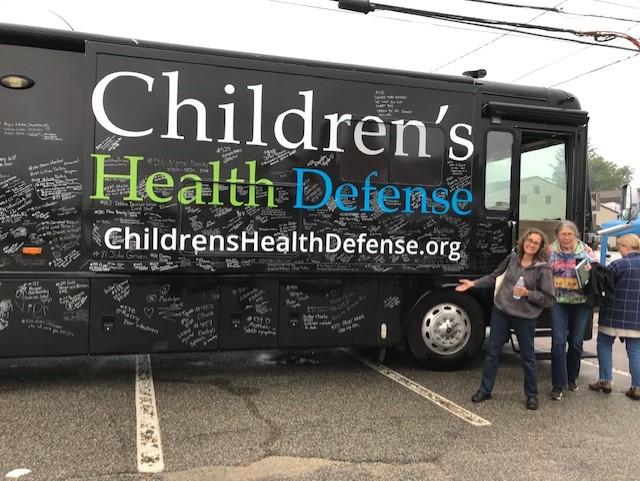
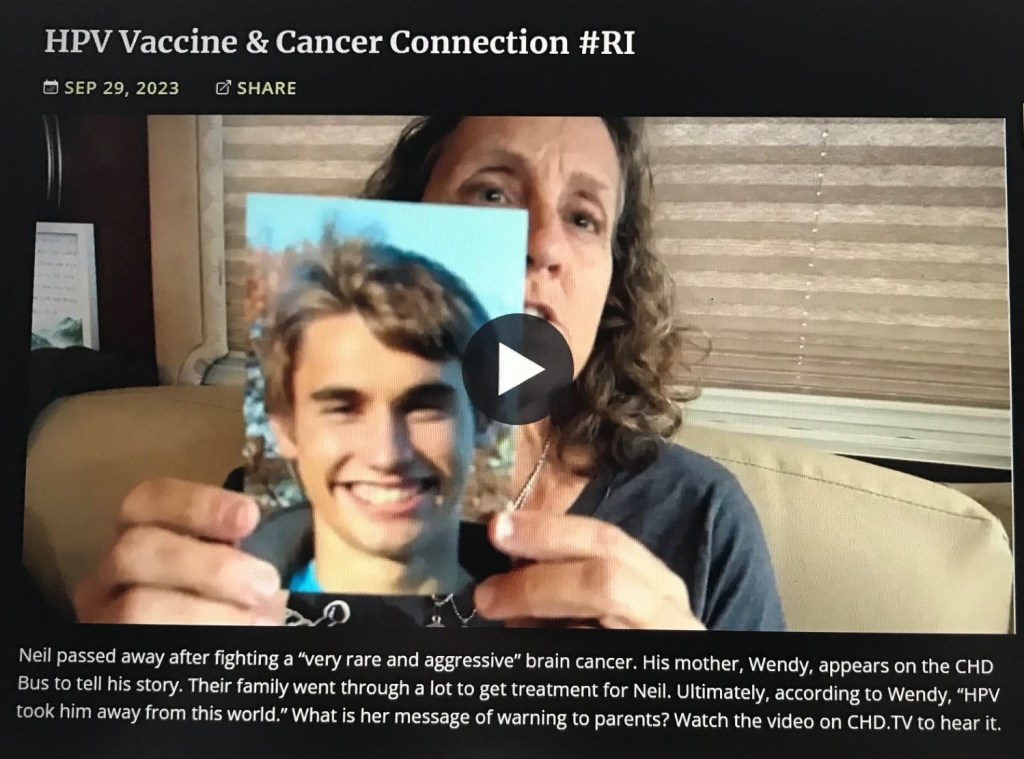
On September 29, 2023, the CHD TV bus rolled into my state, Rhode Island, one stop of many on its cross-country tour. Tommey was collecting people’s stories of vaccine injury and death. I waited in the rain until it was my turn to climb aboard. This time she led me through a full video interview, and I told my story in greater detail and with photos.
While on the bus, I met Brian Hooker, PhD, host of Doctor and Scientists on CHD TV and co-author of Vax-Unvax: Let the Science Speak with Robert F. Kennedy Jr. (RFK Jr.). Wikipedia describes Dr. Hooker as the “Department Chair and Professor Emeritus of Biology at Simpson University… known for promoting the false claim that vaccines cause autism.” Wikipedia describes RFK Jr. as an “American politician, environmental lawyer, anti-vaccine activist and conspiracy theorist.” In Vax-Unvax, these two insightful authors do a deep dive investigation to report on the “real” science and criminality behind vaccines. If you take time to actually read the book, you will be gobsmacked and come to respect their grasp of the real science.
Note: RFK Jr is the chairman and founder of Children’s Health Defense, whose mission is ending childhood health epidemics by eliminating toxic exposure. The organization seeks to protect children, expose harms and seek justice. RFK, Jr hosts The Defender Show on CHD TV.
Hooker signed a copy of his book for me, writing “For Neil, May you rest in the arms of almighty God! Your testimony lives on forever!”
I was also gifted with a second book, The HPV Vaccine on Trial: Seeking Justice for a Generation Betrayed by Mary Holland, J.D., Kim Mack Rosenberg, J.D., and Eileen Iorio. Official statements by the FDA, CDC and WHO, claiming that HPV vaccines are safe, contrast sharply with reports of devastating injuries and death which are recounted throughout this book.
Before leaving the bus…
… I signed Neil’s name and my testimony number (562). Then I went home and found my CHD TV bus interview HPV Vaccine Cancer Connection on the CHD website, watched it and began to read my new books.
In the Vax-Unvax book there is a chapter about HPV Vaccines, which states the following:
“The 2012 Vaccine Adverse Event Reporting System (VAERS) data showed that more serious adverse reactions were attributed to Gardasil than all other vaccines, with Gardasil accounting for more than 60% of the total. The Gardasil vaccine also accounted for 63.8% if all deaths, 61.2% of all life-threatening reactions, and 81.8% of all cases of permanent disability recorded in the CDC VAERS data.”
Let this fact sink in: more adverse reactions than all other vaccines. Gardasil is Merck’s #2 selling product, and Keytruda (a.k.a pembrolizumab), a drug used to treat cancer, is the company’s #1 product. Keytruda has such a long list of ugly common side effects, I question how anyone would want to take it.
Merck and GlaxoSmithKline bring in over $2.5 billion in annual sales for HPV vaccines, and the U.S. government has given these companies blanket liability protection. While the companies claimed the vaccines provided protection against cervical cancer, the clinical trials failed to demonstrate this claim. The HPV Vaccine on Trial exposé shares trial data and reports of women harmed by HPV vaccines.
The CHD bus continued across the country collecting stories to share in its new documentary VAXXED III: Authorized to Kill. The film premiered last week in select theaters. It is a brilliant and stunning piece of journalism. It will be released to the online public on October 4. It presents people’s testimonies of real experiences with C0VID vaccine injuries and deaths, as well as stories of hospital measures that led to unnecessary deaths for the unvaccinated. Currently, the C0VID mRNA spike protein shots, approved for use by the FDA in 2021, now have more adverse event reporting than all other vaccines.
So what comes next? How do we help the children who have been injured, and how do we help everyone else? We take back our health care sovereignty, and we learn how to heal ourselves. The human body has the amazing ability to heal itself when we give it proper support.
I attended the VAXXED III film premier with a group of women who work on the leading edge of care and are proving our children can get better. They provide guidance and natural solutions that are less toxic, less expensive, kinder to the body and more effective. One of these women, Maria Rickert Hong, is a co-founder of Documenting Hopehttps://documentinghope.com/ and Epidemic Answershttps://epidemicanswers.org. These websites provide knowledge for alleviating or even reversing the damage that’s been done. For those of you who, like me, are fighting for kids diagnosed with terminal cancer, please watch Rickert Hong’s interview with Nasha Winters, ND, Lac, FABNO, the best-selling author of The Metabolic Approach to Cancer, about supporting the health of kids with cancer. Winters was diagnosed with Stage 4 Ovarian Cancer at the age of 19. She managed to save herself, and, thirty years later, she is alive and well and helping others in her role as a Naturopathic Oncologist. Documenting Hope will help you find answers for treating autism and other debilitating diseases.
Please check out our DIPG Book web page and all the other links provided in this blog. Open your eyes. Real Eyes Realize Real Lies. We must seek beyond wikipedia and google, and beyond the mainstream media reporting and the agency information controlled by Big Pharma and unelected government technocrats who abuse their power.
Since our son, Neil, was diagnosed with terminal brain cancer in 2016, we have lost more children to DIPG than lives lost on 911. Neil died in 2017. Since 2016, families in the pediatric brain cancer community have sought the passage of what is now H.RES.416, the DIPG Awareness Resolution. 2024 marks a pivotal point in a story that began 62 years ago, in 1962, with the loss of Neil Armstrong’s 2-1/2 year-old daughter, Karen, to DIPG. Armstrong’s grief is central to the Hollywood movie First Man (released in 2019 and obscured by the attention given to the emergence of COVID-19). As a resolution of bereavement, H.RES.416 qualifies as an exception to House Rule 29, and should be eligible for discussion on the floor of Congress.
Bereavement begins at diagnosis. Last year, I participated in a 3-month grief writing program and published my story in an anthology of stories of love and loss, titled Shining a Light on Grief. I titled my chapter A Letter to My Son. Below, I share three excerpts:
“I joined two facebook groups – DIPG Awareness for Family and Friends (5.7K members) and DIPG Research (4.3K). Membership includes parents of children undergoing radiation, parents sharing experiences with natural therapies, parents seeking the newest experimental treatment, parents giving updates on their child’s treatment, and parents losing or having lost a child to the disease. It was place where hope battled mightily with despair. Every family came there in search of a support network and a cure.” p 60, Shining a Light on Grief (Volume Two)
Hundreds of families interact on these private group pages. The photos can often be difficult to look at. This is the one place, however, where we can share our grief and know we are not alone.
“The hospice staff kept urging us to discontinue the tube feeding and stop providing water. We resisted a while longer, as the visitors kept coming. When we finally made the decision to discontinue feeding, I was thinking back to your first breath, holding your small body in my arms for the first time and feeding you from my own breast. Holding back food and water was the most heart-wrenching decision I have ever made in my life. It meant letting go. My anguish was visceral. I felt it deep within my womb, and it was unbearable. While the nurses administered your morphine, I wished they would have given some to me.
“I stepped away from your bedside, hurried down the hall to the hospice chapel room, entered and closed the door. I sat down, alone, on the couch, and then… I began wailing… at God?… to God? Why? Why is this happening? Why did this ever have to happen? I sobbed. My eyes and face became raw with the salt of my tears and snot. I imagined your spirit, floating above me, looking down, unable to console me.” p. 69, Shining a Light on Grief (Volume Two)
After the funeral, we try to reclaim the piece of us that died, put it back together with the remaining pieces of our lives and move forward. This is extremely difficult:
“When Dad and I attended a five-day bereavement session at Camp Sunshine in Maine, we got to know 37 other families who had lost children to a variety of life-threatening diseases… Years beyond loss, many parents continue to attend camp, still feeling raw and brittle. Some Camp Sunshine parents had started foundations within a year of losing their child and were immersed in their causes. Others were still doing their best just to get from one day to the next, and that’s okay. I get that! …
“There were separate discussion groups for mothers and for fathers. Women tend to grieve more openly, while men tend to grieve privately. Mothers spoke of how they felt “lost.” I could relate, having felt lost some days. Some mothers freely discussed how their marriages were tested by the loss of their child. Although Dad and I handle grief differently, our shared loss has brought us closer together…
“So much of what we experienced with you was traumatic. Our autonomic nervous systems got scrambled, and this is especially evident at night time. When my body should be resting, it is wakeful. If I wake, as I sometimes do, at 2am, the rest of the night can seem long to me. Dad and I are a bit like soldiers after a war, suffering our varied wounds and private emotions. pp-78-79, Shining a Light on Grief (Volume Two)
While I contributed 24 pages to Shining A Light on Grief (Volume Two), my husband has poured his heart out by writing a 500-page book titled DIPG. We stand ready to help other bereaved parents put their experiences into words. It might be one paragraph or one page. Reliving the heartbreaking moments and expressing them in words can be extremely difficult, however, it can also be cathartic and healing. Congress needs to hear these stories – heartfelt expressions of bereavement from mothers, fathers, siblings, friends and relatives. Have you lost a loved one to a neglected cancer or are you close to someone who has? If so, please try to put pen to paper, and see where it takes you. Reach out to me if you need help getting started, editing a final draft or identifying your congressional representative. I’m here – wendy@netwalkri.com.
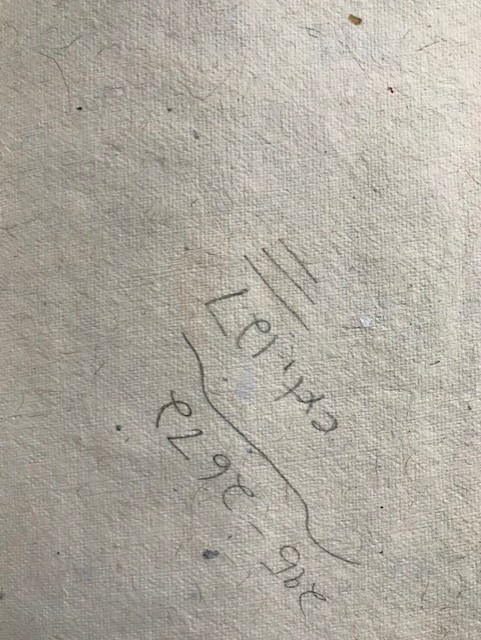
Turning to the next page I found a phone number, written upside down and at an awkward angle across the page. The phone number ended with an extension… 127… which was underlined… three times.
I turned the page again and found a silly poem.
The poem was surrounded with samples of a person’s signature… Emily something… written several times, the way someone practices a signature with the last name of a schoolgirl’s crush. One of the signatures at the top of the page had a halo drawn over the E.
The rest of the journal’s pages were blank… just waiting to be filled. Upon returning home, I went into our study, where one entire wall is bookshelves, floor to ceiling. An overflow of books laid in scattered piles across the floor in front of the shelves. From another shelf on the opposite side of the room I pulled out a reference book titled Angel Numbers 101, because I wanted to look up the meaning of underlined number – 127. The number 127 means “You’re on the right path… stay positive and keep doing what you are doing.”
I studied the signatures more and determined that Emily’s last name was Martin. Emily Martin. On a whim, I googled Emily Martin, which took me to emilymartin.com and a page about a book exhibit that had just opened in San Francisco (2012). The exhibit, mysteriously titled “Exploding the Codex,” was about books and storytelling. I read:
“These books go beyond the traditional format to unveil new ways of presenting and telling stories. Often theatrical or stage-like in their presentation, they pull the viewer into their individual dramas and diverse varieties of form and presentation. The exhibition explores the ways in which a book’s size and dimensions determine our relationship to it and what it is trying to tell us. One can choose between the intimacy of a tiny journal, private and curious, easily hidden as if keeping a secret between reader and teller…”
In that moment of reading, I imagined myself an actress, standing on a stage, surrounded by bookshelves, and holding a mysterious journal in my hand – a secret codex – and I was being pulled into storytelling of the most unconventional nature. Of course, it was all symbolic, and it was a powerful message.
And so, I share this message now, because I believe it is meant for all of us. We each author our own life narratives through our responses to our personal situations… our thoughts… our words… and our choices of action. Life is filled with mystery, and uncertainty, which often requires us to be patient as things continue to play out, and it requires us to respond creatively and positively. “We won’t be askew.” Smile and stay positive.
For tools to help you author your own life narrative go to this page.
Writers are fed with their own life experiences and with the well-written books of other writers. Books are like appetizers, while experiences are the main course. This past month, friends and family recommended books of real substance, all of which I read ravenously. At night time, I’m rather like a doll, whose eyes close when placed in a reclining position. Once lying in bed, I’m seldom able to read beyond one page. Not so with these recent reads:
Grace and Grit: Spirituality and Healing in the Life and Death of Treya Killam Wilber by KenWilbur – compelling story about a couple’s struggle with cancer and their journey to spiritual healing,five-years through illness, treatment, and death.
Breaking Night: A Memoir of Forgiveness, Survival, and My Journey from Homeless to Harvard by Elizabeth Murray – stunning memoir of a young woman, growing upwith parents who were drug addicts. She finds herself living on the streets of New York at the age of 15 after her mother died of AIDS. This is a wonderful book for teens about resilience.
The Tea Girl of Hummingbird Lane: a Novel by Lisa See – powerful story about the destinies of a mother and daughter separated at birth. The baby is left near an orphanage, wrapped in a blanket with a tea cake in its folds. When Li-yan comes of age, she leaves her remote mountain tea-farming village for an education, a business and city life, while her daughter, Haley, is raised in California by loving adoptive parents.
Elephant Company: The Inspiring Story of an Unlikely Hero and the Animals Who Helped Him Save Lives in World War II by Vicki Croken – remarkable true story of James Howard “Billy” Williams, a British adventurer, who entered into the teak trade, navigated the jungles of Burma in the company of elephants, became deeply attached to these highly intelligent animals and led them to help evacuees.
Bioregulatory Medicine: An Innovative Holistic Approach to Self-Healing by Thom, DDS, ND, Maffitt Odell, OMD, ND, L.Ac., Drobot, NMD, and Pleus, MD, DDS, OMFS and Higgins Kelley, MNT – comprehensive and evidence-based book about a holistic medical model that has been refined for over five thousand years by some of the brightest minds in medicine, science and philosophy.
What strikes me about all these books is the common themes of human experience, illness, resilience and spirituality – food for the soul. I picked up Bioregulatory Medicine this past Friday to prepare for a magazine interview and tour at Providence’s new BIOMED Center. The book was published two months ago, and I wish it had been available two years ago, when our son’s neurological symptoms were surfacing. I’m eager to learn more about the center’s leading-edge non-invasive diagnostics and their natural and personalized approach to treating diseases like cancer. I may add a biomed chapter to my book and suggest this gentler approach for treating pediatric cancers.
Practiced in Europe, bioregulatory medicine is beginning to challenge the conventional allopathic approach to medicine currently prevailing in the U.S. Here’s a quote describing the difference between the two approaches:
“Western allopathic medicine relies on drugs that result in an opposite effect of the symptoms. From Greek roots, allopathic literally means ‘opposite of the disease.’ The model is based on using drugs that work against out biology to suppress disease symptoms. Here lies the distinction: Allopathic medicine treatments suppress biology while bioregulatory medicine supports it… the body’s natural ability to heal is profound and should be facilitated, not suppressed.”
In bioregulatory medicine, organic and whole foods support the body’s natural ability to heal, and the writer’s world, inspirational books support the mind’s ability to write.
Neil’s young voice was one of many to speak out about DIPG Awareness and Childhood Cancer in general. This week a few more voices are striving to be heard in Washington, D.C. Three days ago, the DIPG advocacy group issued a press release. The header expresses a sense of urgency – A Moonshot for Kids: DIPG Awareness Resolution H.Res.69 Runs out of Time as Childhood Cancer Advocates Return to Capitol Hill. It continues:
“Since the DIPG Awareness Resolution was first introduced in January of 2016, roughly 1200 more children have died of the deadly brain cancer while the bill has had no attention from House Leadership despite growing support nationwide. The DIPG Advocacy Group returns to fight for this bill which boldly confronts the lack of human values in the medical research industry.”
It concludes with the strong voice of a mother, Janet Demeter, who lost her child, Jack, age 4, to DIPG:
“…it [DIPG] exemplifies in a powerful way the marginalization of childhood cancers and lack of funding for research. Every child’s life deserves hope, but there is none for these children with DIPG. The first iteration of this bill we used to call, ‘Moonshot for Kids.’ Most experts familiar with the disease agree that, if they could find the cure to this one, they might just find the cure to brain cancer. I know they can if science put a man on the moon 50 years ago.”
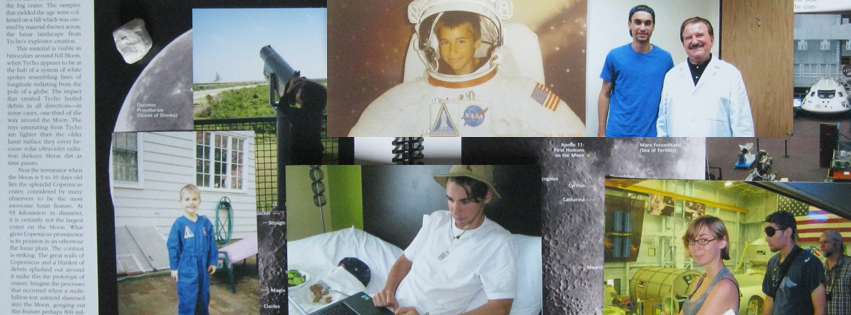
To put this into perspective, according to the American Society of Clinical Oncology (ASCO), while about 3,560 children will be diagnosed with a brain or central nervous system (CNS) tumor this year, it is estimated that 16,830 adults (9,490 men and 7,340 women) will die from primary cancerous brain and CNS tumors. DIPG, one of the deadliest pediatric diseases with a dismal less-than-1% survival rate, has an average age of incidence between 5 and 9 years old. Diagnosed at age 19, Neil was even more of an outlier. He sat on the cusp of childhood and adulthood, just old enough to make his own bold decisions regarding treatment and to clearly articulate the experience of the disease. When DIPG robbed him of his ability to speak and to write about the experience, he spoke to us with his eyes, and this we documented with a few telling photographs.
Stories show far more than statistics, and the sea of voices telling the stories intend to create a big wave. I can imagine Neil’s spirit, riding the crest with a whole bunch of younger souls, all destined to create a sea of change. That is the objective of my writing and sharing his story.
Words matter. Through voice, we speak words to instantly transmit positive thoughts, encouragement, comfort, love and joy. Through writing, we use words to share valuable information, to describe transformative ideas and to compose inspiring stories. I write for Rhode Island NATURAL AWAKENINGS magazine, because the focus is upbeat – Healthy Living Healthy Planet – and my words go out to over 50,000 readers. More recently, I’ve been working on the story of our late son, Neil, who was, and still is, an enthusiastic and conscious communicator, taking care in choosing just the right words.
Neil composing words in the fight for his Right to Try
“Neil had a unique voice, his own way of expressing his life experiences, character, thoughts and feelings. That was until a tumor started to grow inside his brain and gradually took away his ability to write and then his ability to speak. The name of the disease, diffuse intrinsic pontine glioma, is a strange string of uncommon vocabulary words. It is better known by its acronym, DIPG. Diffuse means the tumor is dispersed throughout the tissue, as opposed to being a solid tumor. Pontine refers to a part of the brain stem known as the pons, which relays messages between several areas of the brain and between the brain and the rest of the body. Without the pons, the brain would not be able to function, and neither would the body. Intrinsic means deep-seated. Each of these words means the tumor is inoperable. Glioma refers to the glial tissue that is supposed to support and protect the nerve cells, only in the case of DIPG, the glial cells grow out of control and strangle the nerve cell pathways. DIPG gradually takes away all physical abilities, except the ability to think. Throughout the progression of the disease, Neil remained conscious of everything that was happening, and somehow managed to accept it all with grace.
“Do people realize how blessed they are to have a voice? Since Neil is no longer able to share his story, his thoughts about life and his dreams for the world, I’m here to do it. Things happened in Neil’s life that other kids need to know about in order to help make this world a better place. As Neil’s mom, I’m able to access a lot of material and will share as much as I can in Neil’s own words and the words of the friends, family, coaches and teachers who knew him best. Neil loved a good story, and if Neil’s story and his thoughts about life make people think, and think about their own stories differently, then I will have done my job well.”
I welcome blog readers to engage and share the thoughts sparked by these words. Words are expressions of thought. Words and thoughts are influential. I dream of empowering more young people, like Neil, to share their ideas, stories and dreams for a better world. Read Neil’s story in the Boston Globe.
Etymology – the study of words. Pen – from Middle English, denoting a feather with a sharpened quill that can be dipped in ink for writing; derived from Latin penna, meaning ‘feather.’ When I was around 7 years old, our family traveled to Colonial Williamsburg, Virginia. I remember my souvenirs, a white quill pen and ceramic ink well. Later I married a writer, who for the past 25 years has been my best friend and my teacher, sharing this crazy life and helping me hone my tools and my craft.
He is sitting at his desk, next to mine, and just asked me, out of the blue, where his Exacto penknife disappeared to. I have absolutely no idea!
He has a website, netscribe.com, and here’s a pointed piece he published there a few years ago, about bumper stickers and writing.
The feather, whence the pen
Was shaped that traced the lives of these good men,








 Wendy Nadherny Fachon