Our pink dogwood is old. It is less healthy than it used to be, and it’s roots press up against the foundation of the house. It seems it is time to let it go. Letting go is hard for me to do. Looking out the window at the pink blossoms, for perhaps the last time, brings to mind words I wrote in Shining a Light on Grief:
“…thinking I doing well with respect to grieving, I resumed writing monthly articles for Natural Awakenings magazine, beginning with The Anticancer Kitchen, sharing some of what you and I had learned together – what to eat, what to avoid. Writing about foods that prevent and fight against cancer came easily. It was a practical piece of writing, which I hoped readers would find it helpful.
“At this same time, I began journaling, reliving the difficult memories of your final year, while they were fresh in my mind. I withdrew into this writing, spending days sitting at your computer table, capturing the sequence of events and the details, trying to rationalize it all. As I wrote, however, the reliving was causing more pain than comfort.
“Maybe that is why I would wear your favorite sweat pants and gray hoodie, and imagine your warm presence wrapped around me while I wrote. For comfort. To suppress the anguish deep in my heart. Occasionally, I would look out the window and find distraction in the seasonal changes of the dogwood tree, as you once did. The leaves turned burgundy and fell in the fall, while birds foraged the red berries. The snow came and frosted the branches, and the squirrels nibbled on the new buds for winter time sustenance.
Squirrel. Your power animal. This reminded me of my solitary walk around the block, the day after you died. I found a dead squirrel lying on the pavement. It had taken a bad fall from high up above. It was perfectly beautiful, with a just slight trace of blood, in the back of its head, near the brain stem. I imagined the squirrel had taken a leap of fate, and missed. I mourned its death with yours. It is said that when you see a dead animal in the road, the noticing is to help the spirit of the animal to move on, however, it could also be message for the viewer.
“I have read about squirrel power on a shamanic website. ‘“’Squirrel is an almighty power animal to have any time when you feel you have reached a dead end in your life, or in a situation and ready to give up. We are shown that perseverance and the readiness to try different methods are the keys to success.’”’ The notion that any obstacle can be overcome is part of the squirrel’s outlook on life. There is no giving up. I can see now that this was a message for me, yet back then I was numb and blind to it.”
If we have the pink dogwood cut down, we will have to find a young pink dogwood to replace it, and plant it a little further away from the house.What do you think?
My super power is seeing what other people do not. Working in the field of health insurance opened my eyes to the fact that our medical care system was bleeding our economy to death and compromising our well-being. Was this intentional or was it being done unwittingly? “Unwittingly, blindly,” I thought at the time, “The people who run the system are unable to see what they are doing to us.” The system has become a dark mess created by insurance companies, hospitals and pharmaceutical companies, with each entity focused on its own bottom line.
I left insurance to work in the field of childhood wellness and to write articles for Natural AwakeningsMagazine. As I began researching and contributing articles to the Healthy Kids and Healthy Living sections, my super power began allowing me to see solutions to children’s health challenges and to write about them.
Dean and I had been parenting our own two kids consciously – limiting screen time, seeking outdoor adventures, packing healthy lunches, sharing home-cooked dinners and supporting their athletic activities. When our scholar-athlete son, Neil, 19, was diagnosed with terminal DIPG brain cancer in 2016, we were stunned. “This is impossible! How could this happen?” Oncologists were unable to provide a reasonable explanation.
As conscious, well-informed parents, we quickly concluded the cancer was caused by a pair of vaccines our son had been given during his pre-college physical exam one year earlier – the human papillomavirus (HPV) vaccine (a.k.a. Gardasil) and the meningococcal vaccine. One was supposed to prevent cancer and the other was supposed to prevent brain inflammation.
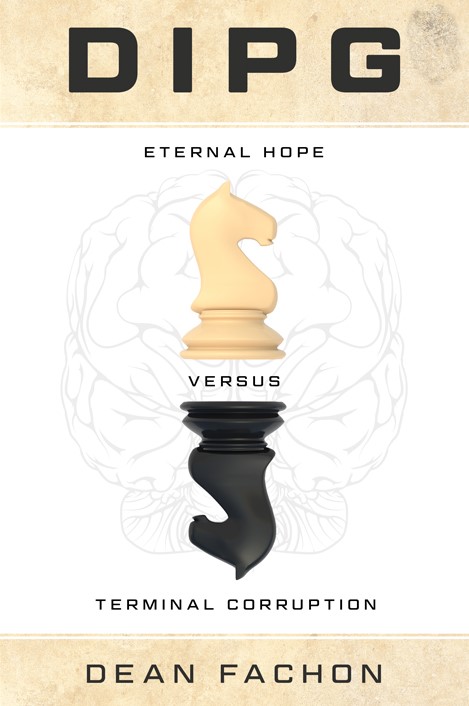
We were aware of adverse events associated with the HPV vaccine, including death. In fact, when one of us had attended Neil on previous doctor visits, we declined the vaccine when it was offered. At the age of 18, however, Neil had driven himself to his appointment, and when the nurse again offered the vaccine, he held out his arm. Dean describes this particular medical transgression, in a book we just published – DIPG: Eternal Hope Versus Terminal Corruption, on pages 87-90. Neil lost his battle with cancer on February 19, 2017, however, our fight continues.
Six years passed before I spoke publicly about the vaccine incident, and its connection with Neil’s illness and his death. In February 2023, we attended a conference presentation on “Citizen Journalism” given by Children’s Health Defense (CHD). The presenters encouraged the audience to document events and stories through video recordings, and CHD TV journalist Polly Tommey invited me onstage to demonstrate citizen journalism. She interviewed me, and I told Neil’s story. What I remember most about that day is people approaching me afterwards to thank me for speaking out. I found great courage and confidence in this.
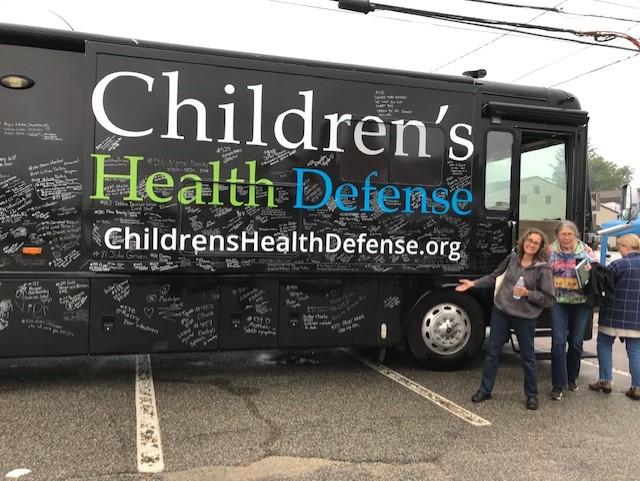
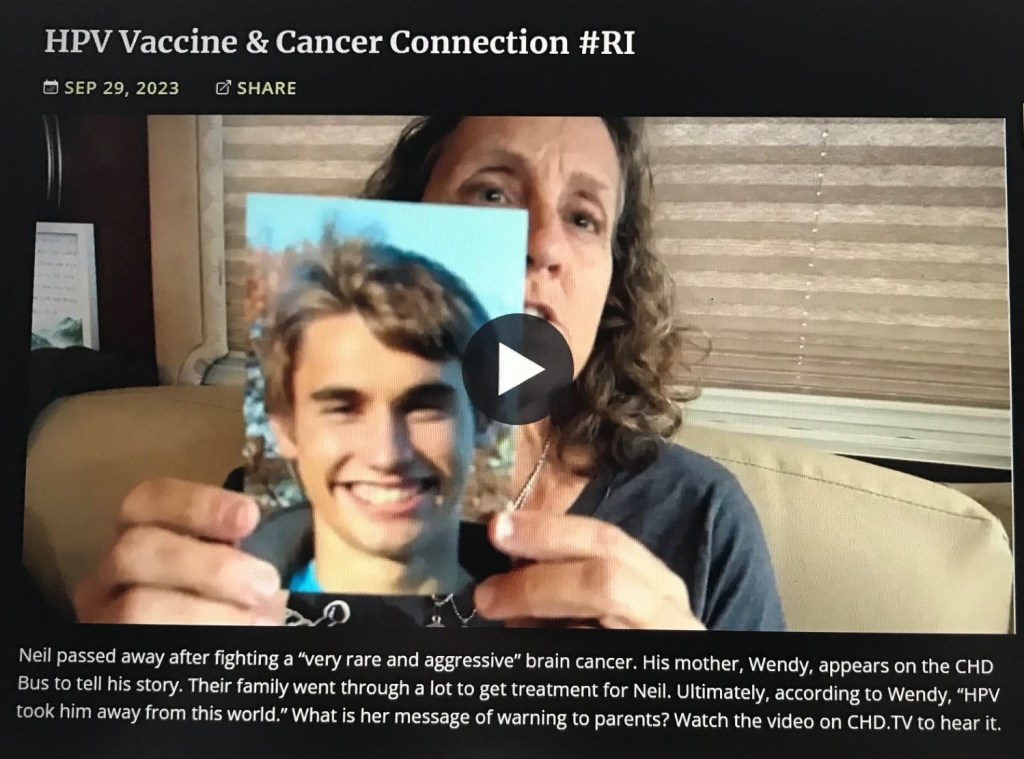
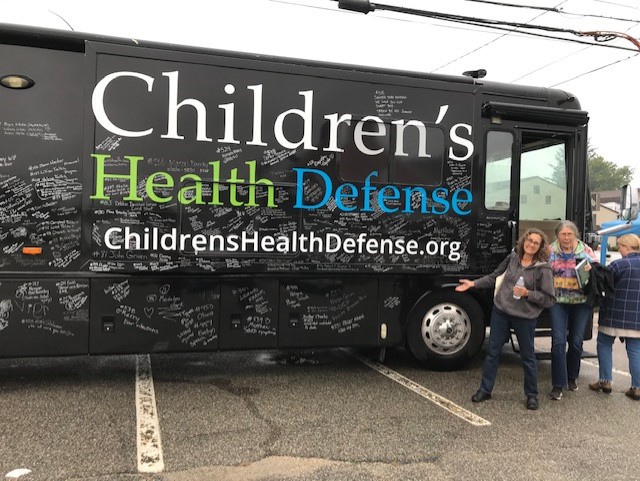
On September 29, 2023, the CHD TV bus rolled into my state, Rhode Island, one stop of many on its cross-country tour. Tommey was collecting people’s stories of vaccine injury and death. I waited in the rain until it was my turn to climb aboard. This time she led me through a full video interview, and I told my story in greater detail and with photos.
While on the bus, I met Brian Hooker, PhD, host of Doctor and Scientists on CHD TV and co-author of Vax-Unvax: Let the Science Speak with Robert F. Kennedy Jr. (RFK Jr.). Wikipedia describes Dr. Hooker as the “Department Chair and Professor Emeritus of Biology at Simpson University… known for promoting the false claim that vaccines cause autism.” Wikipedia describes RFK Jr. as an “American politician, environmental lawyer, anti-vaccine activist and conspiracy theorist.” In Vax-Unvax, these two insightful authors do a deep dive investigation to report on the “real” science and criminality behind vaccines. If you take time to actually read the book, you will be gobsmacked and come to respect their grasp of the real science.
Note: RFK Jr is the chairman and founder of Children’s Health Defense, whose mission is ending childhood health epidemics by eliminating toxic exposure. The organization seeks to protect children, expose harms and seek justice. RFK, Jr hosts The Defender Show on CHD TV.
Hooker signed a copy of his book for me, writing “For Neil, May you rest in the arms of almighty God! Your testimony lives on forever!”
I was also gifted with a second book, The HPV Vaccine on Trial: Seeking Justice for a Generation Betrayed by Mary Holland, J.D., Kim Mack Rosenberg, J.D., and Eileen Iorio. Official statements by the FDA, CDC and WHO, claiming that HPV vaccines are safe, contrast sharply with reports of devastating injuries and death which are recounted throughout this book.
Before leaving the bus…
… I signed Neil’s name and my testimony number (562). Then I went home and found my CHD TV bus interview HPV Vaccine Cancer Connection on the CHD website, watched it and began to read my new books.
In the Vax-Unvax book there is a chapter about HPV Vaccines, which states the following:
“The 2012 Vaccine Adverse Event Reporting System (VAERS) data showed that more serious adverse reactions were attributed to Gardasil than all other vaccines, with Gardasil accounting for more than 60% of the total. The Gardasil vaccine also accounted for 63.8% if all deaths, 61.2% of all life-threatening reactions, and 81.8% of all cases of permanent disability recorded in the CDC VAERS data.”
Let this fact sink in: more adverse reactions than all other vaccines. Gardasil is Merck’s #2 selling product, and Keytruda (a.k.a pembrolizumab), a drug used to treat cancer, is the company’s #1 product. Keytruda has such a long list of ugly common side effects, I question how anyone would want to take it.
Merck and GlaxoSmithKline bring in over $2.5 billion in annual sales for HPV vaccines, and the U.S. government has given these companies blanket liability protection. While the companies claimed the vaccines provided protection against cervical cancer, the clinical trials failed to demonstrate this claim. The HPV Vaccine on Trial exposé shares trial data and reports of women harmed by HPV vaccines.
The CHD bus continued across the country collecting stories to share in its new documentary VAXXED III: Authorized to Kill. The film premiered last week in select theaters. It is a brilliant and stunning piece of journalism. It will be released to the online public on October 4. It presents people’s testimonies of real experiences with C0VID vaccine injuries and deaths, as well as stories of hospital measures that led to unnecessary deaths for the unvaccinated. Currently, the C0VID mRNA spike protein shots, approved for use by the FDA in 2021, now have more adverse event reporting than all other vaccines.
So what comes next? How do we help the children who have been injured, and how do we help everyone else? We take back our health care sovereignty, and we learn how to heal ourselves. The human body has the amazing ability to heal itself when we give it proper support.
I attended the VAXXED III film premier with a group of women who work on the leading edge of care and are proving our children can get better. They provide guidance and natural solutions that are less toxic, less expensive, kinder to the body and more effective. One of these women, Maria Rickert Hong, is a co-founder of Documenting Hopehttps://documentinghope.com/ and Epidemic Answershttps://epidemicanswers.org. These websites provide knowledge for alleviating or even reversing the damage that’s been done. For those of you who, like me, are fighting for kids diagnosed with terminal cancer, please watch Rickert Hong’s interview with Nasha Winters, ND, Lac, FABNO, the best-selling author of The Metabolic Approach to Cancer, about supporting the health of kids with cancer. Winters was diagnosed with Stage 4 Ovarian Cancer at the age of 19. She managed to save herself, and, thirty years later, she is alive and well and helping others in her role as a Naturopathic Oncologist. Documenting Hope will help you find answers for treating autism and other debilitating diseases.
Please check out our DIPG Book web page and all the other links provided in this blog. Open your eyes. Real Eyes Realize Real Lies. We must seek beyond wikipedia and google, and beyond the mainstream media reporting and the agency information controlled by Big Pharma and unelected government technocrats who abuse their power.
Over the past five years, the Story Walking Radio Hour (SWRH) has introduced podcast listeners to some amazing parents and their difference making efforts. As 50 percent of children in the U.S are now afflicted with chronic health issues, parents are taking action to reverse this trend. When parents discover their own children’s lives being threatened by environmental toxins, they become compelled to learn more and correct the situation, for the love of their children and children all across the country.
Zen Honeycutt, a podcast guest as founder of Moms Across America, advocates for healthy community food systems and promotes organic whole food, free from pesticides, herbicides and other contaminants. She has presented astonishing lab analysis of baby formula and fast food that tested positive for heavy metal contamination and continues to conduct similar studies. She has been gathering and publishing solid evidence. Honeycutt is the author of Unstoppable: Transforming Sickness and Struggle into Triumph, Empowerment and a Celebration of Community.
Rachael McIntosh, founder of the Foundation for Bioethcis in Technology, has spoken on two episode. She cares deeply about the historic shift of life on Earth caused by technological advances — specifically synthetic biology introduced into the natural world and even into humans. She is a community organizer known for her advocacy work crafting legislation for the regulation of toxic atmospheric emissions. Few people are aware of the heavy metal particulates being sprayed into the stratosphere for alleged purposes of weather and climate modification. These particulates shower down to pollute the air, water and soil. McIntosh has presented compelling lab analysis of rainwater with high levels of aluminum, barium and other toxic metals. Rachael brings attention to other advanced technologies through monthly news releases and presentations. She is the author of the fictional Security through Absurdity series of books, in which she combines her personal experiences with scientific fact into a compelling narrative that explores bioethics.
Cecelia Doucette, founder of Massachusetts for Safe Technology, is a three-time guest on SWRH. As a communications expert, educator and community organizer, Cece works at the local and state level advocating for tech safe schools, homes, businesses and for regulation of wireless technology. She provides tools, education and informational resources to help people identify, mitigate and eliminate the health effects of living within the radioactive frequencies of cell phones, cell towers, wifi, Bluetooth and smart meters. She introduced listeners to the Safe Living Technologies RF meter, which allows anyone to measure electromagnetic frequencies in any environment. Paired with the monitoring of physical symptoms, these meters can help prove evidence of harm from electromagnetic radiation (EMF) exposure. She works with legislators to craft legislation and leads citizens in advocacy.
Janet Demeter, who lost a child to DIPG brain stem cancer, is the founder of Jack’s Angels Foundation, host of Childhood Cancer Talk Radio and a lead advocate in growing awareness of pediatric cancer through her Moonshot4Kids campaign. Since losing Jack in 2012, Demeter has learned a lot about cancer research, the shortcomings of the pediatric cancer care system and government policy, as well as safer, more effective options for treatment. She one of many parents who have been creating greater visibility and encouraging a higher level of funding for research into cures for diffuse intrinsic pontine glioma (DIPG) and pediatric cancers in general. Janet leads the effort to pass a resolution designating the 17th day in May as ‘‘DIPG Awareness Day,’’ which cites DIPG as the most compelling example of pediatric cancer.
September is Childhood Cancer Awareness Month, and the SWRH host, Wendy Nadherny Fachon, interviews Demeter, after sharing her own observations regarding both healthcare and cancer care. Fachon noticed that conventional oncologists ignore causation while naturopathic oncologists and functional medicine practitioners focus on causation. She wanted to know what caused her child’s cancer. This is relevant for SWRH, because cancer is largely a product of environmental factors, both outside the body and inside the body – polluted air, impure water, tainted foods, electromagnetic radiation and other foreign substances that cause harm to a body. These factors are invisible and effect the body in invisible ways, yet new diagnostics are available to make these causes visible and new therapies are available to make cancer and other diseases more treatable. Listen to the latest radio hour episode, For Our Children: Warrior Parenting.
Parents who lead in civic engagement set wonderful examples for their own children and inspire other parents to claim a cause and do the same.
LISTEN TO PARENTS SPEAK ABOUT OUR CHILDREN’S HEALTH
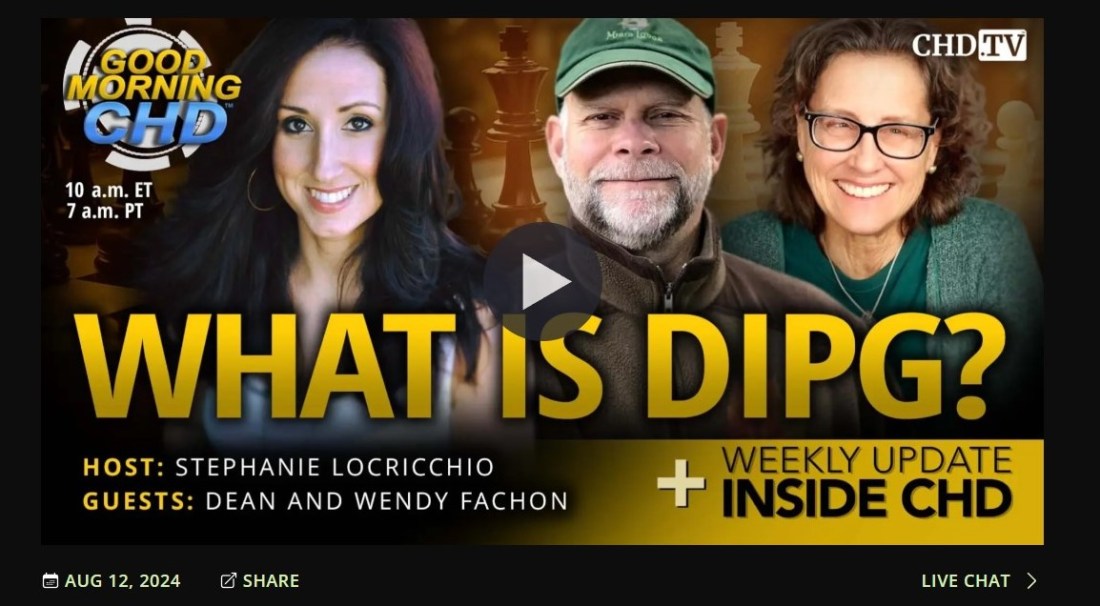
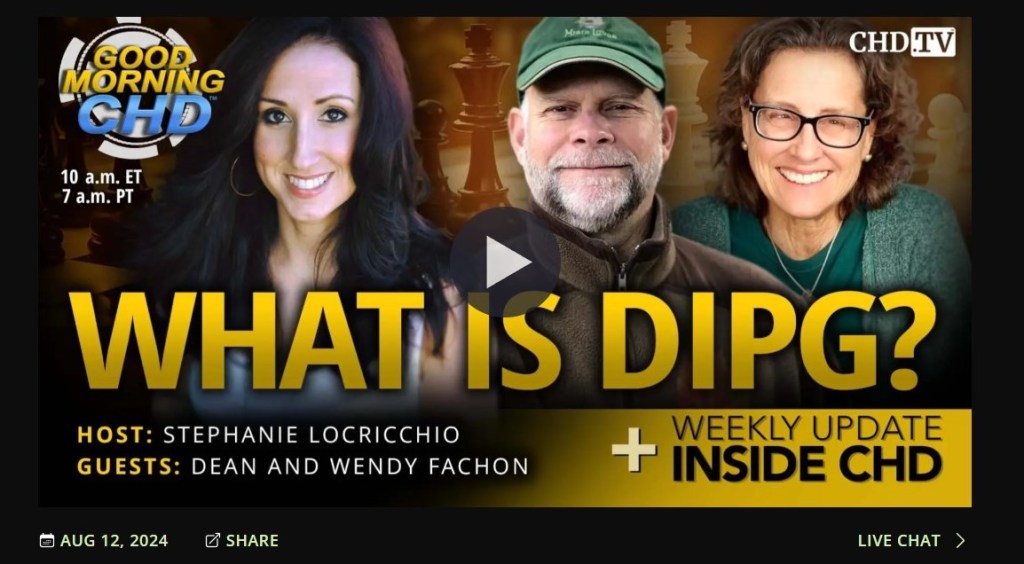
Today our son’s story was featured on Good Morning CHD (CHD.TV). Dean and I answered questions about DIPG, a deadly childhood disease – what it is, what might cause it, treatment options, treatment access, our newly released DIPG book and personal choice in health care treatment. Stephanie Locricchio hosts this edition with an inside look at Children’s Health Defense medical freedom efforts and how viewers can get involved.
Topics in the first segment include the upcoming release of an important new documentary, concerning legislation related to parental consent, and the multitude of screening events across the country. The upcoming film will share the stories of people who visited the CHD Bus as it traveled across the country last year. I was one of hundreds of people who hopped aboard the RV to be interviewed for The People’s Study – a collection of stories gathered from people who were injured or who witnessed a loved one die as a result of irresponsible medical intervention, including but not limited to C0VlD-l9 shots or hospital protocols.
Watch the CHD episode with our story What is DIPG? and consider how it relates.
Since our son, Neil, was diagnosed with terminal brain cancer in 2016, we have lost more children to DIPG than lives lost on 911. Neil died in 2017. Since 2016, families in the pediatric brain cancer community have sought the passage of what is now H.RES.416, the DIPG Awareness Resolution. 2024 marks a pivotal point in a story that began 62 years ago, in 1962, with the loss of Neil Armstrong’s 2-1/2 year-old daughter, Karen, to DIPG. Armstrong’s grief is central to the Hollywood movie First Man (released in 2019 and obscured by the attention given to the emergence of COVID-19). As a resolution of bereavement, H.RES.416 qualifies as an exception to House Rule 29, and should be eligible for discussion on the floor of Congress.
Bereavement begins at diagnosis. Last year, I participated in a 3-month grief writing program and published my story in an anthology of stories of love and loss, titled Shining a Light on Grief. I titled my chapter A Letter to My Son. Below, I share three excerpts:
“I joined two facebook groups – DIPG Awareness for Family and Friends (5.7K members) and DIPG Research (4.3K). Membership includes parents of children undergoing radiation, parents sharing experiences with natural therapies, parents seeking the newest experimental treatment, parents giving updates on their child’s treatment, and parents losing or having lost a child to the disease. It was place where hope battled mightily with despair. Every family came there in search of a support network and a cure.” p 60, Shining a Light on Grief (Volume Two)
Hundreds of families interact on these private group pages. The photos can often be difficult to look at. This is the one place, however, where we can share our grief and know we are not alone.
“The hospice staff kept urging us to discontinue the tube feeding and stop providing water. We resisted a while longer, as the visitors kept coming. When we finally made the decision to discontinue feeding, I was thinking back to your first breath, holding your small body in my arms for the first time and feeding you from my own breast. Holding back food and water was the most heart-wrenching decision I have ever made in my life. It meant letting go. My anguish was visceral. I felt it deep within my womb, and it was unbearable. While the nurses administered your morphine, I wished they would have given some to me.
“I stepped away from your bedside, hurried down the hall to the hospice chapel room, entered and closed the door. I sat down, alone, on the couch, and then… I began wailing… at God?… to God? Why? Why is this happening? Why did this ever have to happen? I sobbed. My eyes and face became raw with the salt of my tears and snot. I imagined your spirit, floating above me, looking down, unable to console me.” p. 69, Shining a Light on Grief (Volume Two)
After the funeral, we try to reclaim the piece of us that died, put it back together with the remaining pieces of our lives and move forward. This is extremely difficult:
“When Dad and I attended a five-day bereavement session at Camp Sunshine in Maine, we got to know 37 other families who had lost children to a variety of life-threatening diseases… Years beyond loss, many parents continue to attend camp, still feeling raw and brittle. Some Camp Sunshine parents had started foundations within a year of losing their child and were immersed in their causes. Others were still doing their best just to get from one day to the next, and that’s okay. I get that! …
“There were separate discussion groups for mothers and for fathers. Women tend to grieve more openly, while men tend to grieve privately. Mothers spoke of how they felt “lost.” I could relate, having felt lost some days. Some mothers freely discussed how their marriages were tested by the loss of their child. Although Dad and I handle grief differently, our shared loss has brought us closer together…
“So much of what we experienced with you was traumatic. Our autonomic nervous systems got scrambled, and this is especially evident at night time. When my body should be resting, it is wakeful. If I wake, as I sometimes do, at 2am, the rest of the night can seem long to me. Dad and I are a bit like soldiers after a war, suffering our varied wounds and private emotions. pp-78-79, Shining a Light on Grief (Volume Two)
While I contributed 24 pages to Shining A Light on Grief (Volume Two), my husband has poured his heart out by writing a 500-page book titled DIPG. We stand ready to help other bereaved parents put their experiences into words. It might be one paragraph or one page. Reliving the heartbreaking moments and expressing them in words can be extremely difficult, however, it can also be cathartic and healing. Congress needs to hear these stories – heartfelt expressions of bereavement from mothers, fathers, siblings, friends and relatives. Have you lost a loved one to a neglected cancer or are you close to someone who has? If so, please try to put pen to paper, and see where it takes you. Reach out to me if you need help getting started, editing a final draft or identifying your congressional representative. I’m here – wendy@netwalkri.com.
When it comes to treating cancer, the best strategy is an integrative approach, which begins by identifying the underlying causes. One cause is too much sugar – cane sugar, beet sugar, corn syrup. Other causes include nutritional deficiencies, immune deficiencies, environmental toxins and a lack of physical exercise, sleep or hydration. Once identified, many of these issues can be addressed by improving diet and digestive health. Nutrition is the key to reclaiming health, and reducing consumption of sugar and simple carbohydrates is a perfect place to start. Sugar lacks vitamins and nutrients, and it literally feeds cancer. This is one of many topics Dean Fachon explores in his book DIPG: Eternal Hope Versus Terminal Corruption. Here are two excerpts from the book:
March 23rd was the day Neil had his first appointment with Dr. Jody Noé, the naturopathic oncologist recommended by Mary Blue. It was sunny and warm outside, and we eagerly piled into the car for the drive to Pawcatuck, Connecticut, just over the state line from Westerly, Rhode Island.
Dr. Noé had a country doctor’s office in the basement of an old New England home. We descended the steps to a reception window, and Neil checked in. Then, we were escorted to a cozily decorated waiting area. As we sat, Wendy picked up a large book off a shelf full of reading material. The book was a tome written by Dr. Noé herself, called the “Textbook of Naturopathic Integrative Oncology (Fundamentals of Naturopathic Medicine).”
* * * * *
“Good nutrition isn’t difficult science,” Dr. Noé continued, “yet you’d be amazed at how little training conventional oncologists ever get.”
“Oh,” Wendy shook her head with chagrin, “we’ve seen posters hawking candy in some of their waiting rooms – — for patients to ‘keep up their strength.’ ”
“It’s hard to fathom,” Neil scowled. “Everything I read says cancer loves sugar!”
Recently, I found an interesting article that explains how sugar feeds cancer: Researchers Discover New Mechanism Linking Diet and Cancer Risk (The Epoch Times, May 29-June 4, 2024). The mechanism is a chemical, methylglyoxal (MGO), which is released whenever the body breaks down glucose. MGO temporarily turns off a cancer-preventive gene known as BRCA2.
BRCA2 repairs damaged DNA and helps make a protein that suppresses tumor growth and cell proliferation. People with a faulty copy of BRCA2 are more susceptible to MGO. For both cancer prevention and supporting cancer treatment, the best doctors recommend reducing or eliminating sugar, high fructose corn syrup and other simple carbohydrates. This means avoiding consumption of soda, baked goods, bread and pasta; cereals and fruit juices (especially with sugar added); candy and even ketchup. If sugar is one of the ingredients listed on the product label, think twice before purchasing. Also beware of sugar substitutes, which can present other products.
FACT: In 1915, the average sugar consumption per person was 17.5 pounds. As of 2011, the number rose to 150 pounds of sugar per person annually.
FACT: The current average sugar consumption per day is 25.28 teaspoons.
FACT: In 2016, the U.S. government has recommended a person’s daily added-sugars intake to 10% of a day’s total calories intake (That means for a 2,000 calories diet, a person should consume no more than 13.3 teaspoons of sugar in a day). THIS IS STILL WAY TOO MUCH!
These facts were pulled from an article titled “45 Alarming Statistics on American’s Sugar Consumption and the Effects of Sugar on Americans’ Health” on The Diabetes Council website – well worth a complete read. Sugar consumption has become a serious addiction, and dealing in sugar is a multi-billion dollar industry. Sugar addictions begin in early childhood, with an overindulgence in sweet foods and drinks. Reducing sugar consumption takes will power, however, removing the temptation of sugar from your kitchen will pay off big time in terms of out-of-pocket health expenses and your family’s overall well being. Ice cream, cookies and soda are a special treat and should be dispensed in moderation.
“Imagine yourself conquering life and beating your fears.The act of imagining can help to make it reality.” — Neil Fachon
Read the following excerpt from DIPG by Dean Fachon, and imagine yourself in the mind and body of a DIPG patient:
It’s “diffuse,” because the cancer spreads in and around healthy tissue; “intrinsic,” because the cancer is so intertwined it’s impossible to tease it apart from healthy tissue; “pontine,” because the cancer specifically takes up residence in the pons, the base of the brain (brain-stem) which controls many crucial bodily functions (many autonomic); and “glioma,” because the cancer invades “glial” cells, the cells which, as irony would have it, form the protective cushion which surrounds healthy neurons. As “Diffuse Intrinsic Pontine Glioma” grows, it stretches synaptic-connections and squeezes neurons, slowly degrading their ability to relay signals until those signals are completely cut off. DIPG for short.
DIPG is quick, and it’s stealthy. At first its symptoms are so imperceptible they could easily be ignored, all the more-so because DIPG’s victims are often very small children who can’t articulate what they’re feeling. Even then, a pediatrician might chalk symptoms up to sleep-loss or fighting a low-grade infection: “Fill this prescription and make sure she gets enough rest.”
Until one day the victim’s eyes cross or her movements become fumbled. Then the alarm bells go off and tests are ordered. By then, the prognosis is bleak. In the latter stages of disease, symptoms range from increasing difficulty with swallowing to being unable to take a deep breath. The progressive loss of autonomic functions and motor-control is akin to beheading the victim one nerve-strand at a time. Death by any combination of critical-system failures usually occurs within less than a year of diagnosis.
Yesterday, the U.S. Senate passed the DIPG Pediatric Brain Cancer Awareness Resolution, recognizing May 17 (today) as DIPG Pediatric Brain Cancer Awareness Day. Concurrently, my husband Dean is publishing our son’s story, DIPG: Eternal Hope vs. Terminal Corruption, to build awareness around DIPG, pediatric brain tumors and navigating the medical care with a rare disease. This unique book will place you in the shoes of a family that must manage a truly daunting diagnosis. While we had hoped to have copies available for purchase this month, a well-published book takes time, and we plan for DIPG to be available by July 2024. In the mean time, please visit our web page, dig into its supplemental content, share this blog, and help us grow awareness.
In 2016, our son, Neil, was diagnosed with Diffuse Intrinsic Pontine Glioma (DIPG), a “rare cancer.” With DIPG Awareness Day coming tomorrow, I got to wondering what “rare” means in this context. Here is what I found on the National Cancer Institute (NIH) website – MyPart:
“Rare cancers are those that affect fewer than 40,000 people per year in the U.S. As a group, they make up just over a quarter of all cancers. Because rates of cancer in children are very low, all children’s cancers are considered rare. A quarter of all cancer deaths each year are due to rare cancers. Although new treatments are always being developed, finding new treatments for rare cancers is very hard for many reasons.”
Over a quarter of all cancersare rare. So, then I got to wondering, how many rare “brain cancers” are there? Here is what I read on the NCI website – NCI-Connect:
“There are over 130 different central nervous system (CNS) tumor types. However, they account for less than two percent of all cancers diagnosed each year in the United States. Because primary CNS cancers are so rare, disease information, support, and expert care can be hard to find. NCI-CONNECT started with 12 select tumor types, each with fewer than 2,000 people diagnosed per year in the United States.”
DIPG is among the rarest and deadliest of these cancers, with only about 300 children diagnosed per year. For a 19-year-old to be diagnosed with DIPG is beyond rare; it’s unique.
The MyPart page explains what a “rare” diagnosis means for patients:
It often takes a long time from the time you think something is wrong to the time when doctors know that you have a rare cancer and what kind of cancer it is.
It is hard to find doctors who know a lot about your cancer and how to treat it.
It is hard to know what to do when doctors don’t agree on how to treat your cancer.
You may need to travel far from your home and family to get treatment for your rare cancer.
It took five months from the onset of initial symptoms for doctors to arrive at a cancer diagnosis. From the moment our son was told that he had a “rare” brain stem tumor, we had to contend with the other three challenges. When the oncologist went on to say that the cancer was aggressive, inoperable and incurable, and Neil had maybe only three months left to live, we understood all to well what “rare” and “deadly” meant.
Cancer is but one category of “rare” diseases. So how many “rare” diseases are known to exist and how many people can relate to our situation? The National Library of Science website reports:
Regulators, scientists, clinicians and patient advocacy groups often cite ~7,000 as the number of rare diseases, or between 5,000 and 8,000 depending on the source.
To date, approximately 300 million people live with “rare” diseases, according to The Lancet, which means pretty much everyone knows someone and can relate. Treating a rare disease requires personalized therapy, yet our rigidly-controlled medical system, with its overbearing clinical trial drug approval process, prevents this from happening. Our conventional system is completely dysfunctional when it comes to helping people diagnosed with rare diseases. Is there anything we can do to challenge the current system and improve how we come to understand and treat rare diseases?
Yes! My husband, Dean, is publishing our son’s story, DIPG: Eternal Hope vs. Terminal Corruption to help people begin to explore and discuss this topic. Available by July 2024, our family’s personal narrative offers a compelling illustration. Please visit our web page and share this blog, which can serve as a forum for readers to exchange their thoughts, experiences and suggestions. Together, we could create one heck of a virtual book club. Refer the “Suggested Reading” list we provide. The first book on that list is Defeat Cancer. If you are interested in joining a “rare” book club, please contact us.
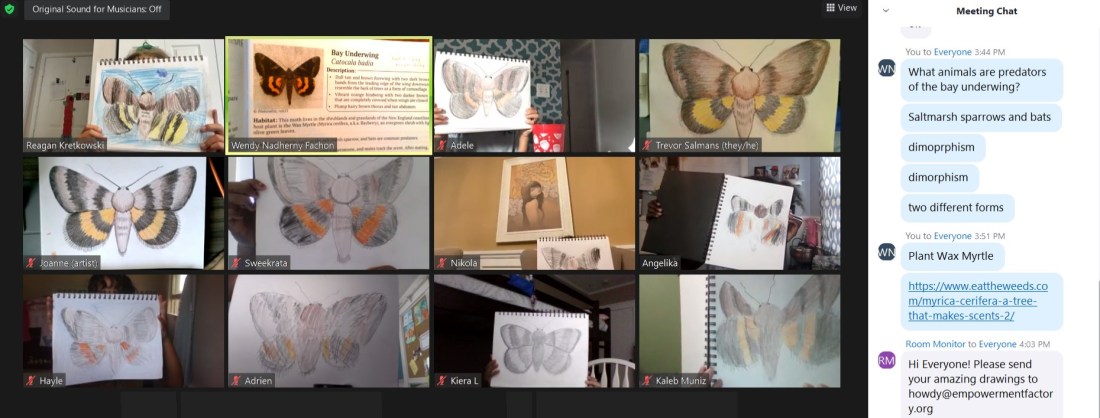
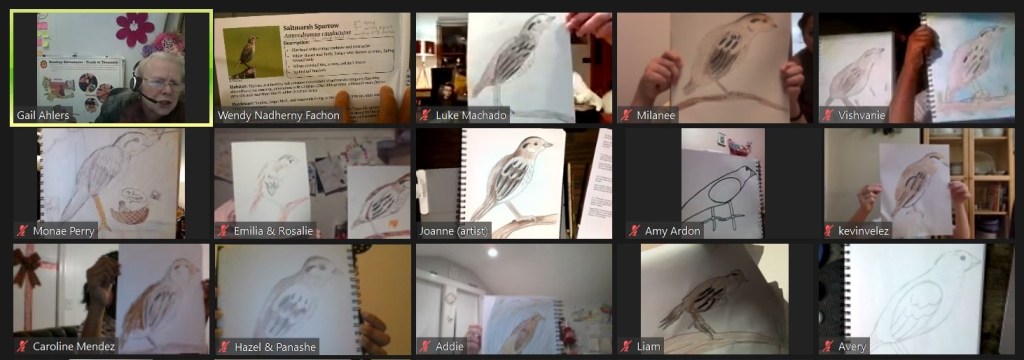
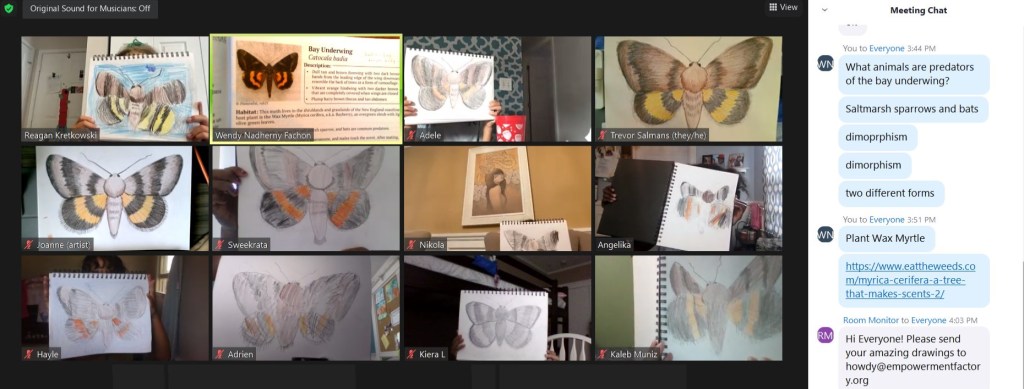
Students share their work at the end of the 11/27/23 Nature Drawing workshop, led by Gail Ahlers, Joanne Chen and myself.
While the Saltmarsh Sparrow (Ammodramus caudacutus) has been named the poster child for sea level rise, its actual story is about restoring salt marsh habitat and conserving a threatened species, protecting it from loss and harm. The Saltmarsh Sparrow is the first of seven species studied in the Empowerment Factory’s Nature Drawing Salt Marsh series, which begins with establishing an understanding of the value of a salt marsh.
SALT MARSH HABITAT
Rhode Island salt marshes are found all around the Narragansett Bay – along the shores of salt ponds, in small bays and estuaries, and within estuary rivers.
Salt marshes serve as natural pollution treatment systems by filtering out pollutants before they reach coastal waters. The marsh’s diversity of plants and shellfish help with the filtering.
Salt marshes provide coastal community developments with a protective buffer during storms and flooding, however, human development itself has increased the likelihood of floods occurring.
Salt marshes provide nursery grounds and foraging habitat for hundreds of species of birds, fish, shellfish, mammals and other animals. At the same time, salt marshes provide recreational areas for line fishing and shellfishing, practices which need to be managed to prevent overfishing.
The salt marsh is a vital resource for both wildlife and humans. Unfortunately, this habitat has been destroyed by human activities, which have thrown the ecology out of balance and adversely affected the wild inhabitants in different ways. The City of Providence was once known as the Great Salt Cove. Over the past 200 years, however, humans have filled an estimated 60% of Rhode Island’s salt marsh’s with mud and sand. Construction of dikes, roads and rail crossings have restricted natural tidal flow and disrupted numerous marsh ecosystems.
The Saltmarsh Sparrow has been living life on the edge of danger and destruction, literally, because they tend to build their nests just above the “normal” high tide mark. Like humans, they love their waterfront property. Each female has 26 days, within the 28-day high tide cycles of the full moon, to build her nest, lay her eggs, hatch her chicks and feed them into fledgling stage. All this has to happen within 26 days! What a Super Mom! This adaptation has been necessary for each baby bird’s survival, yet increasingly marshes are flooding before peak tides and again at mid-cycle, destroying many nests.
How does this happen? It all comes down to the science of hydrology, the exactness of how a salt marsh is flooded by the tide and how freely ocean water is able to move in and out of the marsh area. Specialized plants and animals have adapted to survive in particular areas of the marsh, and this defines the entire marsh food web and complex ecosystem.
Solutions to correct this situation include the repairing stone culverts that have collapsed and restricted the flow of water under elevated roadbeds, digging shallow ditches to help drain areas, removing substrate to elevate land mass and replanting areas with salt marsh grasses. These are all important jobs for humans to take on.
While studying and drawing a different animal each week, students learn about its habits and the problems challenging the survival of its population. Each species has a different story to tell. Students use their artwork to share these stories, build awareness and advocate for species and habitat conservation.
LEARNING OBJECTIVES AND MEASUREMENT BENCHMARKS
Increase in environmental literacy: Students take a pre-survey and a post-survey to assess their acquisition of new knowledge.
Mastery of drawing skills: Students demonstrate their skill development through the completion of seven sequential drawing projects.
Social and emotional advancement: Teachers observe the students as they present themselves on-screen, noticing improvements in mood, social comfort within the group, discussion participation, self-expression and overall self-confidence.
Salt Marsh Nature Drawing is the fifth course in the Nature Drawing series created and taught by The Empowerment Factory. Developed in partnership with the RI Department of Environmental Management, the bilingual teaching materials support the lesson structure in presenting the salt marsh habitat and seven Species of Greatest Conservation Need (SGCN) living there:
Almost all Nature Drawing courses are taught virtually, and the format has been highly successful in terms of attendance, student engagement and project quality and completion. While this course meets Next Generation Science Standards (NGSS), Common Core State Standards (CCSS) and Social Emotional Learning Standards (SEL), it places an emphasis on critical environmental science learning.
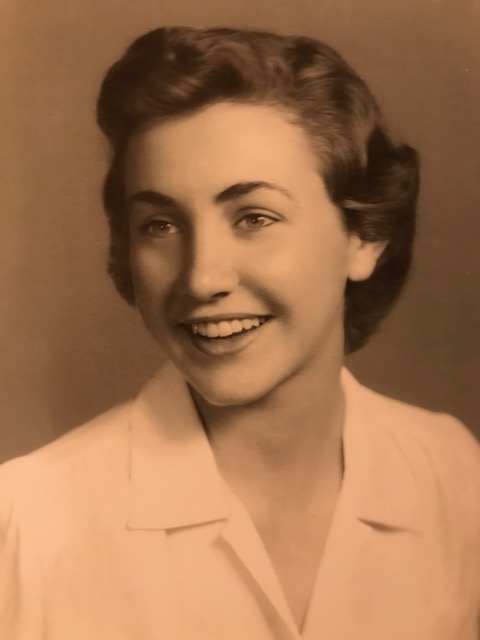
Before my mother married my father and raised five children, she was a school teacher.
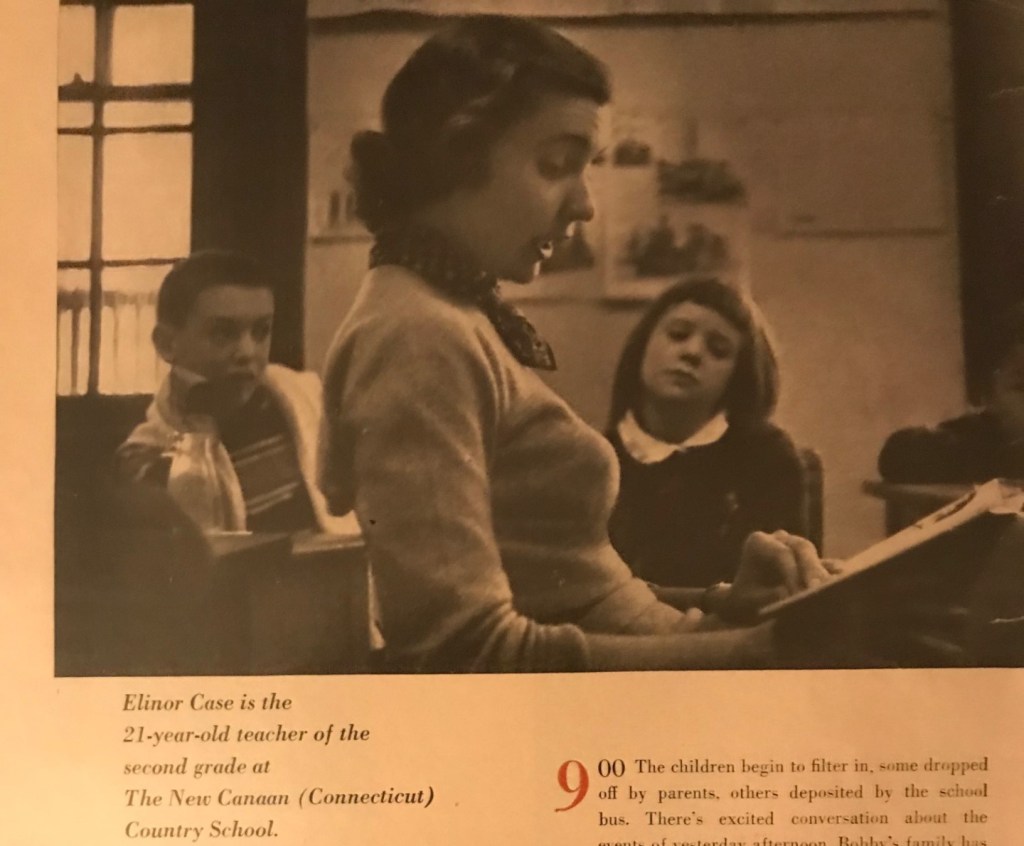
In 1951, at the age of 21, she was profiled by Glamour Magazine, in an article titled “diary of an elementary school teacher.” It was the first in a series of articles about women’s careers.
I found the article in my mother’s scrap book, and it took me on a trip over 70 years back in time.
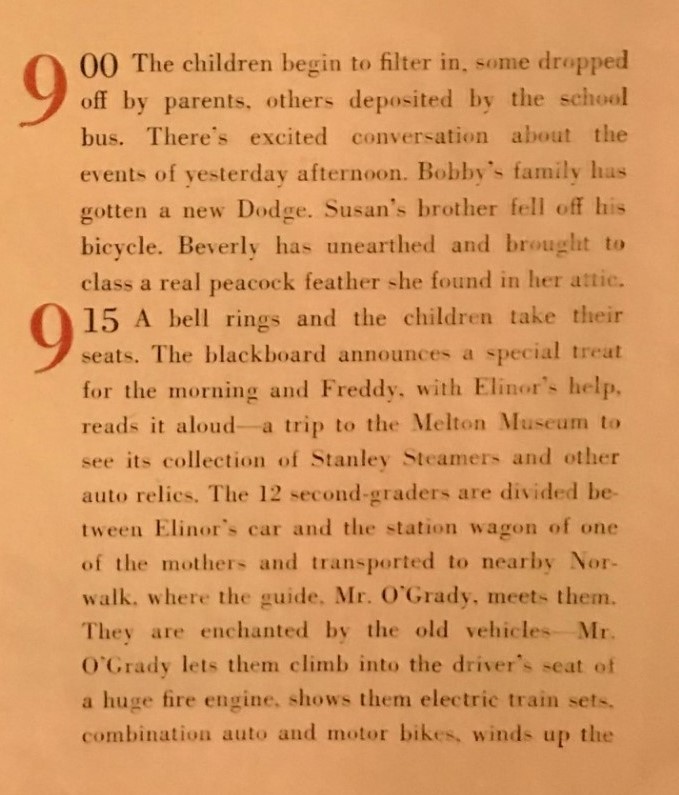
At 11:30 the class returned to school and my mother got her students back to class work with a lesson in gratitude.
“Do you think we should let Mr. O’Grady know that we like the tour?” They do, so Bobby passes out paper and everyone writes a thank-you note. Elinor aids the cause of courtesy by printing hard words like automobile, electric, transportation on the board. Some of thee children wax exuberant, close with “love and kisses” to Mr. O’Grady but Elinor lets these pass. “The important thing,” she says, “is that they learn that it’s nice to express appreciation – the exact form doesn’t matter.”
How long has it been since our society glamorized school teachers? I remember my own teachers in the 1960s, teaching our class how to compose and format thank you notes and then address an envelope. How many elementary students know how to address an envelope today? If we experience a solar storm next year, as reported by the Patch earlier this week, and it knocks out the internet for months, maybe we will need to start teaching these basic skills (letter writing and the expression of gratitude) again. But, why wait until then? Why not now?
Christmas is coming, and my mother made all five of us write thank you notes for every gift we received from friends and relatives. Read my Pop-Up Thanksgiving Message photo blog about adopting a daily practice of gratitude and engaging in more thankfulness activities.






 Wendy Nadherny Fachon