What is a rare cancer?

In 2016, our son, Neil, was diagnosed with Diffuse Intrinsic Pontine Glioma (DIPG), a “rare cancer.” With DIPG Awareness Day coming tomorrow, I got to wondering what “rare” means in this context. Here is what I found on the National Cancer Institute (NIH) website – MyPart:

“Rare cancers are those that affect fewer than 40,000 people per year in the U.S. As a group, they make up just over a quarter of all cancers. Because rates of cancer in children are very low, all children’s cancers are considered rare. A quarter of all cancer deaths each year are due to rare cancers. Although new treatments are always being developed, finding new treatments for rare cancers is very hard for many reasons.”

Over a quarter of all cancers are rare. So, then I got to wondering, how many rare “brain cancers” are there? Here is what I read on the NCI website – NCI-Connect:

“There are over 130 different central nervous system (CNS) tumor types. However, they account for less than two percent of all cancers diagnosed each year in the United States. Because primary CNS cancers are so rare, disease information, support, and expert care can be hard to find. NCI-CONNECT started with 12 select tumor types, each with fewer than 2,000 people diagnosed per year in the United States.”

DIPG is among the rarest and deadliest of these cancers, with only about 300 children diagnosed per year. For a 19-year-old to be diagnosed with DIPG is beyond rare; it’s unique.

The MyPart page explains what a “rare” diagnosis means for patients:

  • It often takes a long time from the time you think something is wrong to the time when doctors know that you have a rare cancer and what kind of cancer it is.
  • It is hard to find doctors who know a lot about your cancer and how to treat it.
  • It is hard to know what to do when doctors don’t agree on how to treat your cancer.
  • You may need to travel far from your home and family to get treatment for your rare cancer.

It took five months from the onset of initial symptoms for doctors to arrive at a cancer diagnosis. From the moment our son was told that he had a “rare” brain stem tumor, we had to contend with the other three challenges. When the oncologist went on to say that the cancer was aggressive, inoperable and incurable, and Neil had maybe only three months left to live, we understood all to well what “rare” and “deadly” meant.

Cancer is but one category of “rare” diseases. So how many “rare” diseases are known to exist and how many people can relate to our situation? The National Library of Science website reports:

Regulators, scientists, clinicians and patient advocacy groups often cite ~7,000 as the number of rare diseases, or between 5,000 and 8,000 depending on the source.

To date, approximately 300 million people live with “rare” diseases, according to The Lancet, which means pretty much everyone knows someone and can relate. Treating a rare disease requires personalized therapy, yet our rigidly-controlled medical system, with its overbearing clinical trial drug approval process, prevents this from happening. Our conventional system is completely dysfunctional when it comes to helping people diagnosed with rare diseases. Is there anything we can do to challenge the current system and improve how we come to understand and treat rare diseases?

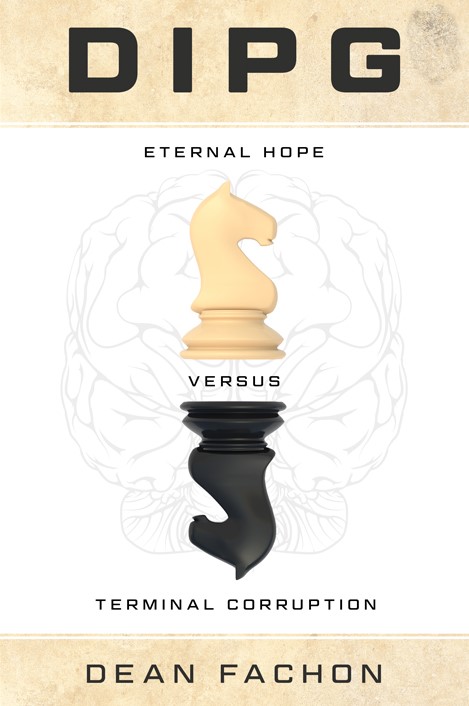
Yes! My husband, Dean, is publishing our son’s story, DIPG: Eternal Hope vs. Terminal Corruption to help people begin to explore and discuss this topic. Available by July 2024, our family’s personal narrative offers a compelling illustration. Please visit our web page and share this blog, which can serve as a forum for readers to exchange their thoughts, experiences and suggestions. Together, we could create one heck of a virtual book club. Refer the “Suggested Reading” list we provide. The first book on that list is Defeat Cancer. If you are interested in joining a “rare” book club, please contact us.
STEAM Learning: Saltmarsh Sparrow Study

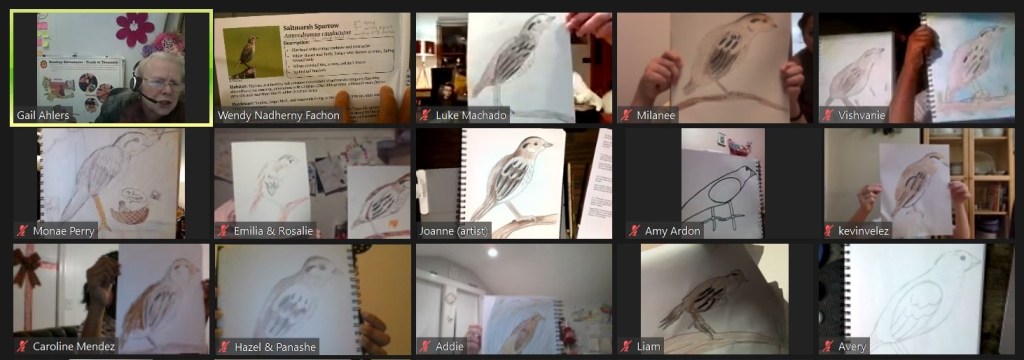
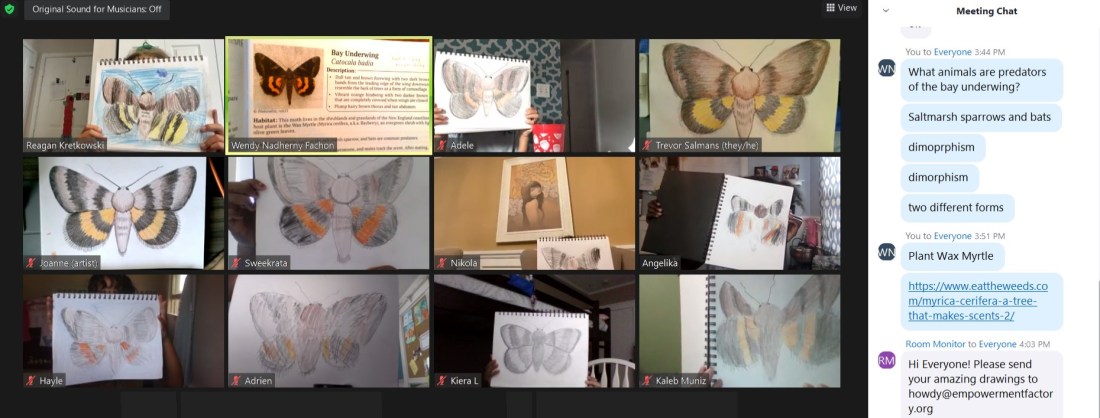
Students share their work at the end of the 11/27/23 Nature Drawing workshop, led by Gail Ahlers, Joanne Chen and myself.

Students share their work at the end of the 11/27/23 Nature Drawing workshop, led by Gail Ahlers, Joanne Chen and myself.

While the Saltmarsh Sparrow (Ammodramus caudacutus) has been named the poster child for sea level rise, its actual story is about restoring salt marsh habitat and conserving a threatened species, protecting it from loss and harm. The Saltmarsh Sparrow is the first of seven species studied in the Empowerment Factory’s Nature Drawing Salt Marsh series, which begins with establishing an understanding of the value of a salt marsh.

SALT MARSH HABITAT

  • Rhode Island salt marshes are found all around the Narragansett Bay – along the shores of salt ponds, in small bays and estuaries, and within estuary rivers.
  • Salt marshes serve as natural pollution treatment systems by filtering out pollutants before they reach coastal waters. The marsh’s diversity of plants and shellfish help with the filtering.
  • Salt marshes provide coastal community developments with a protective buffer during storms and flooding, however, human development itself has increased the likelihood of floods occurring.
  • Salt marshes provide nursery grounds and foraging habitat for hundreds of species of birds, fish, shellfish, mammals and other animals. At the same time, salt marshes provide recreational areas for line fishing and shellfishing, practices which need to be managed to prevent overfishing.

The salt marsh is a vital resource for both wildlife and humans. Unfortunately, this habitat has been destroyed by human activities, which have thrown the ecology out of balance and adversely affected the wild inhabitants in different ways. The City of Providence was once known as the Great Salt Cove. Over the past 200 years, however, humans have filled an estimated 60% of Rhode Island’s salt marsh’s with mud and sand. Construction of dikes, roads and rail crossings have restricted natural tidal flow and disrupted numerous marsh ecosystems.

The Saltmarsh Sparrow has been living life on the edge of danger and destruction, literally, because they tend to build their nests just above the “normal” high tide mark. Like humans, they love their waterfront property. Each female has 26 days, within the 28-day high tide cycles of the full moon, to build her nest, lay her eggs, hatch her chicks and feed them into fledgling stage. All this has to happen within 26 days! What a Super Mom! This adaptation has been necessary for each baby bird’s survival, yet increasingly marshes are flooding before peak tides and again at mid-cycle, destroying many nests.

How does this happen? It all comes down to the science of hydrology, the exactness of how a salt marsh is flooded by the tide and how freely ocean water is able to move in and out of the marsh area. Specialized plants and animals have adapted to survive in particular areas of the marsh, and this defines the entire marsh food web and complex ecosystem.

Solutions to correct this situation include the repairing stone culverts that have collapsed and restricted the flow of water under elevated roadbeds, digging shallow ditches to help drain areas, removing substrate to elevate land mass and replanting areas with salt marsh grasses. These are all important jobs for humans to take on.

While studying and drawing a different animal each week, students learn about its habits and the problems challenging the survival of its population. Each species has a different story to tell. Students use their artwork to share these stories, build awareness and advocate for species and habitat conservation.

LEARNING OBJECTIVES AND MEASUREMENT BENCHMARKS

Increase in environmental literacy: Students take a pre-survey and a post-survey to assess their acquisition of new knowledge.

Mastery of drawing skills: Students demonstrate their skill development through the completion of seven sequential drawing projects.

Social and emotional advancement: Teachers observe the students as they present themselves on-screen, noticing improvements in mood, social comfort within the group, discussion participation, self-expression and overall self-confidence.

Salt Marsh Nature Drawing is the fifth course in the Nature Drawing series created and taught by The Empowerment Factory. Developed in partnership with the RI Department of Environmental Management, the bilingual teaching materials support the lesson structure in presenting the salt marsh habitat and seven Species of Greatest Conservation Need (SGCN) living there:

Saltmarsh Sparrow Ammodramus caudacutus

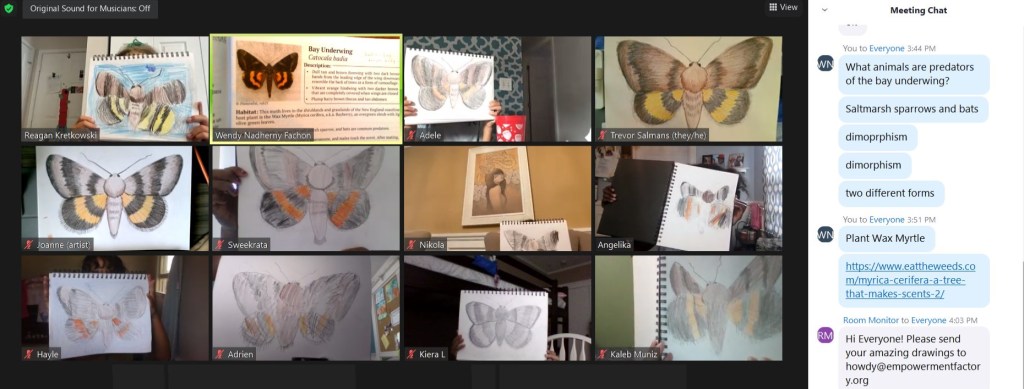
Bay Underwing Catocala badia

Northern Diamondback Terrapin Malaclemys terrapin terrapin

Bay Scallop Argopecten irradians

Atlantic Marsh Fiddler Crab Uca pugnax

Striped Kilifish Fundulus majalis

Atlantic Brant Branta bernicla

Almost all Nature Drawing courses are taught virtually, and the format has been highly successful in terms of attendance, student engagement and project quality and completion. While this course meets Next Generation Science Standards (NGSS), Common Core State Standards (CCSS) and Social Emotional Learning Standards (SEL), it places an emphasis on critical environmental science learning.

Contact The Empowerment Factory about bringing Nature Drawing into your school or classroom: theempowermentfactory.org, howdy@empowermentfactory.org, 401-365-1010.

Mom’s Lessons in Gratitude

Before my mother married my father and raised five children, she was a school teacher.

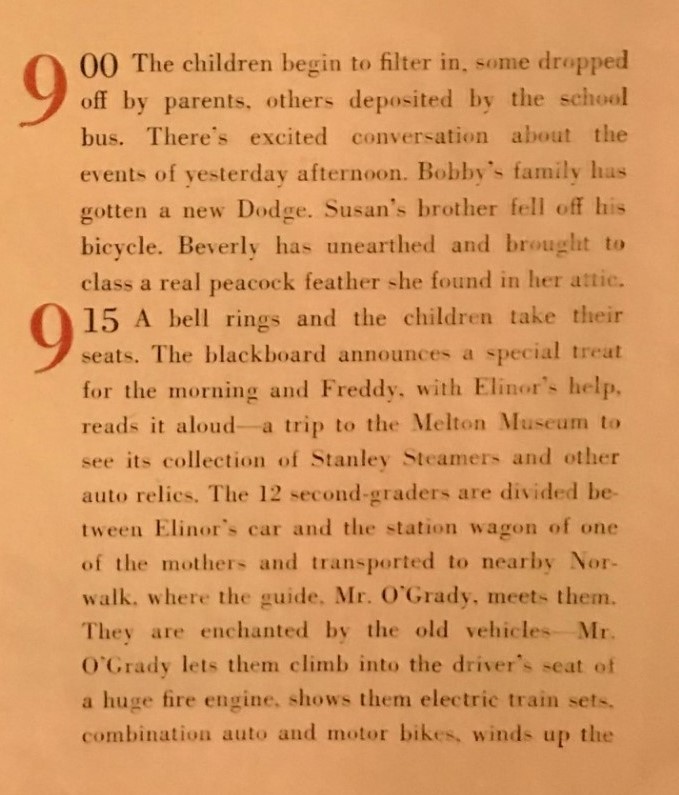
In 1951, at the age of 21, she was profiled by Glamour Magazine, in an article titled “diary of an elementary school teacher.” It was the first in a series of articles about women’s careers.

I found the article in my mother’s scrap book, and it took me on a trip over 70 years back in time.

At 11:30 the class returned to school and my mother got her students back to class work with a lesson in gratitude.

“Do you think we should let Mr. O’Grady know that we like the tour?” They do, so Bobby passes out paper and everyone writes a thank-you note. Elinor aids the cause of courtesy by printing hard words like automobile, electric, transportation on the board. Some of thee children wax exuberant, close with “love and kisses” to Mr. O’Grady but Elinor lets these pass. “The important thing,” she says, “is that they learn that it’s nice to express appreciation – the exact form doesn’t matter.”

How long has it been since our society glamorized school teachers? I remember my own teachers in the 1960s, teaching our class how to compose and format thank you notes and then address an envelope. How many elementary students know how to address an envelope today? If we experience a solar storm next year, as reported by the Patch earlier this week, and it knocks out the internet for months, maybe we will need to start teaching these basic skills (letter writing and the expression of gratitude) again. But, why wait until then? Why not now?

Christmas is coming, and my mother made all five of us write thank you notes for every gift we received from friends and relatives. Read my Pop-Up Thanksgiving Message photo blog about adopting a daily practice of gratitude and engaging in more thankfulness activities.

Healthy Lawns, Healthy Pets, Healthy Kids, Healthy Families

September is Lymphoma Awareness Month: time to dispose of weedkillers containing glyphosate (such as Roundup), which are known to cause non-Hodgkins lymphoma, and about healthier alternatives.

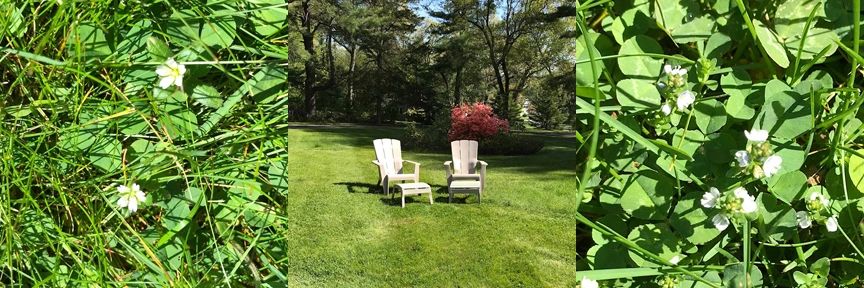
We stopped using herbicides and pesticides on our lawn over twenty years ago, and it is still green and lush. If you take a close look at our lawn, you will see Dandelions, Violets, Cinquefoil, Chickweed (left), Sweet Clover and Veronica (right) and more. Some of these “weeds” are highly nutritious and medicinal, and they represent the biodiversity that makes nature so resilient.

A lawn that grows only one species of plant, such as Bluegrass, is called a monoculture. It lacks diversity, and it is a wasteland for pollinators. It lacks nourishment – no flowers, no pollen and no nectar essential for sustaining wild bees, honey bees, butterflies and other pollinators. Furthermore, maintaining the perfect monoculture lawn requires the application of chemicals, including herbicides to eliminate all other plant life and pesticides to eliminate insect pests. These chemicals are harmful to pollinators, as well as pets and children. They also pollute groundwater and run off into streams and rivers, where they cause harm to fish, birds and other wildlife. So why use them? 

If weeds truly bother you, try these safer alternatives solutions, presented by Drugwatch. I love my weeds, however, I will use mulch to keep them out of my garden beds.

Reduce yard labor, save money, and create a safe and healthy outdoor space for pets, kids, wildlife and you. Check out these Story Walking Radio Hour podcasts.

Pesticide Free Parks, Lawns and Gardens

Lawns into Meadows: Rebuilding Biodiversity

Wild Weed Wisdom: Gather and Give

Dispose of lawn chemicals properly. Rhode Islanders can take their hazardous waste to the Eco-Depot. Where can you take it where you live?

Stop Fiddling Around

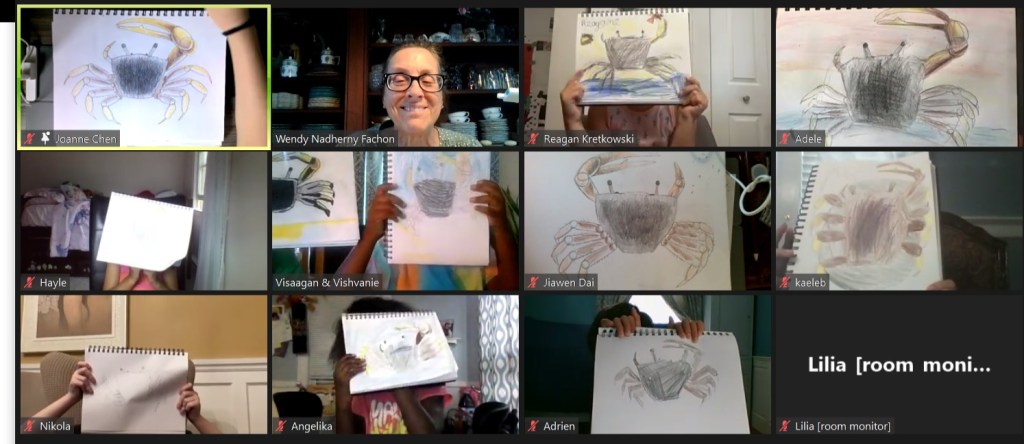
Yesterday, we taught kids “How to draw an Atlantic Marsh Fiddler Crab” (Week 5 of the Salt Marsh Nature Drawing series for grades 3-5). RISD student Joanne Chen led the drawing instruction, while I did the environmental science talk. We teach about animals classified as Species of Greatest Conservation Need (SGCN), so the kids can use their artwork to share the animal’s stories and help raise awareness.

I am always blown away by the final drawings! (screenshot)

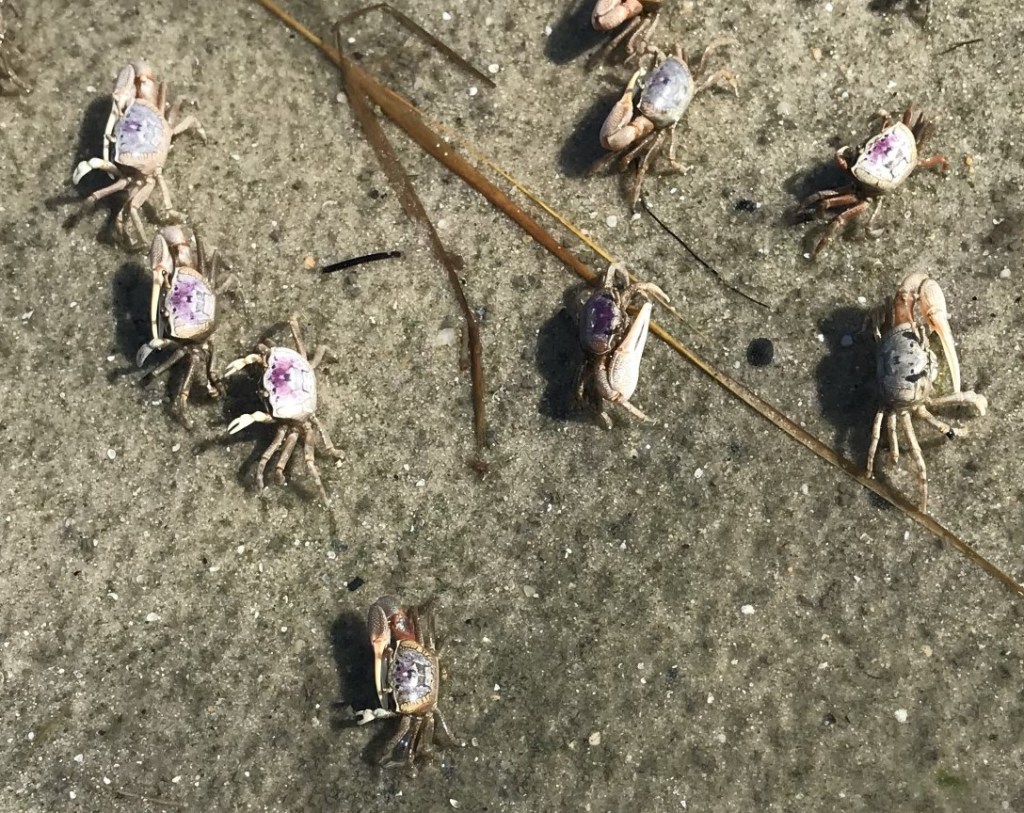
Fun fact: The common English name for “Fiddler Crab” (vs. Uca Pugnax) comes from the feeding habits of the males, where the movement of the small claw from the ground to its mouth resembles the motion of someone moving a bow across a fiddle (the large claw). Males fiddle to attract females to their burrows, but here’s the rub:

Water pollution! A fertilized female fiddler crab carries hundreds to thousands of eggs under her abdomen. She goes into the water and allows the eggs to hatch into microscopic free-swiming larvae, which live in the open water as part of the plankton. How does the water get polluted and what happens to these little babies?

Heavy metals such as mercury, copper and zinc (from manufacturing waste water) are toxic to larvae and cause developmental problems.

Pesticides runoff causes abnormalities and interferes with normal behavioral functions.

Chlorine, used as a disinfectant in water treatment plants, and then released into estuary waters, effects the growth and survival of fiddlers.

Loads of toxic laundry detergent chemicals find their way into estuary waters, too.

What can we do to help reduce the pollution?

Two days ago, I got phone call from my brother, Steve, asking if I saw the article he sent me about Why is laundry detergent is blue. Here is what I learned from that article: If your laundry detergent is blue (mine is NOT), it is time to change detergents. Laundry detergents are formulated with blue chemicals called optical brighteners to make clothes LOOK like they are brighter! To keep clothes looking bright, these chemicals have to stick like glue to the fibers of your garments, which means the chemicals are insoluble in water, which means they are not biodegradable. These harsh chemicals can cause rashes, hives and eczema, as clothing come in contact with skin. What doesn’t stick to the clothing ends up in the water, and scientists have found high volumes of optical brighteners in our water systems, and they believe these chemicals are causing mutations in marine life!

This article was written to promote Earth Breeze Laundry Detergent Eco Sheets, and Steve planned on ordering some and wanted my input. I did some additional research to see what chemical ingredients were infused into the Earth Breeze sheets. I saw the ingredient “fragrance,” which set off alarm bells in my head. More slight-of-hand marketing. Then I found a laundry sheet product comparison at Just Natural Home, which nixed Earth Breeze in favor of Clean People Laundry Sheets. I did some additional research to see what chemical ingredients were infused in the Clean People sheets. It is a completely different list of ingredients from Earth Breeze, and to be totally honest, I can barely pronounce the names of the chemical ingredients for either product, much less know what they are, how safe they are and whether or not they are truly effective at getting clothes clean and fresh smelling. One eco detergent I tried recently made my bath towels smell awful!

What I do know is that if we raise young people’s awareness of these issues, they will find better solutions. And I am heartened to know that more and more colleges are offering degrees in Green Chemistry. UMass Boston was the first school in the country to offer a Ph.D. in chemistry with a track in Green Chemistry. Read about The Greenest Colleges in Greater Boston and Rhode Island, and share the information with the teenagers in your life. Share the hot links in the article with your kids, see what you can learn together, and talk about it.

Time to stop fiddling around with Nature. It’s easy to see why fiddler crabs are an indicator of water quality and health in a wetlands system. I love watching the thousands of fiddler crabs that scurry up into the cord grass along the shore of the West Falmouth Harbor as the tide rises, and I hope to be able to enjoy the sight of them in the years to come.

Learn more about our Nature Drawing classes at The Empowerment Factory.

“Bee Tree”

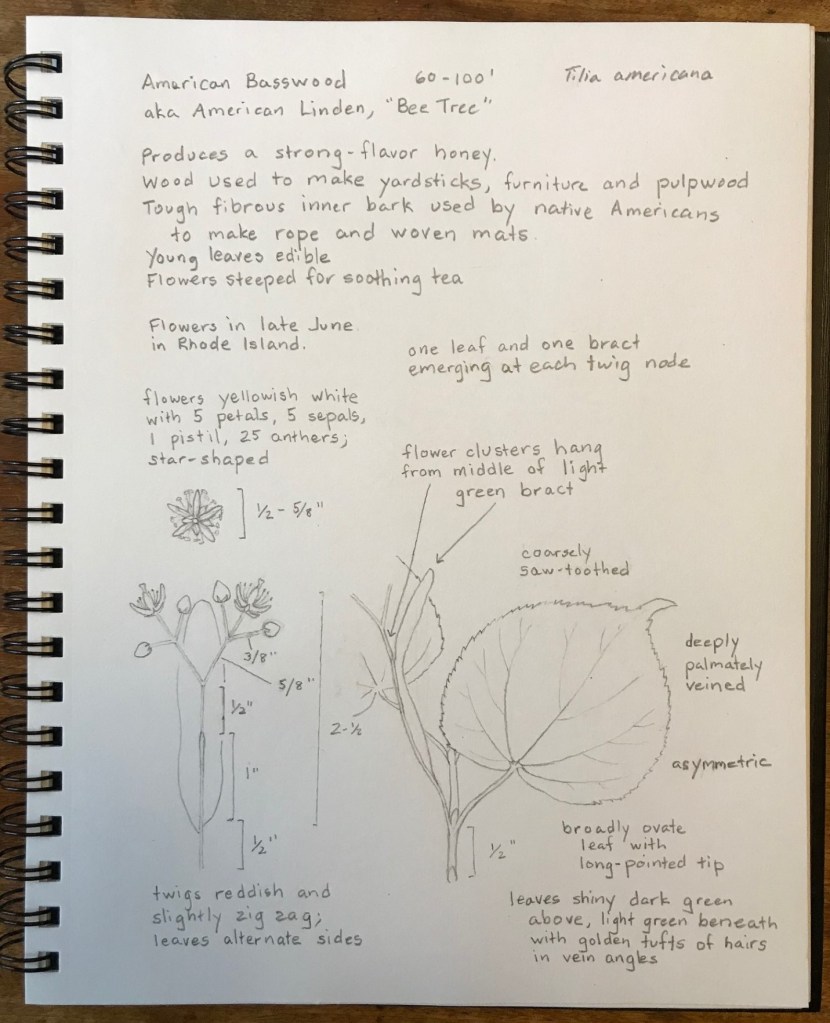
Thursday, June 29, 2023 – While out walking this morning, I noticed an American Basswood tree (a.k.a. “Bee Tree”) in bloom. I took a small branch home to do some nature drawing. The leaves look like lopsided hearts, and the flowers look like bursting stars.

Using the ruler on my magnifying glass, I sketched out the proportional structure of my drawing. I examined my live sample closely from different angles and drew in the details of the bract, flowers and leaves. Then I searched for botanical descriptions of plant details in a couple reference books and added some botany terminology (ie., broadly ovate, palmately veined) to my drawing. The America Basswood tree is a pollinator attracting tree that bee use to produce honey. This is a wonderful tree to use in the overstory layer of a food forest garden.

I am a Nature Drawing instructor, a food forest gardener and an Abundance Ambassador for Food Forest Abundance. Follow my journey through this blog and through the Story Walking Radio Hour.

Why advocate for Local Farmland Preservation and Conservation?

This Thursday, the RI Senate Finance Committee will be hearing testimony for a allocating funds for farmland preservation. Rhode Island has the most expensive farmland in the country. Developers and their lawyers salivate over open land for affordable housing and solar farm projects, which guarantee them revenue and profit. How does this benefit us economically? Why do we need to preserve this land for farming? Here’s the written testimony I submitted this morning. Please read and consider sending in your own testimony. Let’s flood the state house with letters!

Date: Monday, May 23, 2023

To: Chairman Louis DiPalma, Senate Finance Committee

cc: Representative Michelle McGaw

From: Wendy Fachon, East Greenwich

RE: Support for S560: $5M for the Preservation, Protection and Conservation of Farmlands

Dear Chairman DiPalma,

I live in East Greenwich and am testifying in support for House Bill 6018 and Senate Bill 560, funding farmland conservation in the Governor’s FY 24 budget. Thank you bringing this issue to the attention of your committee, My husband I have been supporting farmland conservation through our weekly purchases at local farms and farmer markets, because the food quality and nutrition is better than store-bought produce that is grown and transported from afar.

When I do go food shopping at a supermarket, I notice that most of the produce is labeled as coming from California or south of the border. Between the breakdown of the food supply chain during the pandemic and California’s worsening climate and water challenges, it is time for Rhode Island to focus on food security for its citizens.

We recognize and appreciate the many quantifiable advantages, beyond food quality, of a local farm economy, because it…

  • keeps Rhode Island dollars circulating locally
  • provides over 2,500 “green economy” jobs and over $250 million in revenue
  • improves food security for all Rhode Island residents
  • eliminates fuel costs and carbon emissions that result from long distance transportation
  • attracts matching funds from federal and philanthropic resources
  • harbors the potential to grow exponentially, resulting in an abundance that can be exported out-of-state
  • helps achieve climate resiliency and soil fertility, through use of regenerative practices
  • assures fresher, better tasting food and less spoilage
  • generates agro-tourism dollars
  • builds our sense of community and pride

As you know, Rhode Island has the most expensive farmland in the country, making it difficult to grow the local farm economy. And yet, farmland preservation is a good long-term investment that will appeal to voters. I am among the many asking you to include $5 million in the budget to support the Agricultural Land Preservation Commission, which is critical to preserving important RI farmland.

Thank you, Chairman DiPalma and Finance Committee members, for your service and for listening. Please, help pull S560 through the budget allocation process, so $5 million (or more) can go towards farmland preservation in the Governor’s FY ‘24 Budget. Lead us forward.

Thank you!

Wendy Fachon

East Greenwich, RI

Submit to senatefinance@rilegislature.gov and copy your local senator and house representative on your correspondence. Go here for the email addresses.

Beneficial Garlic

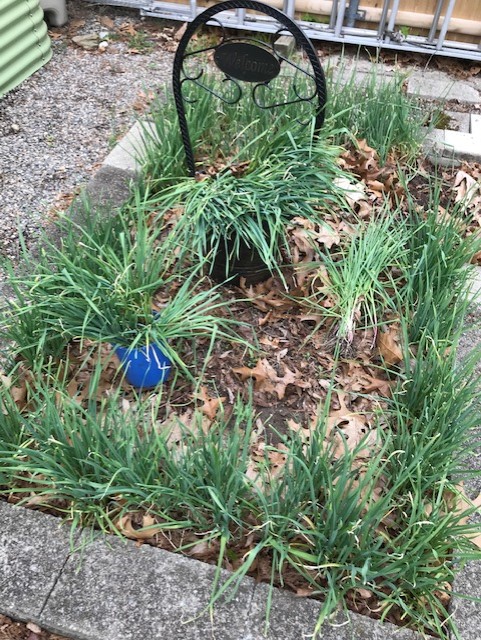
Friday, April 22, 2023 (Earth Day) – I am in the process of digging up two large beds of garlic, so that I can rebuild the beds and plant them with vegetables. But, what will I do with all this garlic?

I’ll relocate some to serve as companion plants for select fruits and vegetables. Garlic has a strong odor that deters garden pests. It can repel cabbage worms, Japanese beetles, moths and aphids away from cabbage and kale. It can even help deter rabbits and deer.

In addition, garlic bulbs release sulfur into the soil, which helps to reduce fungal infections in nearby plants and fruit trees. For example, garlic is known to reduce potato blight and apple scab.

Garlic is an essential perennial plant for both permaculture and medicinal gardening.

Among its many health benefits for people, garlic is anti-viral, anti-bacterial, anti-inflammatory and anti-cancer. Garlic also a natural blood thinner, however, people should avoid it before surgery, and people on blood thinner medication also need to be cautious.

Garlic provides the culinary benefits of distinct flavor and versatility, and it stores well.

I use a lot of garlic in my cooking. For example, I harvest Rosemary buds and Garlic scapes in July to infuse with olive oil. After pouring the olive oil into a double boiler, I add the flowers, rolling the rosemary between my palms to release the oils and crumbling the garlic scape flowers with my fingers.

Then I heat the oil and flower/bud mixture in the double boiler for ten minutes, turn off the heat, and let the mixture sit for an hour, before straining out the herbs and decanting the oil into a clean bottle.

Still, I have far more garlic than needed, and I am ready to share the abundance with interested neighbors.

Preparing for Sub-Zero Temperatures

Tuesday, January 31, 2023 – According to the National Weather Service, this coming weekend, Rhode Islanders will experience the coldest weather in seven years, as temperatures are expected to drop below zero with wind gusts making it feel even colder. Among my strategies for shock-proofing plants are insulating the roots with a layer of mulch and applying a agrohomeopathy remedy called aconite.

Agrohomeopathy is the use of homeopathic remedies and protocols to improve the health and vitality of pets, livestock, wildlife and plants. It is an inexpensive, chemical free, non-toxic method of healing and protecting plants and agricultural resources from pests and disease. This idea resonates with me, and the application of aconite is my first experience using agrohomeopathy.

Aconite is a homeopathic dilution derived from the plant Aconitum napellus. As a child, my mother would take me wildflower hunting. I remember picking a stem of Monkshood in a mountain meadow and pressing the distinctive purple flower between the pages of our wildflower field guide. At the time, I was unaware of the medicinal value of the many plants we found. I was unaware that Aconitum napellus is toxic and must be handled with care.

Dilution is a procedure by which a substance is diluted, with alcohol or distilled water, and then vigorously shaken in a process called succussion. The founder of homeopathy, Samuel Hahnemann (1755–1843), asserted that succussion activated the “vital energy” of the substance, and that successive dilutions increased the “potency” of the preparation. The dilution procedure is repeated many times to achieve a therapeutic dose. Dilutions are theorized to work on an energetic level, holistically stimulating the natural healing response of a body, animal or plant.

Homeopathic remedies are used by millions of consumers worldwide. Since 1938, homeopathic medicines have been regulated as drugs by the United States Food and Drug Administration (FDA).

Traditional homeopathy is based on three principles:

  1. Law of similars (like cures like). Something that in large doses creates the symptoms of a disease, will, in small doses, treat it. This is similar to the theory behind vaccines.
  2. Extreme dilution enhances the medicine’s healing properties and eliminates undesirable side-effects.
  3. When choosing a remedy, a holistic approach, assessing the whole person, animal or plant, must be taken into consideration. Protocols are individualized.

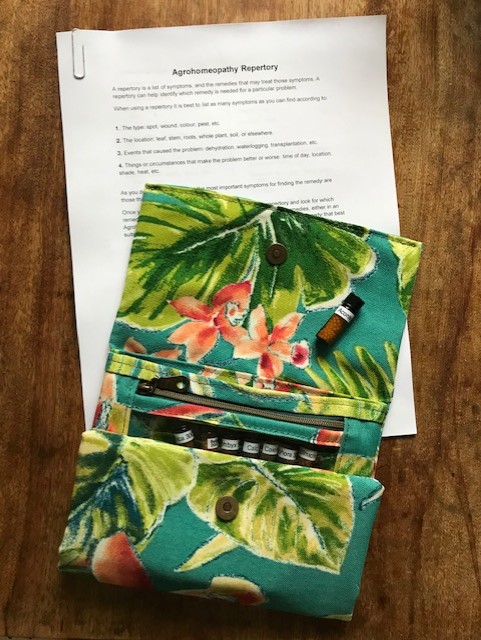
In traditional homeopathy, Aconite is used to treat a number of medical conditions, and it is one of several remedies used to help alleviate shock or trauma. In agrohomeopathy, gardeners and farmers use it to treat plants exposed to the shock of extreme cold. Homeopathic Educator, Kristina White, instructed me to apply Aconite to my fruit tree saplings, both before and after the extreme weather event. She had provided me with an Agro Kit, which includes small vials, each holding a different remedy.

I dissolved 12 tiny pellets of Aconite 30C into one gallon of filtered water and gave the gallon a good shake. Then I transferred the preparation to a watering can, which provided me with enough fluid to water three saplings. I applied it in a circle around the bases of my cherry tree and two pear trees, so the treatment would soak down into the roots. I will repeat this process after the extreme weather passes and the day time temperature rises back up above freezing. This is a simple, inexpensive, chemical free and non-toxic method.

Check out my February 2023 Story Walking podcast on “Agrohomeopathy for Healthier Farms and Gardens” with guest, Kristina White, Homeopathic Educator at Your Life and Land. Stay tuned. More good things to come.

I am an Abundance Ambassador for Food Forest Abundance. I invite you to follow my journey around and into the forest, here and through my Story Walking Radio Hour.

Fiddlehead Ferns & Forests

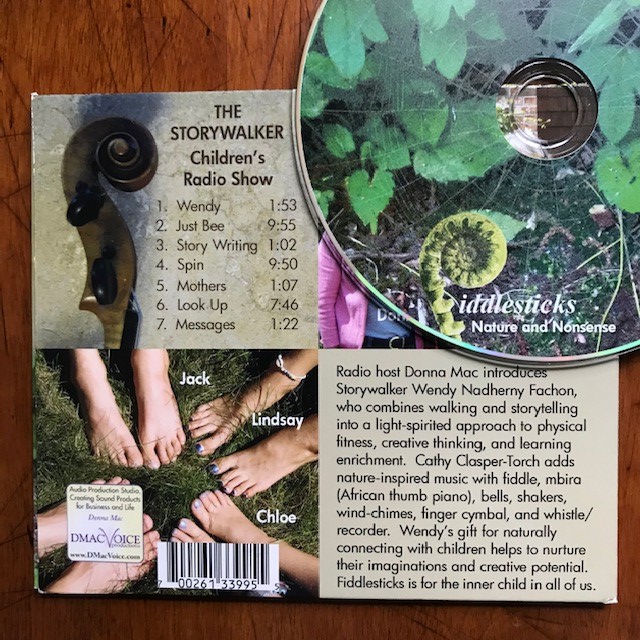
My fascination with fiddleheads and ferns began around the time I was creating my Fiddlesticks story CD, which is about slowing down and taking time to see and appreciate God’s creative work through nature. Learn more about the CD here. Now, as I consider options for shade-tolerant plants to include in the ground cover layer of our food forest garden, I have been taking time to research ferns more extensively. Here is what I now know:

A few fern species are edible during their fiddlehead stage, however, most species are toxic. Fiddleheads are the tightly coiled tender green tips that unfurl in the spring to become fern fronds. Fiddleheads are so named because they resemble the scrolled end of fiddle or violin. The time for foraging them is brief. Wait too long, and the fiddleheads will have already opened into the feathery fronds of mature ferns, and they will be inedible. As ferns mature, they become more toxic.

Back cover and disk art for Fiddlesticks Story CD (2011)

The fiddleheads of the Ostrich Fern, Matteuccia struthiopteris, are edible. Their bright green coils are covered with thin, brown, papery scales, which will fall away as the frond unfurls. Ostrich Ferns are also distinguished by a deep U-shaped groove in the inside stem. Ostrich Fern fiddleheads should be well-rinsed with cold water and fully cooked before adding them to salads and other dishes. In fact, it is best to blanch fiddleheads in boiled water even before sautéing or cooking in other preparations.

Ostrich Fern fiddleheads are prized for their crunchy texture and delicate flavor, which is somewhere in the range of asparagus, broccoli and spinach. Nutritionally, fiddleheads contain omega-3 and omega-6 fatty acids, vitamin A, vitamin C, potassium, iron, manganese and copper.

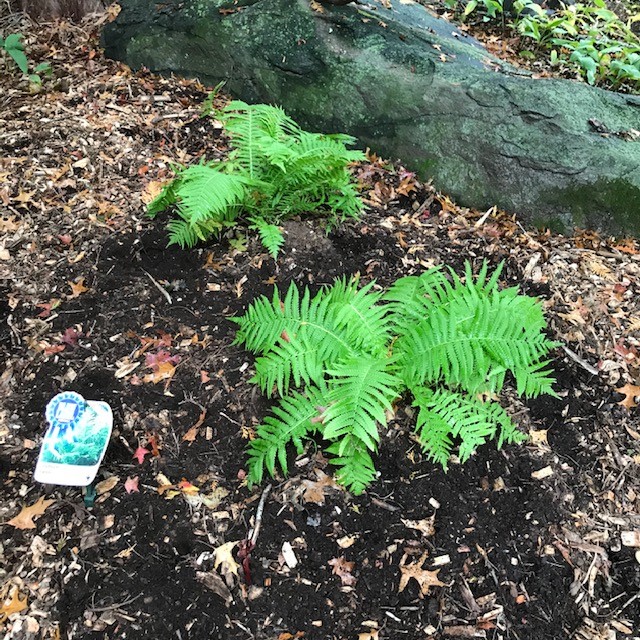
I started a small fern nursery, with specimens I should be able to propagate and transplant to other areas of our property. Propagation is the process of using one or more plants make more plants of its kind. To establish the nursery, I sheet mulched a shady area outside our kitchen window, and I splurged on the purchase of two mature Ostrich Ferns at a local garden center.

The ferns beautify the area, however, there was still a lot of empty space around them, and my husband suggested buying and planting five more. I would love to, however, it would be more costly. Instead, I have chosen to be patient; I will wait and order some ferns online in the early spring. bThose plants will be smaller and less developed, but far less costly.

Alternatively, I could be even more patient and wait for my two ferns to self-propagate naturally. Ferns self-propagate in two ways. They can propagate sexually by reproducing and scattering spores. Not seeds, but spores. For a gardener to create the right conditions for fern spores to germinate and develop into a new fern takes a lot of patience and care. This is, however, the best way to propagate large numbers of new ferns.

Ferns can also propagate asexually, also known as vegetative propagation. Most ferns, after they grow from spores, will begin to spread by means of their creeping rhizomes, the root system that spreads underground. Over time one plant can grow into a colony. For gardeners, vegetative propagation is as easy as physically dividing a fern pant in half, carefully separating clumps of roots and replanting them. This method is easier than growing ferns from spores. Unlike with spore propagation, each new plant will be a clone, genetically identical to the original plant.

Through the vegetative method, gardeners can speed along the propagation of many perennial species. Berry plants can be propagated by cutting shoots and treating them to grow roots. By learning vegetative propagation skills, gardeners can dramatically increase their food forest abundance.

I have plenty of time to experiment with fern propagation, since fruit trees will require some years to grow. The trees will need to grow big enough to be able to produce sufficient shade and moisture to support a flourishing ground cover of ferns.

Two weeks ago, I walked the property of a local fruit grower, Narrow Lane Orchard, which is a family-owned farm. I have been buying Narrow Lane Orchard fruit at my local farmer’s market for a few years now, and finally took the time to go visit the orchard, which is only five miles away from our house. It has taken me far too long to get around to doing this.

About this orchard… back in 2004 Stephen and Sharon Grenier purchased Narrow Lane Orchard to save the 30 acre farm from being developed into residential homes. Expanding the farm’s diversity of trees, shrubs and vines, the Greniers have grown more than 20 varieties of apples, peaches, nectarines, blackberries, blueberries and kiwi berries.

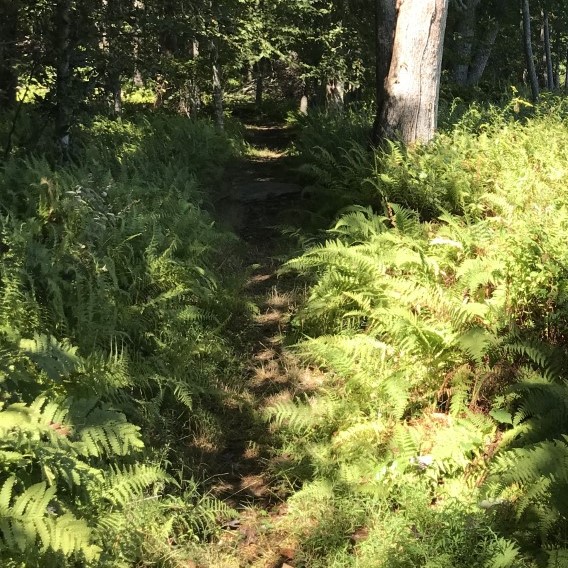
The orchard itself is surrounded by 8-foot tall deer fencing to protect the trees. Visitors enter the orchard through a gate situated next to the orchard’s farm stand. My favorite feature of the farm is the one-mile Nature Trail that winds around through the woods surrounding the orchard and outside the fencing. Here I saw lush green ferns growing everywhere. I have never seen so many ferns in all my life. I felt as if I was walking through a prehistoric forest. This landscape was a clear testament to the fern’s ability to self-propagate, and it was an indication that I could indeed grow ferns beneath the tree canopy on our property.

While researching ferns, I discovered they are one of the oldest groups of plants on Earth, with a fossil record dating back almost 400 million years. Back in the time of the dinosaurs, ferns were actually the main food source for the herbivorous sauropods, the largest animals ever to walk the earth. Ferns also played a vital role in plant evolution, specifically in the development of vascular tissue. Without the development of plant vascular tissue, we would not have berry bushes and fruit trees.

The fern category of plants, due to its long-lived presence on earth, is highly diverse, having evolved into the 10,500 living species that inhabit the earth today. Ferns tend to grow in moist, shady areas among the trees of the forest, which provide the ferns with protection from wind, over exposure to sunlight, and excess heat from the sun. Some species, however, can grow in desert climates.

Within a forest community, ferns have their own important ecological roles. They provide shelter, shade and food to small animals. Bracken ferns are eaten in the fiddlehead stage in the springtime by white-tailed deer and eastern cottontail rabbits with little consequence. As these fern grows into adults, however, their fronds begin to produce toxins, and they become unpalatable. At the same time, insects like grasshoppers and snails can eat adult ferns on a regular basis, despite the increased toxicity. Generally, plants produce toxins as a defensive measure, so they can grow and propagate.

One final fern fact, that bares further research, is their ability to uptake heavy metals from the soil. They can be planted to heal contaminated environments. I think that’s very cool!

Learn more about fern propagation.