Yesterday, we taught kids “How to draw an Atlantic Marsh Fiddler Crab” (Week 5 of the Salt Marsh Nature Drawing series for grades 3-5). RISD student Joanne Chen led the drawing instruction, while I did the environmental science talk. We teach about animals classified as Species of Greatest Conservation Need (SGCN), so the kids can use their artwork to share the animal’s stories and help raise awareness.
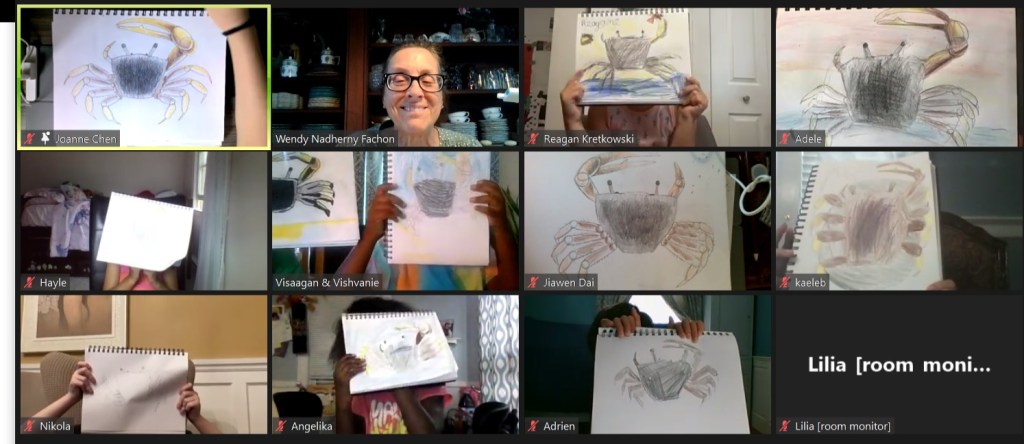
I am always blown away by the final drawings! (screenshot)
Fun fact: The common English name for “Fiddler Crab” (vs. Uca Pugnax) comes from the feeding habits of the males, where the movement of the small claw from the ground to its mouth resembles the motion of someone moving a bow across a fiddle (the large claw). Males fiddle to attract females to their burrows, but here’s the rub:
Water pollution! A fertilized female fiddler crab carries hundreds to thousands of eggs under her abdomen. She goes into the water and allows the eggs to hatch into microscopic free-swiming larvae, which live in the open water as part of the plankton. How does the water get polluted and what happens to these little babies?
Heavy metals such as mercury, copper and zinc (from manufacturing waste water) are toxic to larvae and cause developmental problems.
Pesticides runoff causes abnormalities and interferes with normal behavioral functions.
Chlorine, used as a disinfectant in water treatment plants, and then released into estuary waters, effects the growth and survival of fiddlers.
Loads of toxic laundry detergent chemicals find their way into estuary waters, too.
What can we do to help reduce the pollution?
Two days ago, I got phone call from my brother, Steve, asking if I saw the article he sent me about Why is laundry detergent is blue. Here is what I learned from that article: If your laundry detergent is blue (mine is NOT), it is time to change detergents. Laundry detergents are formulated with blue chemicals called optical brighteners to make clothes LOOK like they are brighter! To keep clothes looking bright, these chemicals have to stick like glue to the fibers of your garments, which means the chemicals are insoluble in water, which means they are not biodegradable. These harsh chemicals can cause rashes, hives and eczema, as clothing come in contact with skin. What doesn’t stick to the clothing ends up in the water, and scientists have found high volumes of optical brighteners in our water systems, and they believe these chemicals are causing mutations in marine life!
This article was written to promote Earth Breeze Laundry Detergent Eco Sheets, and Steve planned on ordering some and wanted my input. I did some additional research to see what chemical ingredients were infused into the Earth Breeze sheets. I saw the ingredient “fragrance,” which set off alarm bells in my head. More slight-of-hand marketing. Then I found a laundry sheet product comparison at Just Natural Home, which nixed Earth Breeze in favor of Clean People Laundry Sheets. I did some additional research to see what chemical ingredients were infused in the Clean People sheets. It is a completely different list of ingredients from Earth Breeze, and to be totally honest, I can barely pronounce the names of the chemical ingredients for either product, much less know what they are, how safe they are and whether or not they are truly effective at getting clothes clean and fresh smelling. One eco detergent I tried recently made my bath towels smell awful!
What I do know is that if we raise young people’s awareness of these issues, they will find better solutions. And I am heartened to know that more and more colleges are offering degrees in Green Chemistry. UMass Boston was the first school in the country to offer a Ph.D. in chemistry with a track in Green Chemistry. Read about The Greenest Colleges in Greater Boston and Rhode Island, and share the information with the teenagers in your life. Share the hot links in the article with your kids, see what you can learn together, and talk about it.
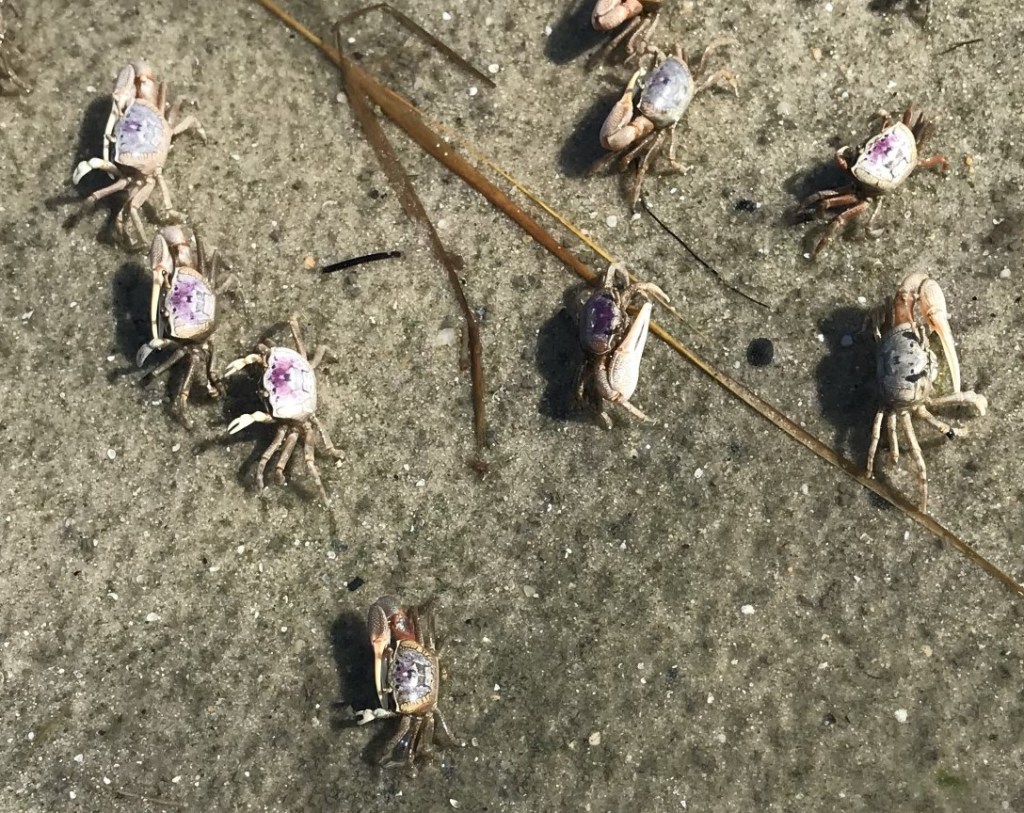
Time to stop fiddling around with Nature. It’s easy to see why fiddler crabs are an indicator of water quality and health in a wetlands system. I love watching the thousands of fiddler crabs that scurry up into the cord grass along the shore of the West Falmouth Harbor as the tide rises, and I hope to be able to enjoy the sight of them in the years to come.
Learn more about our Nature Drawing classes at The Empowerment Factory.

 Wendy Nadherny Fachon