Spotlight on Medical Marijauna

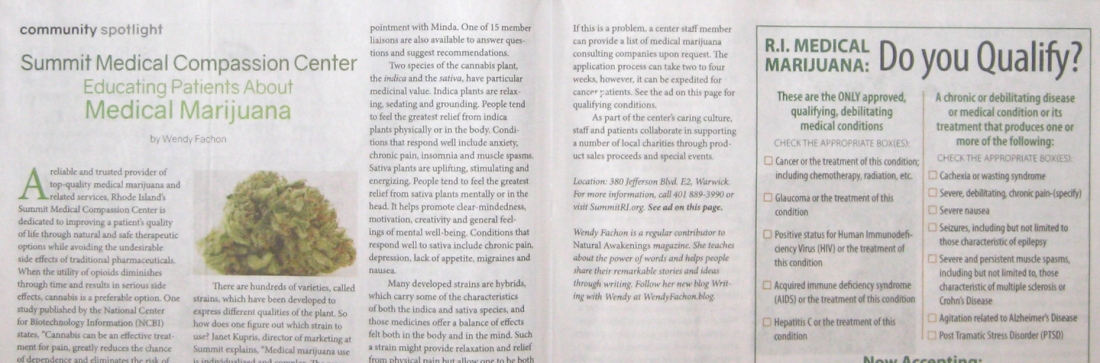
When the Rhode Island Natural Awakenings publisher asked me to write a spotlight on the Summit Medical Compassion Center, I eagerly complied, because the integration of medicinal cannabis in treating life-threatening diseases is becoming more noteworthy.

The endocannabinoid system (ECS) was discovered in 1992 by scientists studying how cannabis interacts with the brain. This previously unknown molecular signaling system is involved in regulating a broad range of biological functions and maintaining homeostasis, a healthy equilibrium, within the body. Scientists realized that the ECS allows the body to send signals back and forth, rather than just one direction, allowing the body to communicate with itself, so that it could fix itself.

When our son Neil was diagnosed with cancer, we learned about the beneficial effects of CBD and THC, two key chemical compounds produced by the cannabis plant that are compatible with receptors in the ECS. While CBD and THC do not comprise a proven cure to cancer, they can help fight against the disease. They have demonstrated abilities to prevent cancer cells from reproducing, to prevent the formation of new blood vessels needed by a tumor to grow, to prevent cancer from spreading to other organs and to cause cancerous cells to kill themselves. There are documented cases of cannabis oil sending cancer patients into remission and cases of patients who took cannabis oil and still succumbed to the disease.

Due to his terminal condition, Neil’s medical marijuana card application was expedited and the compassion center he visited gave him some different products to try. Use is individualized and complex, and the process is exploratory. I wish there had been more hard research to guide us, because we sensed so much possibility in integrating cannabis with cancer therapy. This is why I felt so compelled to write about the topic now.

One of the gems I picked up while doing research for the medical marijuana article was this: Cannabis can prevent opioid use and can alleviate symptoms associated with opioid withdrawal. Award-winning neuroscientist, Adie Poe, explains how cannabis can help with opioid detox and replacement: “The evidence suggests it’s the opposite of a gateway drug. It’s an exit drug. This is one of the most exciting frontiers we have in cannabis science at the moment.”

A second gem is that Autism patients will be able to access medical marijuana here in Rhode Island. A third gem is the emergence of cannabis training for nurses.

Read the full article.
Storywalking for Inspiration

The trash I find while out walking inspires much of my writing. Because of this, my husband named me the Storywalker, and we refer to this creative process as “Storywalking.”

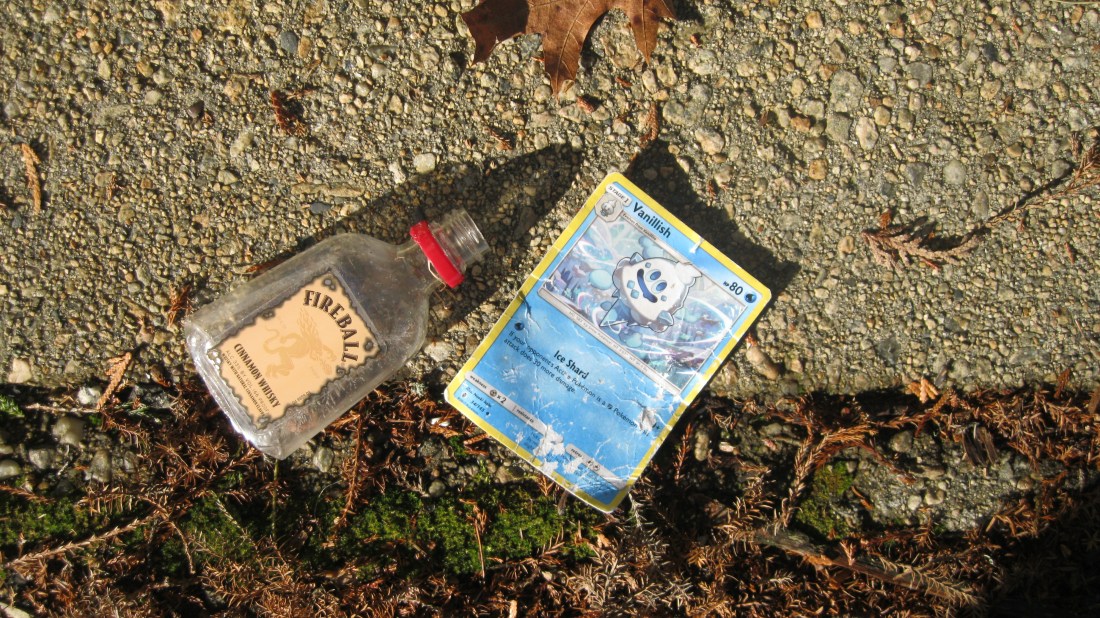
For example, yesterday, walking to my yoga class I found a Pokemon card, featuring Vanillish and an Ice Shard attack. Vanillish? Villainish! The card was stiff as ice, with bits of dried leaf plastered to it, masking the face of the character. I tucked it in my pocket.

Further down the sidewalk, I noticed a small liquor bottle, called a nip. On the label was a character that looked like the Devil and some words. The “RED HOT” nip once held some Fireball Cinnamon Whisky. Cinnamon? Pokemon. The Inside was a frozen flash of crystallized water.

What happens when a Shard attack meets a Fireball attack? Poof! A lot of steam! Our son, Neil, used to collect Pokemon cards and play the game with his friends. Unfortunately, Neil was attacked and completely taken out by Cancer last year. Poof! I pulled the Pokemon card out of my pocket and showed it to my yoga teacher as I checked into class. She commented that the leaf fragment covering Vanillish’s face was shaped like a heart. I took off my sneakers, hung up my coat and went into the studio.

As I left yoga, I pulled the card out of my coat pocket. The leaf fragments were gone. They had effectively melted away, revealing the hidden character of Vanillish, a cute smiley composite of ice cream and ice crystals, shaped like an ice cream cone. Sweet! I hold my angel, that sneaky silly cool little devil, forever in my heart and mind.

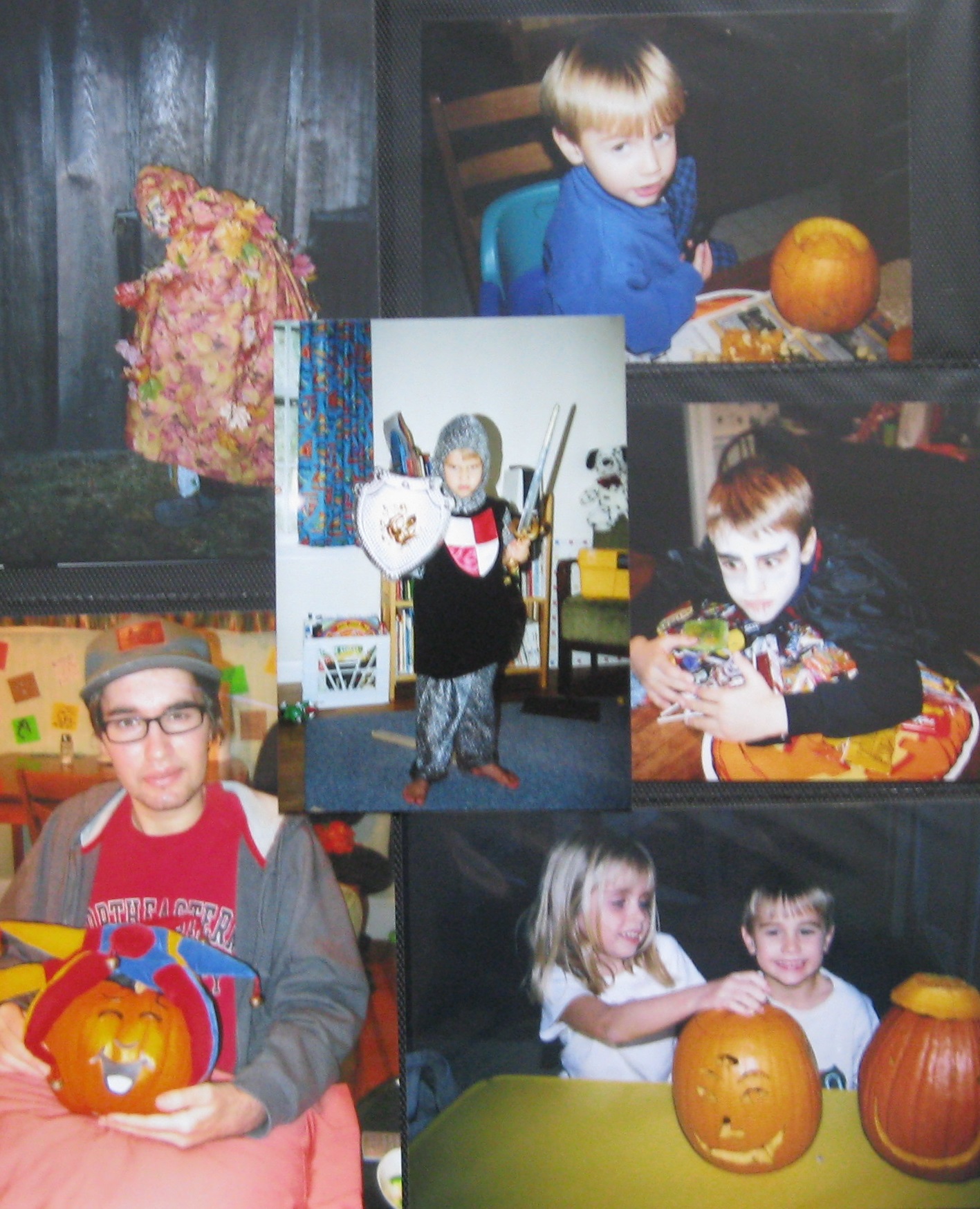
Captions, starting from top left and spiraling clockwise: Sneaking around cloaked in dead leaves; looking cute and innocent; hoarding sweets with a vampire’s sweet tooth; smiling faces; smiling his way through the last Halloween of his life here; ever ready to engage in battle.

Learn more about After Death Communications (ADC) from Psychology Today. Our angels and muses are there to inspire us.

What do you think about Writing?

Estudiantes de ESL, corte y pegue el siguiente texto en “google translate” para convertirlo a su idioma principal.

One year, Neil’s first assignment for English class was to write a letter to the teacher, about English and writing, so he wrote:

  I like to be treated with respect. It’s nice when teachers tell funny stories about their past related to a subject we’re discussing. I find that it makes classes more interesting and keeps students from dozing off. I really dislike it when a teacher gets overly strict and starts to yell at the class or when one student is goofing off and the whole class gets blamed.

  As a writer I can write pretty strong and vividly, but it’s definitely not my strongest subject. I’d like to get better at using quotation marks and conversations in my writing. I like to write about my memories and past experiences and hate writing “how to” procedures. I’m best at voice in my writing and worst at spelling and grammar (But please, please, please don’t do to many grammar lessons, they bore me to death. Probably why I’m worst at it).

  My favorite book series is the “Alex Rider” series. It’s about a teenage spy who does James Bond kind of stuff. My favorite book type definitly, positivly is fiction/fantasy/Science Fiction. In past classes I’ve hated doing picture narative and have loved doing personal naratives.

Some people like to write science fiction of fantasy stories, while others may prefer composing poetry or keeping a personal journal. Some people dream of publishing a book, while others just enjoy writing and receiving letters. Imagine writing a letter to a teacher and sharing your opinions and preferences with regards to writing

What would you like the teacher to know about you?

What do you like and dislike about English class?

What are your strengths and weaknesses when it comes to writing?

How would you like to improve your writing?

What kind of writing do you enjoy doing?

What genre of books do you like to read?

What are your favorite activities outside of school or work?

Do you participate in activities you might like to write about?

January 28, I begin facilitating a high school Writing Club and am looking forward to conversing with the students about their personal goals – what kinds of pieces they wish to write, what they want to learn and how they hope to improve their skills. Beyond that, I look forward to guiding them, reading their words and learning more about them. So, what do YOU think about writing?

Explore, Experience, Explain (1): Thermometry

Some people write about their adventures, traveling across the icy Arctic, through the wild Amazon, over the boundless sea, or under. Today, I’ve decided to write about the vast unexplored terrain right inside my body. I prepared to navigate this uncharted territory by traveling only 15 miles from home, into the city of Providence, where I underwent a complete body health assessment and consultation, using state-of-the-art diagnostics.

As a writer for Rhode Island’s #1 healthy living magazine, I ‘m always finding there is so much more to explore, research, experience and explain with regards to well-being. After reading a book on bioregulatory medicine, touring Providence’s new BioMed Center and writing an article about both for RI’s Natural Awakenings magazine, I felt drawn to participate in this exploratory process. The process appears to be non-invasive, so why not be a guinea pig. I set up an appointment for January 2, filled out the requisite medical forms and followed through with the appointment.

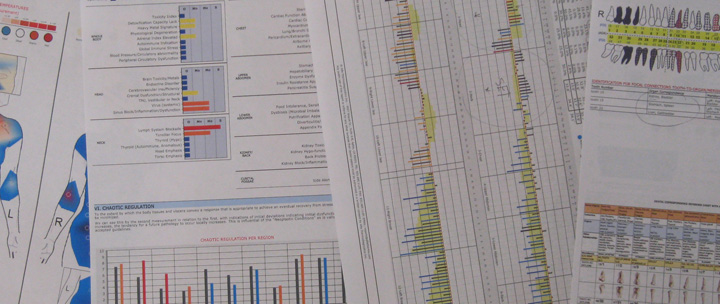
What happened that day? A whole lot. Where do I begin? With a quick overview and the description of one of six tests. I’m analytical and I’m visual. I like to look at numbers and pictures, because they show me things. The graphic above shows a small sampling of the resulting data of energy signatures, which map the terrain inside my body. The data provides a glimpse of my AlfaVue Regulation Thermometry Report.

I tried to explain this test in my article with one sentence: “whole body regulation thermometry is an assessment that takes skin temperature readings at 119 points on the body, before and after stress, to assess circulation patterns and identify areas of vulnerability or dysregulation.” The stress part sounds a bit scary. In actuality, inducing stress had nothing to do with psychological battering or trotting on a treadmill. It was induced with exposure to a slightly colder temperature for ten minutes. I just stood there. The temperature readings were as quick as a when someone swipes a thermometer across the forehead. The resulting numbers and pictures are far more adequate than my one sentence in explaining thermometry, which was the first and most demanding of all the tests – simply stressful enough for the body to communicate relevant data, so doctors can see, interpret and explain the most significant findings.

What jumped out on this map of my body was a lymph system blockade (red bar on graph). This issue was confirmed by other types of tests administered that day. This is a symptom of being a passionate writer who will sit and spend hours absorbed in the work. According to Anne Lemons, “Prolonged sitting negatively impacts the lymphatic system as well as the heart, brain, and musculoskeletal system (1,2,3). If you sit most of the day for work, set a timer to get up every hour to take a short walk and move your lymph. As you may have heard it described, ‘sitting is the new smoking.'” Lymph vessels are activated by body movement; any activity that moves the arms, legs, and torso will help to move lymph.

The lymphatic system is a network of tissues and organs that help rid the body of toxins, waste and other unwanted materials. While there are numerous doctors trained to treat all the other body systems (neurologist (nervous), cardiologist (cardovascular), gastroenterologist (digestive), endocrinologist (glandular), a patient would be hard-pressed to find a lymphologist.

Understanding the critical role of the lymphatic system, the doctors at BioMed gave me a list of options for exploring and removing this blockade, many of which I can do myself, including dry skin brushing, rebounding for ten minutes per day at my health club, doing a detox regimen, taking a daily spore-based probiotic and adding a few herbal supplements. BioMed also offered me options to expedite the blockade removal process, including cranial/structural core distortion release (CSCDR), myofacial massage, hemosonic treatment and ozone therapy.

I plan to explore all of these options, one by one, to see which makes the most difference for me. I also plan to learn more about the lymph system and how it interacts with the other systems in my body. Once I get past the blockade, I can start to explore other areas of my internal terrain, because there is so much more to learn.

Read my recent article to learn more about bioregulatory medicine. The BioMed Center is hosting an open house on Wednesday, February 13, 4:30-6pm at 111 Chestnut Street in Providence.

Read what Anne Lemons recommends for lymphatic self-care.